














One in three UK small businesses stuck in survival mode: New research exposes productivity disconnect
- Research from Employment Hero calls for a national rethink on how we define and measure productivity
- SMEs feel more productive than ever – but 1 in 3 are stuck in “survival mode”
- Employees say job satisfaction fuels performance, but it’s not a priority for businesses
London, 18 June 2025: A new report from global HR, payroll and employment platform Employment Hero is calling for an urgent rethink of how the UK defines and measures productivity, as new data reveals a striking disconnect between how productivity is understood by SMEs and their employees.
SMEs say they’re more productive – but growth has stalled according to ONS data
Despite the UK facing its worst productivity growth in over a decade, Employment Hero’s “Work that Works” report – based on a nationwide survey of over 2,000 business leaders and employees* – reveals that 72% of SME leaders say productivity in their business has increased over the past year. Most attribute these gains to technology adoption.
While businesses may feel they’re working more efficiently, the research exposes a troubling reality beneath the surface: one in three small businesses are operating in or close to ‘survival mode’, with limited capacity to grow or innovate.
This contrast suggests that while many SMEs are “doing more,” those efforts aren’t translating into meaningful growth or long-term stability.
Productivity misunderstood: The employee disconnect
The disconnect doesn’t stop at business performance. The report also reveals a fundamental mismatch between how productivity is measured nationally – typically through output per hour – and what actually drives productivity at the human level.
For employees, the strongest driver of productivity isn’t time spent on tasks or even financial reward – it’s job satisfaction.
The data shows that employees who find their work meaningful are 3x more likely to feel committed to their organisation and 2x more likely to say they are productive.
And yet, job satisfaction ranks 7th out of 10 of business priorities when it comes to boosting productivity.
Productivity gains rise in unison with job satisfaction:
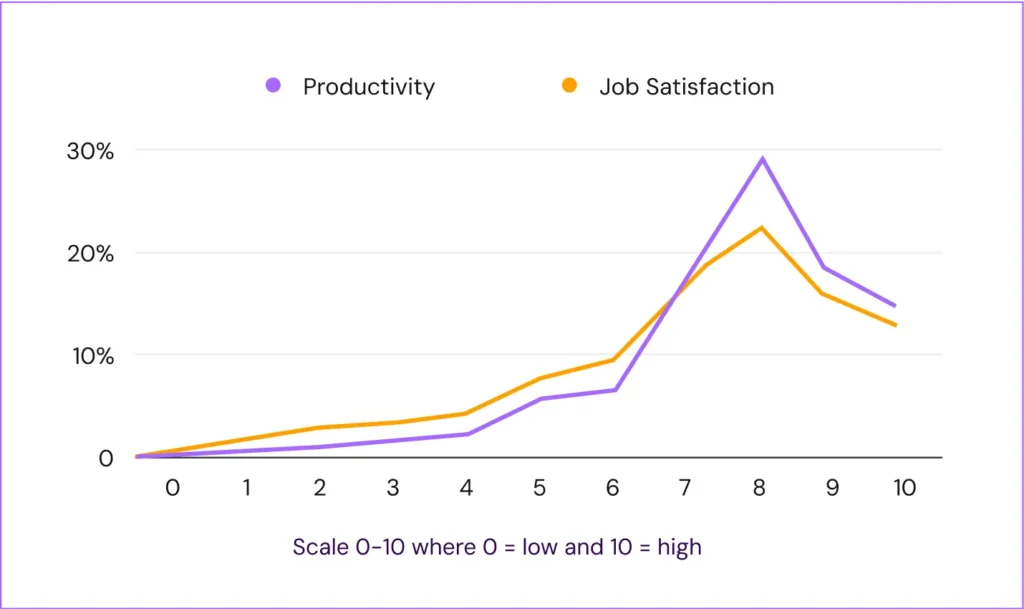
This gap highlights a widespread misunderstanding of what fuels a productive workforce. Businesses may be investing in systems and hours, but overlooking the emotional and motivational factors that drive real performance.
Commenting on the findings, Employment Hero UK Managing Director, Kevin FItzgerald, said:
“There are 5.5 million SMEs powering the UK economy, and the vast majority of them are stuck in survival mode. This isn’t just a warning sign, it’s a crisis.
“The national conversation on productivity is missing the mark. SMEs are working harder than ever, but that effort isn’t translating into growth.
“The data is clear, when people feel good about their work, productivity follows. Until we rethink what we value, we’re not going to solve the productivity puzzle – and it’s small businesses who will continue paying the price.
“Measuring productivity through the outdated ‘output vs. input’ lens no longer reflects the realities of modern work. In 2025, we must rethink how we define and measure productivity – and that starts by listening to the people on the ground.”
Related Resources
-
 Read more: How to Refresh Your HR Policies for the New Tax Year (2026 Edition)
How to Refresh Your HR Policies for the New Tax Year (2026 Edition)
Stay compliant and efficient in 2026. Learn how to update your HR policies for the new tax year with practical…
-
 Read more: Zero-hours contract template and employment guide
Zero-hours contract template and employment guide
Discover essential features and guidelines for creating a zero hours contract template.
-
 Read more: Ask the Experts: Time and Attendance Software with Mobile Apps That Actually Work for Teams
Ask the Experts: Time and Attendance Software with Mobile Apps That Actually Work for Teams
Discover why Employment Hero is the best time and attendance software for shift-based teams. Manage shifts, automate overtime, and integrate…
