














HRIS vs HRMS: What’s the Difference and Which Is Right for Your Business?

Contents
As a business owner or HR professional, you’re probably juggling a dozen things at once. Growing your business, managing your team, and trying to stay ahead of the competition. It’s a lot to manage. So the last thing you need is to get bogged down in a sea of confusing HR acronyms. HRIS, HRMS, HCM… it’s enough to make your head spin. Especially when all you really care about is knowing what will work best for your business and make your life easier.
Choosing the right HR software is a big decision that can either supercharge your business or create a whole new set of headaches. So it’s important to get it right. But the tricky thing is, it’s not always about choosing the platform with the most features; it’s about finding the one that aligns best with your business goals.
To cut through the noise, we’ll give you a practical, UK-specific comparison between HRIS vs HRMS. We’ll break down exactly what they are, what they do, and help you decide which one is the right partner for your business goals.
What is an HRIS?
An HRIS, or Human Resource Information System, is your digital filing cabinet. Its primary job is to take all your core, administrative HR tasks and put them in one clean, organised and secure place. Think of it as the foundation of your HR operations.
At its heart, an HRIS platform is about managing your people data effectively. It’s the single source of truth for everything from employee contact details and contracts to tracking annual leave and ensuring you’re compliant with UK-specific regulations like PAYE and GDPR. It’s designed to automate the repetitive tasks that eat up your time, freeing you to focus on the bigger picture.
Key features of an HRIS
An HRIS is built to handle the essential, data-heavy side of HR. Its core capabilities are focused on efficiency and accuracy for your day-to-day operations.
- Employee records management: A central, secure database for all employee information, from personal details and employment contracts to right-to-work documentation.
- Payroll integration: Streamlines the payroll process by automatically feeding employee data, hours worked and leave information into your payroll system, ensuring accurate and timely payment in line with PAYE requirements.
- Benefits administration: Manages employee benefits enrolment and tracking, such as pensions and private health insurance.
- Absence and leave management: Automates the process of requesting, approving and tracking all forms of leave, from holidays to sick days.
- Reporting and compliance: Generates standard reports and helps you manage compliance with UK employment laws, providing an essential audit trail for things like GDPR and workplace pensions.
What is an HRMS?
An HRMS, or Human Resource Management System, takes everything an HRIS does and builds on it. If an HRIS is the foundation, an HRMS is the entire house. It’s a broader, more strategic suite of tools designed not just to manage your people, but to develop and engage them.
An HRMS includes all the core administrative functions of an HRIS but adds a powerful layer of talent management features. It’s built for businesses that want to move beyond simple record-keeping and start actively nurturing their team’s performance, growth, and overall engagement. It’s about managing the entire employee lifecycle, from their first day to their last.
Key features of an HRMS
An HRMS provides a more holistic view of your workforce, with advanced functions that connect administrative HR to strategic business outcomes.
- Talent management: Covers the full spectrum of attracting, hiring and retaining top talent. This includes, applicant tracking systems (ATS), recruitment tools, and succession planning.
- Performance management: Facilitates performance reviews, goal setting (like OKRs), 1:1 meetings and continuous feedback, helping you build a high-performance culture.
- Onboarding and offboarding: Creates structured, engaging onboarding experiences for new hires and streamlined exit processes for leavers, ensuring a positive impression at every stage.
- Learning and development (L&D): Manages training programs, tracks employee development and provides access to learning materials to help your team grow their skills.
- Workforce analytics: Offers more sophisticated reporting and dashboards that provide deep insights into workforce trends, from staff turnover rates to performance metrics, helping you make smarter, data-driven decisions.
HRIS vs HRMS: The key differences
We get it, they both manage people, but the difference is in the scope of that management. One is about administration, the other is about strategy.
Understanding this difference is crucial to choosing the right HR system for your business. Let’s break down the core distinctions.
| Feature | HRIS (Human Resource Information System) | HRMS (Human Resource Management System) |
| Primary purpose | To manage and automate core administrative HR tasks. | To manage the entire employee lifecycle, from admin to strategic talent management. |
| Core focus | Efficiency, accuracy and compliance in HR administration. | Employee performance, engagement, development and retention. |
| Key functions | Payroll, benefits admin, time/attendance, employee records. | All HRIS features, PLUS onboarding, performance reviews, L&D, recruitment. |
| Ideal business | Small to mid-sized UK businesses who need to centralise and automate core HR. | Scaling or larger organisations focused on building culture and managing talent. |
| Strategic impact | Frees up HR time from administrative burdens. | Provides tools to actively improve workforce performance and engagement. |
Focus and functionality
The simplest way to think about HRIS vs HRMS software is to look at their focus. An HRIS is fundamentally about managing the information related to your human resources. It excels at the quantitative aspects of HR, such as:
- How many days leave has someone taken?
- Is their payroll data correct?
- Are our records GDPR compliant?
It’s about creating an efficient, orderly system for your essential people data.
An HRMS, on the other hand, is about managing the people themselves in a more holistic way. It incorporates the strategic and qualitative aspects of HR. It asks bigger questions, like:
- How can we improve this employee’s performance?
- Are our new hires feeling engaged?
- Who is our next generation of leaders?
It includes the tools to act on the answers to these questions.
Business size and use case
There’s no one-size-fits-all answer, but your business size and complexity offer do play a role in deciding if HRIS vs HRMS is best for your business.
For many small to mid-sized UK businesses, an HRIS is the perfect starting point. When your main priority is to get rid of spreadsheets, automate payroll and ensure you’re compliant, an HRIS provides exactly what you need without overwhelming you with features you won’t use. It solves the immediate pain points of HR admin.
As your business grows and your focus shifts towards culture, retention and performance, the need for an HRIS and HRMS becomes clearer. If you’re a scaling business, a company with multiple sites, or an organisation that sees talent development as a competitive advantage, you’ll quickly outgrow a basic HRIS. An HRMS gives you the integrated tools to manage a more complex workforce and invest in your people strategically.
Integration and scalability
This is a critical point of difference between HRIS and HRMS. While a good HRIS will integrate with your payroll software, an HRMS is designed to be a much more connected hub. It typically offers a wider range of integrations with other business systems, from accounting software to your internal communication tools.
More importantly, an HRMS is built for scalability. The talent management features it includes, like performance reviews and learning modules, are designed to support a growing team. As you hire more people, an HRMS helps you maintain a consistent and high-quality employee experience, something that becomes increasingly difficult with disconnected systems. An all-in-one platform like Employment Hero’s HR software is built on this principle, offering a single, scalable system that grows with you.
How to choose between an HRIS and HRMS
You know the difference, but how do you make the final call? This isn’t just an HR software comparison; it’s an exercise in understanding what your business truly needs, both today and in the future.
This step-by-step breakdown will help you work out what’s the best solution for your business.
Start with your organisation’s core needs
Before you look at a single feature, look at your own business. What are your biggest people-related challenges right now?
- Are you drowning in paperwork and spending too much time on manual data entry for payroll and leave requests? Your core need is administrative efficiency. An HRIS is a strong contender.
- Are you struggling with high staff turnover, inconsistent performance, or a lack of clear development paths for your team? Your core need is strategic talent management. An HRMS is likely the better fit.
Be honest about your pain points. Don’t pay for a suite of strategic tools if your most pressing problem is getting your holiday tracking out of a spreadsheet.
Consider business size and complexity
As we’ve discussed, size matters. A small UK business with 15 employees has vastly different needs than a 150-person company with employees in multiple locations. So keep this in mind when considering what type of software is right for your business.
For smaller businesses, the simplicity and cost-effectiveness of a focused HRIS might be the best option. However, for larger or more complex businesses, having the robust capabilities of an HRMS to manage performance, development and engagement at scale is likely to be beneficial.
Evaluate integration and future growth potential
When considering HRIS vs HRMS, it shouldn’t just be about the current needs of your business, but also future needs. Planning ahead not only helps you remain organised and focused, but it also ensures that you’re future-proofed.
If you plan on significant growth, choosing a system that can scale with you is vital. While an HRIS might solve today’s problems, will you need to replace it in 18 months when you realise you need a proper performance management tool?
An HRMS, or a platform that combines both, offers a more future-proof solution. Consider whether you need simple automation or a system that can become the central hub for all your people operations, from payroll and benefits to talent and engagement analytics.
Align with long-term HR strategy
Ultimately, your HR software should be a tool that helps you achieve your business goals. So finding a solution that aligns with your long-term HR strategy should always be front of mind.
For example:
- If your goal is to become the most efficient operator in your industry, an HRIS that automates admin and ensures compliance is perfectly aligned.
- If your goal is to build an award-winning company culture and become an employer of choice, you need the tools to deliver that. An HRMS that helps you manage performance, foster learning, and engage your team is essential.
Your HR platform shouldn’t just be a system of record; it should be a partner in building the business you want.
Choosing a future-ready HR platform
The debate over HRIS vs HRMS is becoming less about choosing one or the other. Modern, all-in-one platforms are blurring the lines, offering the best of both worlds in a single, integrated solution. You shouldn’t have to choose between efficient administration and powerful strategic tools. You need both.
A future-ready platform is one that can handle your payroll and leave management flawlessly today, while also giving you the tools you need to build a world-class performance management system tomorrow. It’s a solution that grows with you, not one you’ll outgrow.
How Employment Hero Brings HRIS and HRMS Together
At Employment Hero, we don’t believe you should have to compromise. Our Employment Operating System was built to put the traditionally isolated elements of employment all into one place.
We combine the core administrative power of an HRIS—automating payroll, managing leave, and helping you stay compliant—with the strategic talent features of an HRMS. With integrated tools for recruitment, onboarding, performance reviews, learning and recognition, you have everything you need to manage the entire employee lifecycle.
Stop wrestling with disconnected systems and confusing acronyms. It’s time to choose a single, powerful platform that can handle your needs today and support your ambitions for tomorrow.
Ready to see how an all-in-one platform can transform your business?make payroll effortless. Talk to us today to find out how.
Related Resources
-
 Read more: How to Turn EOFY into a Strategic Advantage
How to Turn EOFY into a Strategic Advantage
Join our expert led EOFY webinar to learn how to use payroll reports, legislative updates, and cost optimisation in 2026.…
-
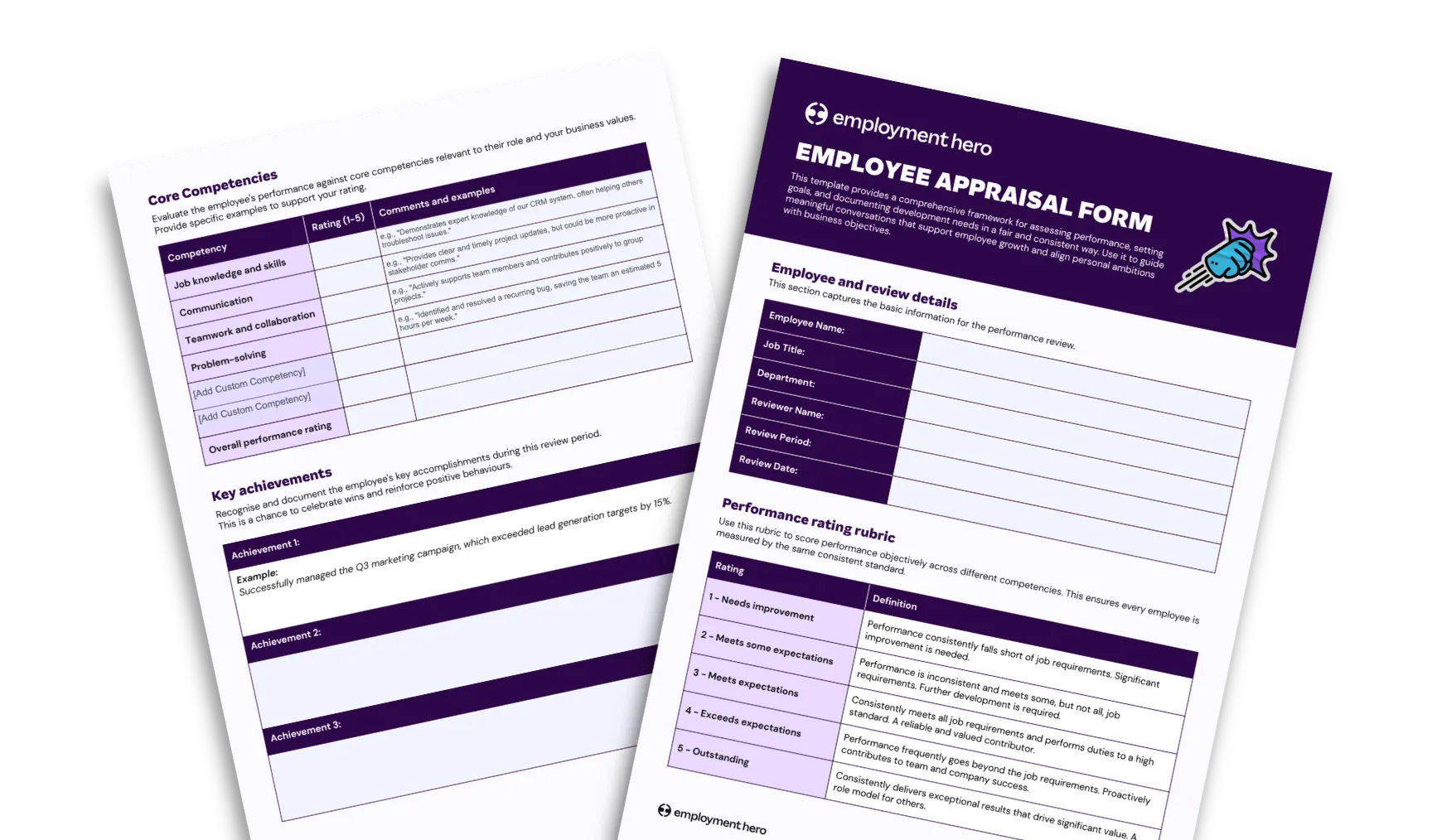 Read more: Performance appraisal form template and guide
Performance appraisal form template and guide
Download our appraisal form template to enhance employee performance reviews. Improve feedback processes and growth.
-
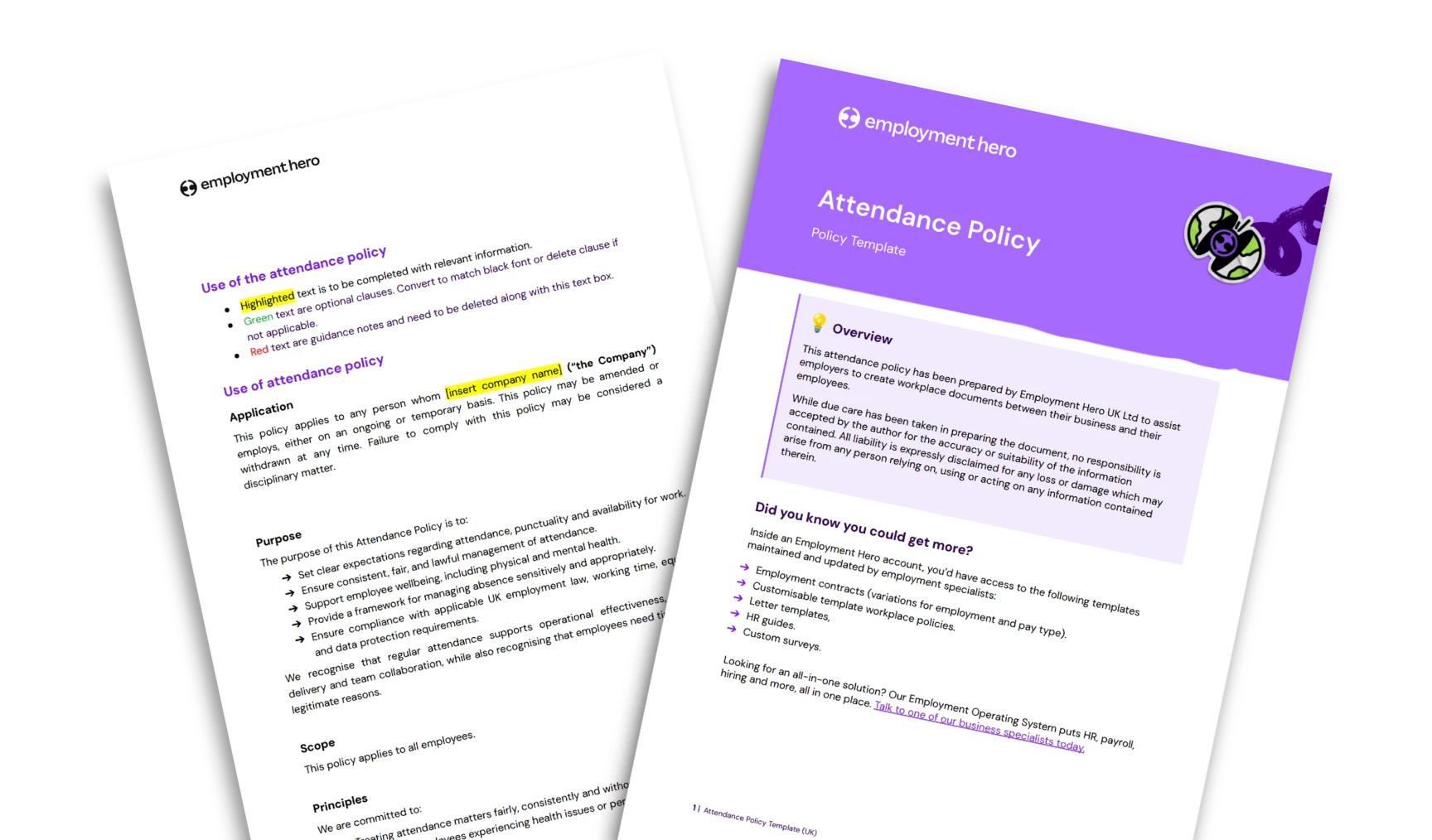 Read more: How to Build an Employee Attendance Policy in 2026
How to Build an Employee Attendance Policy in 2026
Learn how to create a fair and effective employee attendance policy in 2026. Discover strategies for managing attendance policies that…

