


















Workplace Bullying Checklist for UK Businesses
Published
Workplace Bullying Checklist for UK Businesses
Last Updated
Building a thriving business is all about championing your people and empowering them so they can do their best work. But there are a few things that can inhibit this, such as workplace bullying.
It’s a silent productivity killer and can tear through even the strongest teams. The truth is, bullying doesn’t just threaten your people’s wellbeing; it blocks innovation, destroys morale and hits your bottom line. No UK employer can afford to ignore it and no leader worth their salt would stand by and watch their people struggle.
Bullying claims aren’t just PR nightmares or legal headaches, they’re a clear indication that your organisation must take decisive and responsible action to protect its people. Handling them swiftly and fairly protects your team and your reputation, but more than anything, it’s about fostering an environment where everyone is respected and empowered to do their best work.
Not sure where to start? Our workplace bullying checklist has you covered.
Download the workplace bullying checklist.
What is workplace bullying?
There is no definition of “bullying” in employment law, but workplace bullying is generally understood to be a persistent pattern of mistreatment from others in the workplace that causes either physical or emotional harm. Unlike a one-off disagreement or a “tough boss” who has high standards, bullying is repeated, health harming and can come in the form of verbal, non-verbal, written or physical. It can result in someone feeling intimidated, degraded, humiliated or undermined.
Examples of bullying behaviour include:
- Persistent criticism or unjustified complaints.
- Public humiliation or ridicule.
- Excluding someone from meetings or communications.
- Spreading rumours or gossip.
- Excessive monitoring or micromanagement.
- Setting unrealistic deadlines designed to cause failure.
It’s important to distinguish bullying from legitimate management actions, such as:
- Addressing performance issues.
- Providing constructive feedback.
- Managing misconduct through formal processes.
Identifying the signs of bullying
Bullying is not always obvious. And as an HR professional or business leader, having a workplace bullying checklist in place to help you spot the signs is essential. Warning signs often show up and catching them early is the best way to prevent unpleasant team dynamics from escalating.
Look out for:
- Sudden drops in performance or engagement.
- Increased sickness absence or lateness.
- Withdrawal from team activities or meetings.
- Anxiety, stress or visible lack of confidence.
- Increased staff turnover in a specific team.
- Complaints about a particular individual or manager.
Managers should also watch for team-level indicators, such as:
- Poor morale.
- Lack of communication.
- Tension or cliques forming.
Spotting these signs early allows you to intervene before things escalate. But intervention isn’t just good management; it’s often a legal requirement.
What are employers’ legal responsibilities for workplace bullying in the UK?
Any comprehensive workplace bullying checklist must address your legal obligations. As an employer, you have a duty of care to protect the health, safety and wellbeing of your employees, including their mental health. So while bullying itself is not a standalone claim an employee can take to an employment tribunal, the consequences of it absolutely are.
Under the Health and Safety at Work Act 1974, you are legally required to ensure, so far as is reasonably practicable, the health, safety and welfare of your employees. Allowing bullying to go unchecked is a clear failure of that duty.
Under the Equality Act 2010, bullying linked to a protected characteristic, such as age, sex, race or disability, becomes harassment, which is unlawful.
In addition, employees may bring claims for:
- Constructive dismissal if bullying forces them into a position where they have no choice but to resign.
- Personal injury relating to stress or psychiatric harm.
Employers can also be vicariously liable for the actions of their employees if they fail to take reasonable steps to prevent bullying and harassment. Put simply, ignoring bullying is not an option. Failing to act, or handling complaints poorly, exposes your organisation to serious legal, financial and reputational risk.
Download the workplace bullying checklist.
Creating an anti-bullying policy
Your stance needs to be in black and white. A robust policy is your first line of defence. It sets the standard for acceptable behaviour and tells your team bullying will not be tolerated in your workplace.
Your policy should clearly define what bullying and harassment are, providing concrete examples. It must outline the procedure for making a complaint and assure employees that they will be protected from victimisation if they speak up.
Don’t just copy-paste a template and hide it in a drawer. Make it a living document. Ensure every new starter reads it. If you need a starting point, our Workplace Harassment and Bullying Policy Template can save you time and ensure you’re covering the essentials.
It is generally recommended to also have in place a stand-alone Sexual Harassment Policy.
But a policy is just words on a page if the culture doesn’t support it.
How to create a workplace culture that prevents bullying
The most effective way to tackle bullying is to prevent it from taking hold in the first place and that starts with culture.
A positive workplace culture creates an environment where respect is expected, communication is open and employees feel psychologically safe to speak up. In this kind of environment, bullying behaviour is far less likely to emerge and far more likely to be addressed quickly if it does.
Here’s how to build a culture where bullying can’t survive:
- Lead from the top: Leaders and managers set the tone. They should model respectful behaviour, challenge poor conduct and communicate clear expectations at all times.
- Set clear behavioural expectations: Define your organisational values and the behaviours that support them. Make these expectations part of onboarding, performance management and everyday communication.
- Encourage open communication: Ensure employees have safe, accessible ways to raise concerns. Regular check-ins and multiple reporting channels help issues surface early.
- Build psychological safety: Create an environment where employees feel safe to share ideas, raise concerns and challenge inappropriate behaviour without fear of negative consequences.
- Recognise positive behaviours: Reinforce the culture you want by recognising collaboration, respect and inclusive behaviour through reviews, recognition schemes and team communications.
- Monitor and act on feedback: Use surveys, exit interviews and regular conversations to understand how employees feel and take action on what you learn.
Training for managers and employees
You can’t expect people to follow rules they don’t understand. Training empowers your team to recognise, report and respond to bullying effectively.
Managers are your front line. They need specific training on how to handle conflict, manage performance without crossing the line into bullying and spot the early warning signs we mentioned earlier. They need the soft skills to have difficult conversations.
For the wider team, training should focus on what acceptable behaviour looks like and how to be an active bystander. If they see something, they should feel empowered to say something.
Knowledge is power. But when that knowledge leads to a complaint, you need to know exactly how to react.
How to handle a bullying complaint
When an employee plucks up the courage to say, “I’m being bullied,” your reaction sets the tone for everything that follows.
Take every complaint seriously. Never dismiss it as “just banter” or tell them to “toughen up.” Listen with empathy and without judgment. Assure them that you will handle the matter confidentially and impartially.
You need a clear process for this. Our Grievance Handling Policy outlines the steps to ensure consistency. Decide whether the issue can be resolved informally or if it requires a formal investigation.
Whatever path you choose, speed and fairness are key.
Conducting a fair investigation
If a formal route is needed, you must uncover the facts without bias. To do this, appoint an investigator who is impartial; it could be someone from HR or an external consultant if the allegations are against senior leadership. They need to interview the complainant, the alleged bully and any witnesses.
Gather evidence like emails, Slack messages, or witness statements. Keep an open mind. Remember, natural justice applies: the accused has a right to know the allegations against them and respond. For guidance on structuring this, check our Grievance and Dispute Procedure.
Once the facts are in, you have a decision to make.
Taking disciplinary action
If your investigation confirms that bullying occurred, you must act. Doing nothing is the worst possible outcome,it tells the victim you don’t care and the bully that they can get away with it.
The action should be proportionate to the offence. It might range from a verbal warning and mandatory training to a final written warning or, in cases of gross misconduct, dismissal.
Consistency is vital. You can’t fire one person for behaviour you let another person slide on. Follow your disciplinary procedures to the letter to avoid unfair dismissal claims. If you’re unsure about the appropriate measure, our HR Advisory service can guide you through the tricky legal bits.
While you’re dealing with the perpetrator, don’t forget the person who got hurt.
Supporting the victim
The impact of bullying doesn’t vanish the moment the investigation ends. The victim may be feeling vulnerable, anxious, or demotivated.
Offer practical support. This could include access to an Employee Assistance Programme (EAP) for counselling, a phased return to work if they’ve been off sick, or temporary adjustments to their role.
Check in with them regularly. Rebuilding trust takes time. Show them that they are valued and safe. Sometimes, simply knowing that the business has their back makes all the difference in their recovery.
In some cases, the relationship isn’t broken beyond repair and you might consider bringing people together.
Mediating conflict
Mediation can be a powerful tool, but it’s not a magic wand. It involves a neutral third party helping the individuals involved find a way to work together again.
However, proceed with caution. Mediation is generally voluntary. It’s suitable for personality clashes or communication breakdowns, but it is rarely appropriate for serious bullying or harassment cases where there is a significant power imbalance.
If used correctly, it can clear the air and set new ground rules for interaction. But don’t force it. Forcing a victim to sit in a room with their bully can do more harm than good.
Throughout this entire process, there is one golden rule you must follow: write everything down.
Documenting incidents and actions
In HR, if it isn’t written down, it didn’t happen. Documentation is a non-negotiable item on any workplace bullying checklist
Keep detailed records of every conversation, meeting and decision. Note dates, times, who was present and what was said. Save relevant emails and documents.
This isn’t just bureaucracy. If you end up in a tribunal, these records are your evidence that you followed due process and acted reasonably. From the initial complaint to the final outcome letter, document it all. Our HR Software makes keeping secure, digital employee records effortless.
Good documentation also helps you monitor for any after-shocks, like retaliation.
Preventing retaliation
Reporting bullying takes guts. The biggest fear for many employees is that speaking up will make their lives worse. You must ensure that never happens.
Make it explicitly clear that retaliation, treating someone poorly because they made a complaint or supported one,is a disciplinary offence in itself. This includes shunning the victim, cutting them out of meetings, or giving them bad shifts.
Monitor the situation after the case is closed. Keep an eye on the victim’s performance reviews and workload to ensure they aren’t being subtly punished.
Why go to all this effort? Because the alternative is costly.
The impact of bullying on business
Understanding the business impact should be the first item on your workplace bullying checklist for senior leadershipIgnoring bullying is expensive. We’re talking about real-world costs that hit your bottom line hard.
First, there’s the loss of talent. Good people leave toxic environments. Recruitment and training costs for replacements are skyrocketing. Then there’s absenteeism; stress and anxiety are major causes of long-term sickness.
Productivity takes a nose-dive. People can’t focus on their work when they’re walking on eggshells. Creativity dies in an atmosphere of fear. And let’s not forget the legal fees and potential compensation payouts if you get sued.
But beyond the money, it damages your brand. In the age of Glassdoor and LinkedIn, a reputation for tolerating bullying will repel top talent.
Download the workplace bullying checklist
Workplace bullying is a complex beast, but you don’t have to tame it alone. Having a structured approach protects your business and, more importantly, your people.
Don’t wait for a crisis to check your processes. We’ve compiled a comprehensive workplace bullying checklist for UK businesses to help you audit your current setup and identify gaps. This checklist covers every stage: prevention, identification, response, support and documentation.
FAQs
Although “bullying” doesn’t have a definition in employment law, workplace bullying is generally understood to mean repeated, unwanted behaviour that makes someone feel intimidated, degraded, humiliated or undermined. It can be verbal, non-verbal, written or psychological. Examples include persistent unjustified criticism, public humiliation, excluding someone from meetings, spreading rumours, excessive micromanagement, or setting unrealistic deadlines designed to cause failure. While there’s no standalone “workplace bullying” law in the UK, it becomes unlawful when it breaches your duty of care under the Health and Safety at Work Act 1974, constitutes harassment under the Equality Act 2010, or leads to constructive dismissal.
Bullying itself is not a specific offence, but the consequences of it absolutely are. Under the Health and Safety at Work Act 1974, employers must ensure the health, safety and welfare of employees—allowing bullying breaches this duty. When bullying is linked to a protected characteristic (age, sex, race, disability, religion, sexual orientation, gender reassignment), it becomes harassment under the Equality Act 2010, which is unlawful. Employees can also bring tribunal claims for constructive dismissal, personal injury relating to stress or psychiatric harm, or breach of contract. Employers face vicarious liability if they fail to take reasonable steps to prevent bullying.
Act immediately and take every complaint seriously. Acknowledge the complaint within 24 hours, thank the employee for coming forward and assure them the matter will be handled confidentially and impartially. Never dismiss it as “just banter” or tell them to “toughen up.” Assess whether immediate action is needed to separate the parties. Appoint an impartial investigator (from HR or external if needed), follow your formal grievance procedure and complete the investigation within 2-4 weeks. Document every step, keep both parties informed throughout and offer support such as Employee Assistance Programme access to the complainant.
Harassment is a specific legal term under the Equality Act 2010—it’s unwanted conduct related to a protected characteristic (age, disability, gender reassignment, race, religion, sex, sexual orientation) that violates someone’s dignity or creates an intimidating, hostile, degrading, humiliating or offensive environment. Bullying becomes unlawful harassment when it’s linked to a protected characteristic. Both require employer action, but harassment carries specific legal consequences and unlimited compensation awards at tribunal.
Yes, absolutely. A written anti-bullying policy is your first line of defence and demonstrates you’re taking reasonable steps to prevent harassment—a legal requirement since October 2024. Your policy should clearly define bullying and harassment with concrete examples, outline reporting procedures, guarantee confidentiality and protection from victimisation, explain the investigation process, state consequences (from warnings to dismissal) and detail support available to victims. Make it accessible—communicate it during onboarding, display it prominently, reference it in team meetings and review it annually. A policy hidden in a drawer you never reference is legally worthless. It is generally reccomended to also have a standalone Sexual Harassment Policy in place.
To download the checklist, we just need a few quick details.
Related Resources
-
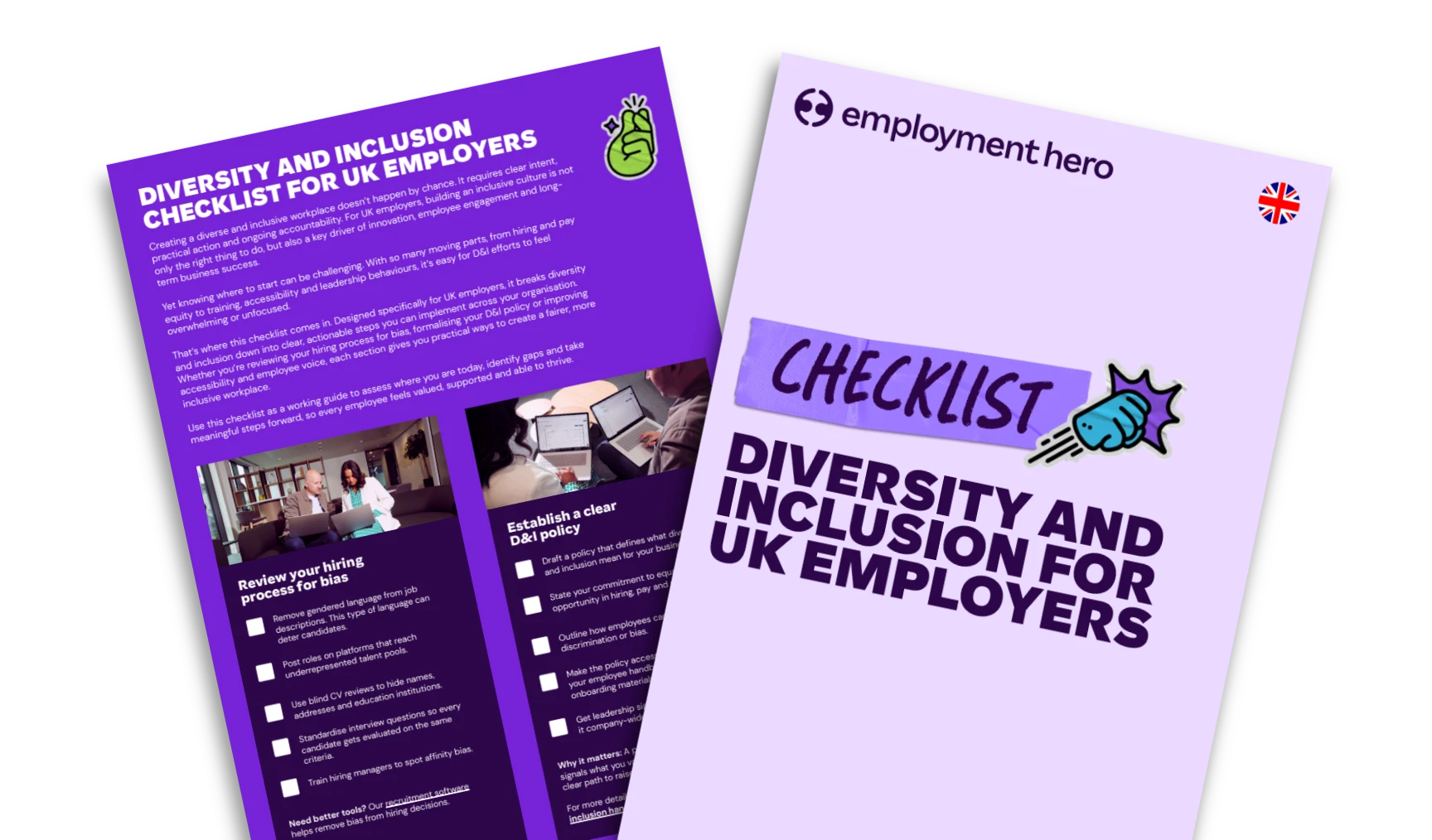 Read more: Diversity and Inclusion Checklist for UK Employers
Diversity and Inclusion Checklist for UK Employers
Create a truly inclusive environment with our diversity and inclusion checklist.
-
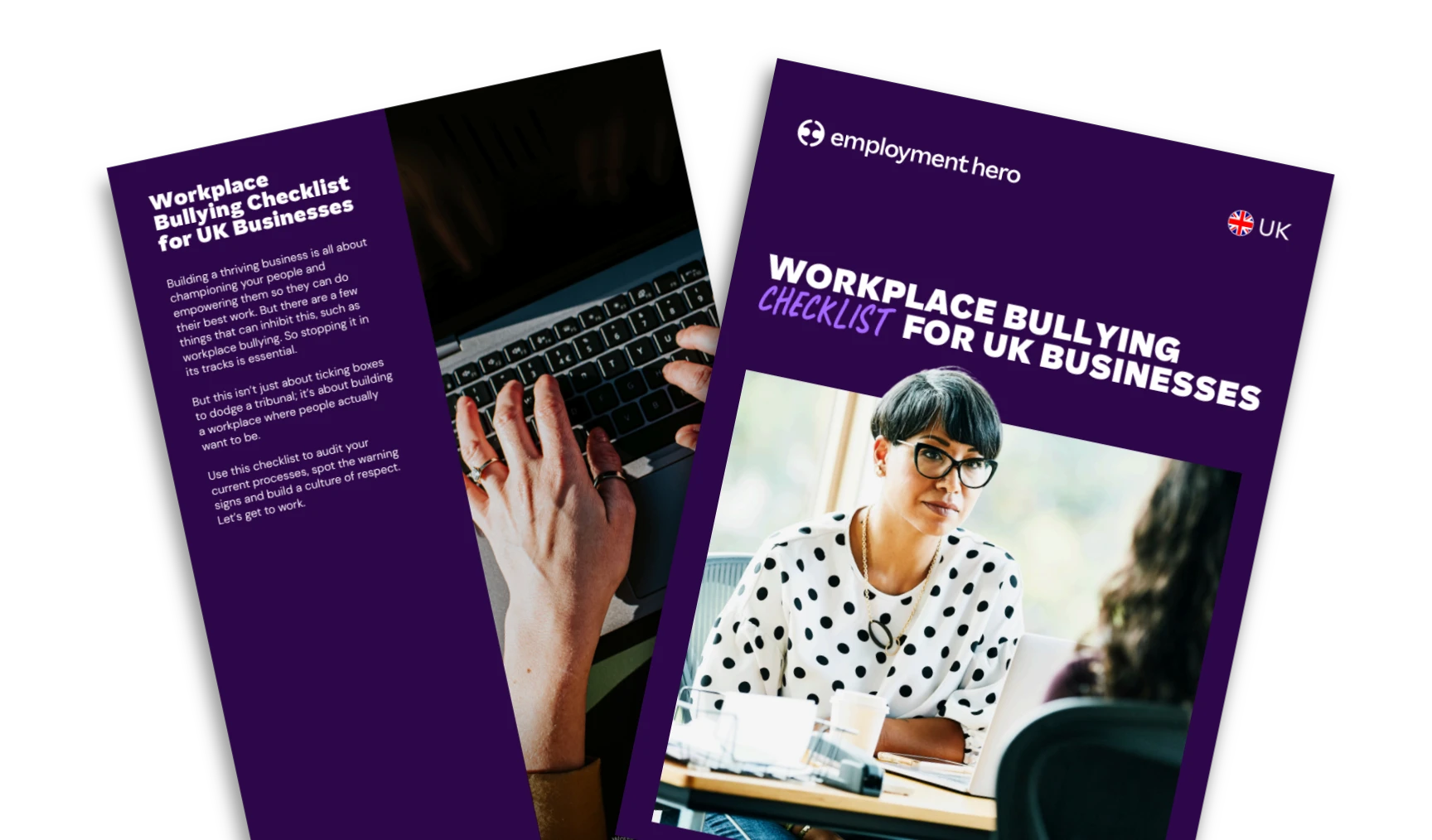 Read more: Workplace Bullying Checklist for UK Businesses
Workplace Bullying Checklist for UK Businesses
Are your employees protected from workplace bullying? Review your processes and learn how to handle arising issues with this checklist.
-
 Read more: Monthly Payroll Checklist for UK Businesses
Monthly Payroll Checklist for UK Businesses
Manage your payroll processing with our monthly checklist. Streamline your tasks and improve efficiency.
