














Serious misconduct in New Zealand: What employers must know
Published
Serious misconduct in New Zealand: What employers must know
Published
Dealing with serious misconduct is one of the toughest challenges an employer can face. It’s not just about addressing bad behaviour. It’s about protecting your business, your team and your reputation. Getting the process wrong can have significant financial and legal consequences.
Understanding your obligations under New Zealand law is critical. Our guide breaks down what serious misconduct is, how to manage it correctly and how to follow a fair and reasonable process every step of the way.
Download the guide by filling in the form on the right.
What is serious misconduct?
Serious misconduct is an act so severe that it destroys the trust and confidence essential to the employment relationship. Unlike ordinary misconduct which might include lateness or minor breaches of policy, serious misconduct strikes at the heart of an employee’s obligations.
The Employment Relations Authority (ERA) and courts often apply the ‘trust and confidence‘ test. They ask whether the employee’s actions have fundamentally broken the employer’s trust in them to do their job. If the answer is yes, it’s likely serious misconduct.
Common examples of serious misconduct
While every situation is different some behaviours are consistently viewed as serious misconduct. These include:
- Theft or fraud
- Assault or violence in the workplace
- Actions that have brought the business into disrepute
- A serious breach of health and safety rules that endangers others
- Being impaired by alcohol or illegal drugs at work
- Deliberately damaging company property
- Serious dishonesty such as falsifying records
- A major and deliberate breach of company policy
The legal framework in New Zealand
The Employment Relations Act 2000 governs how employers must handle these situations. A central part of this law is the obligation of good faith. This means you must be honest, open and communicative with your employee throughout the entire process. You cannot mislead them or withhold relevant information.
If serious misconduct is proven after a fair investigation, it can justify summary dismissal. This means you can dismiss the employee without notice. However the ERA may only view it as lawful if you have followed a robust and procedurally fair process first.
Following a fair process is essential
Even when an employee’s actions seem indefensible, you must follow a fair process. Failure to do so can easily lead to a successful personal grievance claim for unjustified dismissal. Your process must include these key steps.
Notification of concerns
You should inform the employee of the specific allegations in writing. This letter should detail the concerns, provide all relevant supporting information and state that dismissal is a possible outcome. It must also advise the employee of their right to seek representation and bring a support person to any meeting.
Investigation and evidence gathering
Before making any decisions you need to conduct a thorough and impartial investigation. This involves gathering evidence like security footage, emails or documents and interviewing any witnesses. The purpose is to establish the facts, not to build a case against the employee.
Meeting with the employee
You must invite the employee to a formal meeting to discuss the allegations. In this meeting you present the information you have gathered and give the employee a genuine opportunity to respond and share their side of the story. Listen carefully and take notes without making a final decision.
Decision and communication
After the meeting you must take time to genuinely consider the employee’s explanation alongside your investigation. Only then should you make a decision. Your decision and the reasons for it must be communicated to the employee in writing. If you decide on dismissal, the letter must clearly state the reasons why.
Risks of getting it wrong
Mishandling a serious misconduct case can expose your business to significant risk, including:
- Personal grievance claims: An employee can claim they were unjustifiably dismissed if you failed to follow a fair process.
- Financial penalties: The ERA can award remedies, including lost wages, compensation for humiliation and distress and legal costs.
- Reinstatement: In some cases, the ERA can order you to give the employee their job back.
- Reputational damage: Public legal disputes can harm your brand and make it harder to attract talent.
Best practice tips for employers
Dealing with serious misconduct is a huge challenge for an employer. Here are a few suggestions for how you can prevent misconduct from happening, as well as how best to respond if it does:
Maintain clear policies
Have a comprehensive employee handbook with clear policies on conduct expectations and disciplinary processes.
Act promptly
Address allegations of serious misconduct as soon as they arise. Delays can complicate the investigation and you could lose access to critical information..
Document everything
Keep detailed written records of every step, from the initial complaint to the final decision. This will demonstrate whether you’ve followed a fair process.
Ensure consistency
Make sure everyone is following the same rulebook. Apply your policies and procedures consistently across all employees to avoid claims of unfair treatment.
Seek advice
This situation can be a legal minefield. Here we’ve provided information based on guidance from Employment New Zealand. However, we’d always recommend getting independent advice from an HR specialist or employment lawyer when serious misconduct occurs.
Employment Hero has a team of employment law experts ready to support you through tough situations. Find out how we can help you here.
How Employment Hero can support you
Navigating serious misconduct is complex but you don’t have to do it alone. Employment Hero simplifies compliance and people management.
Our platform helps you manage policies, store records securely and create workflows for disciplinary processes. With centralised document management and integrated HR tools, it’s much easier to follow a fair and consistent process every time.
For more information on serious misconduct and your responsibilities as an employer, download our guide by filling in the form on the right.
The information in this article is current as at 30 November 2025, and has been prepared by Employment Hero Pty Ltd (ABN 11 160 047 709) and its related bodies corporate (Employment Hero). The views expressed in this article are general information only, are provided in good faith to assist employers and their employees, and should not be relied on as professional advice. Some information is based on data supplied by third parties. While such data is believed to be accurate, it has not been independently verified and no warranties are given that it is complete, accurate, up to date or fit for the purpose for which it is required. Employment Hero does not accept responsibility for any inaccuracy in such data and is not liable for any loss or damages arising directly or indirectly as a result of reliance on, use of or inability to use any information provided in this article. You should undertake your own research and seek professional advice before making any decisions or relying on the information in this article.
FAQs about serious misconduct
No. Even if the misconduct is severe, you must follow a fair and reasonable process before making any decision to dismiss. Summary dismissal can only occur after a proper investigation and meeting with the employee.
All types of responses are considered feedback, even if the employee says they don’t want to respond. Just be sure to include that in your meeting minutes or your proposed outcome letter.
Not always. Dismissal should be a last resort. When making your decision you must consider all factors, including the employee’s explanation, their length of service and their work history. A fair and reasonable employer considers whether a lesser disciplinary action like a final written warning would be more appropriate.
Misconduct is unacceptable behaviour that breaches workplace rules like lateness or failing to follow instructions. Serious misconduct is far more severe behaviour that fundamentally destroys the employment relationship, such as theft or assault. The key difference is the impact on the trust and confidence between you and the employee.
Register for the guide
Related Resources
-
 Read more: NZ Employment Law 2026 Forecast
NZ Employment Law 2026 Forecast
Get a clear summary of 2025 employment law changes and what’s coming in 2026, with expert guidance on what HR…
-
 Read more: Making an impact in your first 90 days as a new HR manager
Making an impact in your first 90 days as a new HR manager
With the right preparation, you can make a great impact in your first 90 days as an HR manager.
-
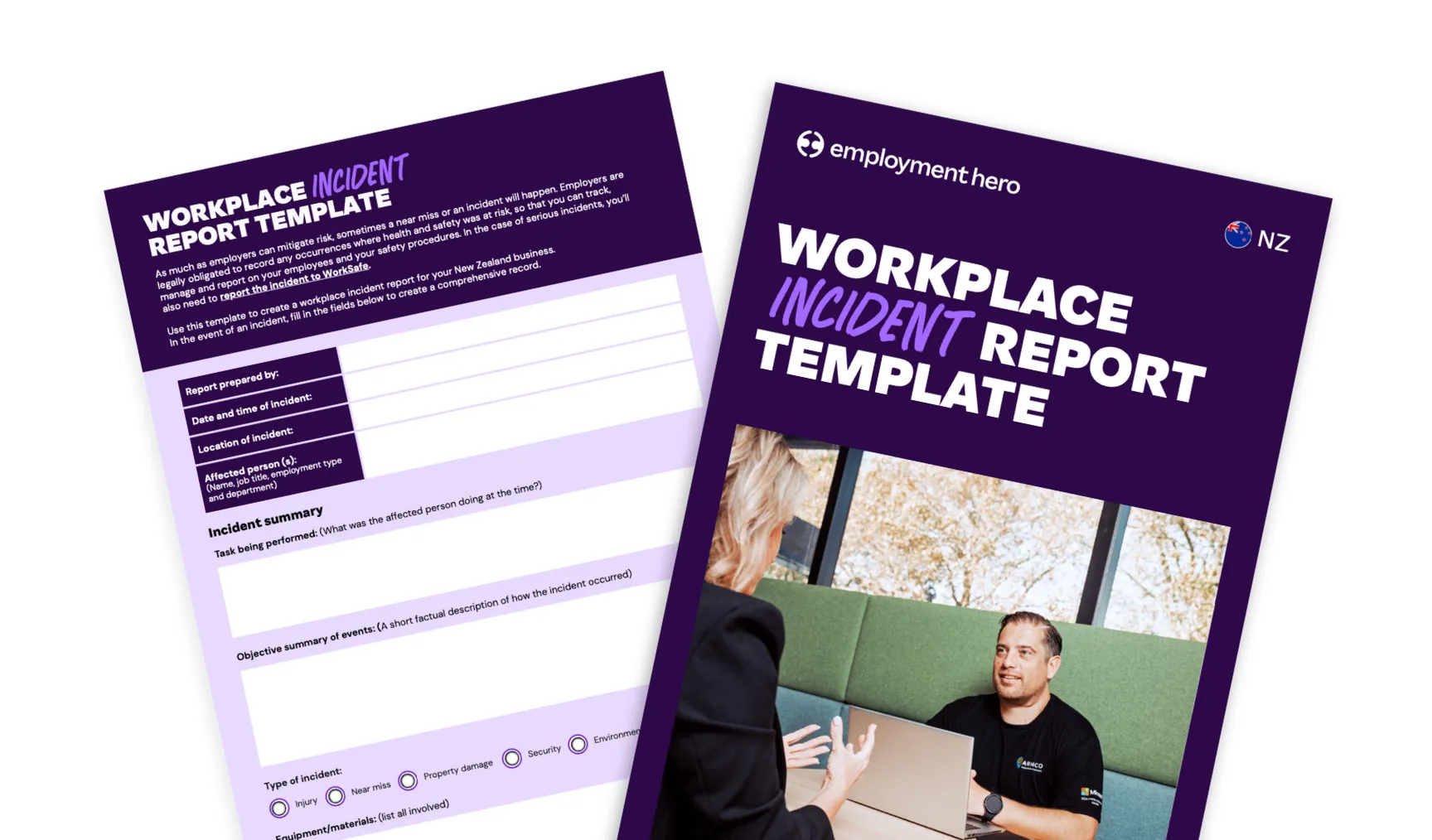 Read more: Incident report template NZ: free download for businesses
Incident report template NZ: free download for businesses
Download our free NZ incident report template. Record and report workplace incidents correctly under HSWA and ACC requirements.

