

















Performance management process in NZ: A practical guide for employers
Published
Performance management process in NZ: A practical guide for employers
Last Updated
Managing employee performance can feel like a complex task but it doesn’t have to be. A structured performance management process helps you guide your team towards success, support their growth and protect your business. It’s about creating a work environment where everyone understands what’s expected and has the opportunity to thrive.
Our guide gives you a practical framework for managing performance issues in both informal and formal ways. It’s a short scannable resource designed to provide actionable steps you can implement right away.
What is performance management?
Performance management is an ongoing process of communication between an employer and an employee. It’s a supportive cycle that involves setting clear expectations, monitoring progress and providing regular feedback. The goal is to help employees meet their objectives and develop professionally.
It’s important to distinguish performance management from disciplinary action. Performance management is proactive and developmental focused on improvement and growth. Disciplinary processes are reactive and used to address misconduct. While poor performance can sometimes lead to formal warnings, the initial focus should always be on support and guidance.
Why a clear performance management process matters
A well-defined process benefits everyone. For employers, it drives better business outcomes by aligning individual performance with company goals. It increases productivity and engagement and it also provides a clear framework for addressing performance issues fairly.
For employees, a clear process provides clarity on what’s expected of them. It gives them regular opportunities to discuss their performance, receive constructive feedback and get the support they need to succeed. This fosters a sense of fairness and transparency which can significantly boost morale and job satisfaction. Following a fair process is also a fundamental requirement under New Zealand law.
Difference between performance management vs. performance improvement plans
While they sound similar, these two tools serve different functions.
Performance management is the continuous day-to-day process of setting goals, giving feedback and supporting employees. It applies to everyone on your team as part of normal operations.
A performance improvement plan (PIP) is a more formal tool used when an employee’s performance is not meeting expectations despite regular feedback and support. A PIP outlines specific areas for improvement, sets clear goals and provides a timeline for achieving them. It’s a structured intervention designed to help a struggling employee get back on track.
Key steps in the performance management process
A successful performance management cycle is built on a foundation of clear communication and documentation. Here are the key steps to follow.
Set clear expectations and goals
It all starts with clarity. Employees need to know exactly what is expected of them in their role. This includes their specific responsibilities, performance standards and how their work contributes to the wider business objectives. Setting clear key performance indicators (KPIs) at the start makes it easier to measure success and provide targeted feedback.
Monitor performance and give regular feedback
Performance management shouldn’t be saved for an annual review. It’s an ongoing conversation. Regularly check in with your team members both formally and informally. Acknowledge good work and offer constructive feedback as soon as you spot an opportunity for improvement. This continuous communication helps keep everyone aligned and prevents small issues from becoming larger problems.
Identify issues early and document concerns
When you notice an employee is not meeting expectations, address it promptly and privately. Early intervention is often all that’s needed. It’s vital to document these conversations including the date what was discussed and any agreed actions. These records are crucial for demonstrating you have followed a fair process if the issues persist.
Create a performance management plan
If informal feedback isn’t leading to improvement, it may be time for a more structured approach. A performance management plan outlines the specific performance gap, details the expected standards and sets a reasonable timeframe for improvement. It should also specify the support you will provide such as training or coaching.
Review progress and next steps
At the end of the plan’s timeframe, meet with the employee to review their progress. If they have successfully met the objectives you can return to your regular performance management cycle. If performance has not improved, you will need to consider the next steps. This could involve extending the plan providing more support or beginning a formal disciplinary process for poor performance.
Legal and compliance considerations in New Zealand
Navigating performance management correctly is crucial for staying on the right side of New Zealand employment law. According to Employment New Zealand, employers have specific obligations to meet.
Fair process and good faith obligations
The principle of good faith is central to New Zealand employment relations. This means you must be open, honest and responsive when dealing with employees. For performance management it requires you to follow a fair process. This includes clearly communicating your concerns, giving the employee a reasonable opportunity to improve and genuinely considering their feedback before making any decisions that could affect their employment.
Documentation and privacy
Accurate and objective record-keeping is critical in a potential dispute. Document every step of the process, from setting goals to review meetings. These records must be stored securely and handled in accordance with the Privacy Act 2020. Employees have the right to access information held about them so ensure your notes are professional and factual.
Best practices for effective performance management
To get the most out of your performance management process, here are a few practical tips.
- Encourage regular informal feedback. Don’t wait for scheduled meetings – make feedback a normal part of your daily interactions.
- Align goals with business objectives. Help employees see how their individual contributions directly impact the company’s success.
- Involve employees in solutions and work together to find solutions for performance challenges. This collaboration fosters ownership and commitment.
- Use tools and templates to standardise the process. Using consistent templates for plans and reviews ensures fairness and efficiency across the business.
Take the next step in performance management
A strong performance management process is a powerful tool for any New Zealand employer. It helps lift performance, drives engagement and helps you meet your legal obligations. By creating a supportive and transparent framework, you empower your team to do their best work and help your business grow.
Download our free guide to get a deeper understanding of the performance management process. Or explore how Employment Hero’s performance management software can streamline all those essential tasks in one secure space.
The information in this article is current as at 30 December 2025, and has been prepared by Employment Hero Pty Ltd (ABN 11 160 047 709) and its related bodies corporate (Employment Hero). The views expressed in this article are general information only, are provided in good faith to assist employers and their employees, and should not be relied on as professional advice. Some information is based on data supplied by third parties. While such data is believed to be accurate, it has not been independently verified and no warranties are given that it is complete, accurate, up to date or fit for the purpose for which it is required. Employment Hero does not accept responsibility for any inaccuracy in such data and is not liable for any loss or damages arising directly or indirectly as a result of reliance on, use of or inability to use any information provided in this article. You should undertake your own research and seek professional advice before making any decisions or relying on the information in this article.
Register for the guide
Related Resources
-
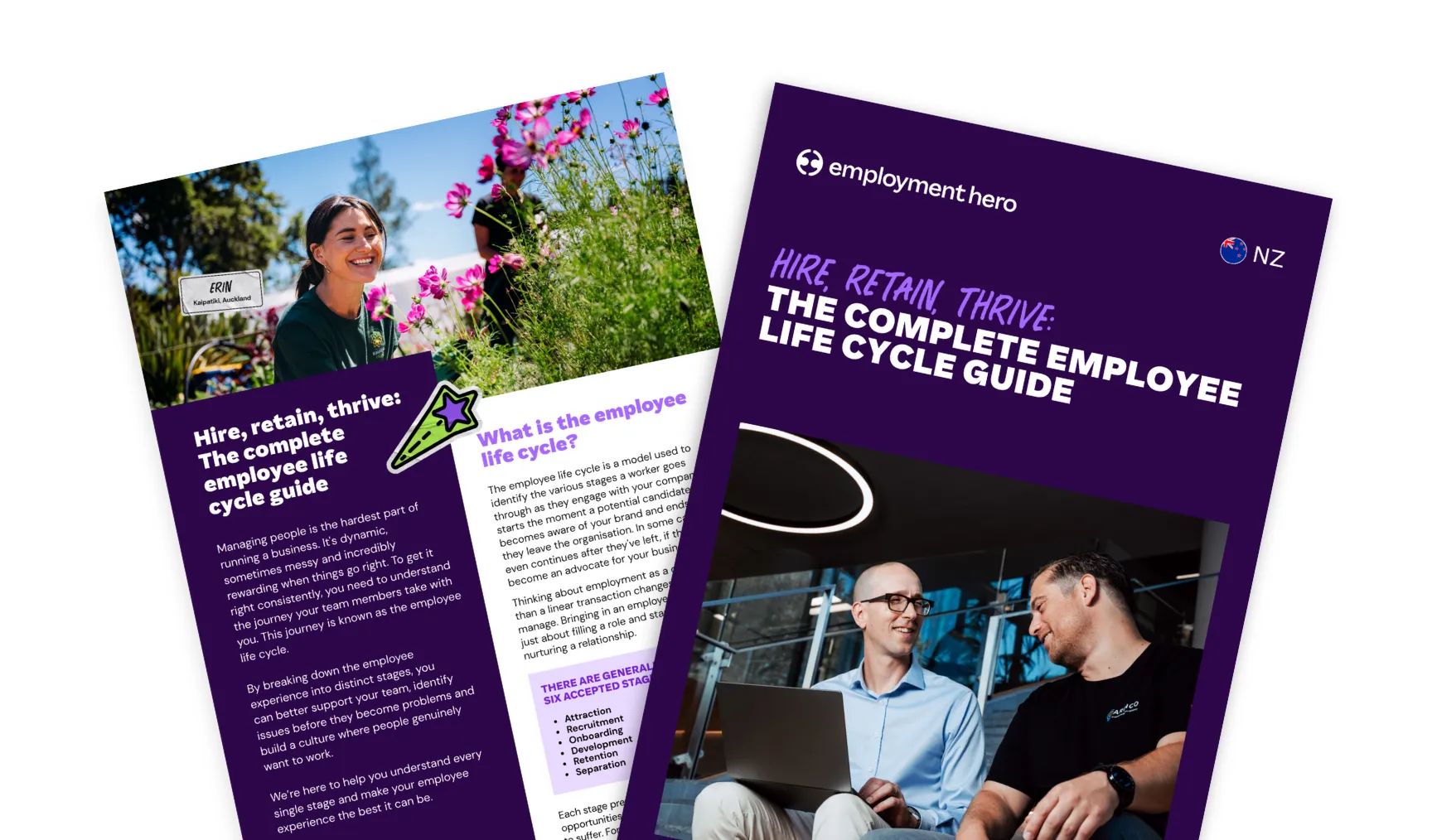 Read more: Hire, retain, thrive: The complete employee life cycle guide
Hire, retain, thrive: The complete employee life cycle guide
Learn the full scope of the employee life cycle and how it impacts recruitment, onboarding and retention.
-
 Read more: The Invisible Duty: Navigating NZ’s Psychosocial Safety Landscape
The Invisible Duty: Navigating NZ’s Psychosocial Safety Landscape
Join Employment Hero’s Employment Counsel, Sanam Ahmadzadeh Salmani, for a practical webinar on NZ health and safety duties.
-
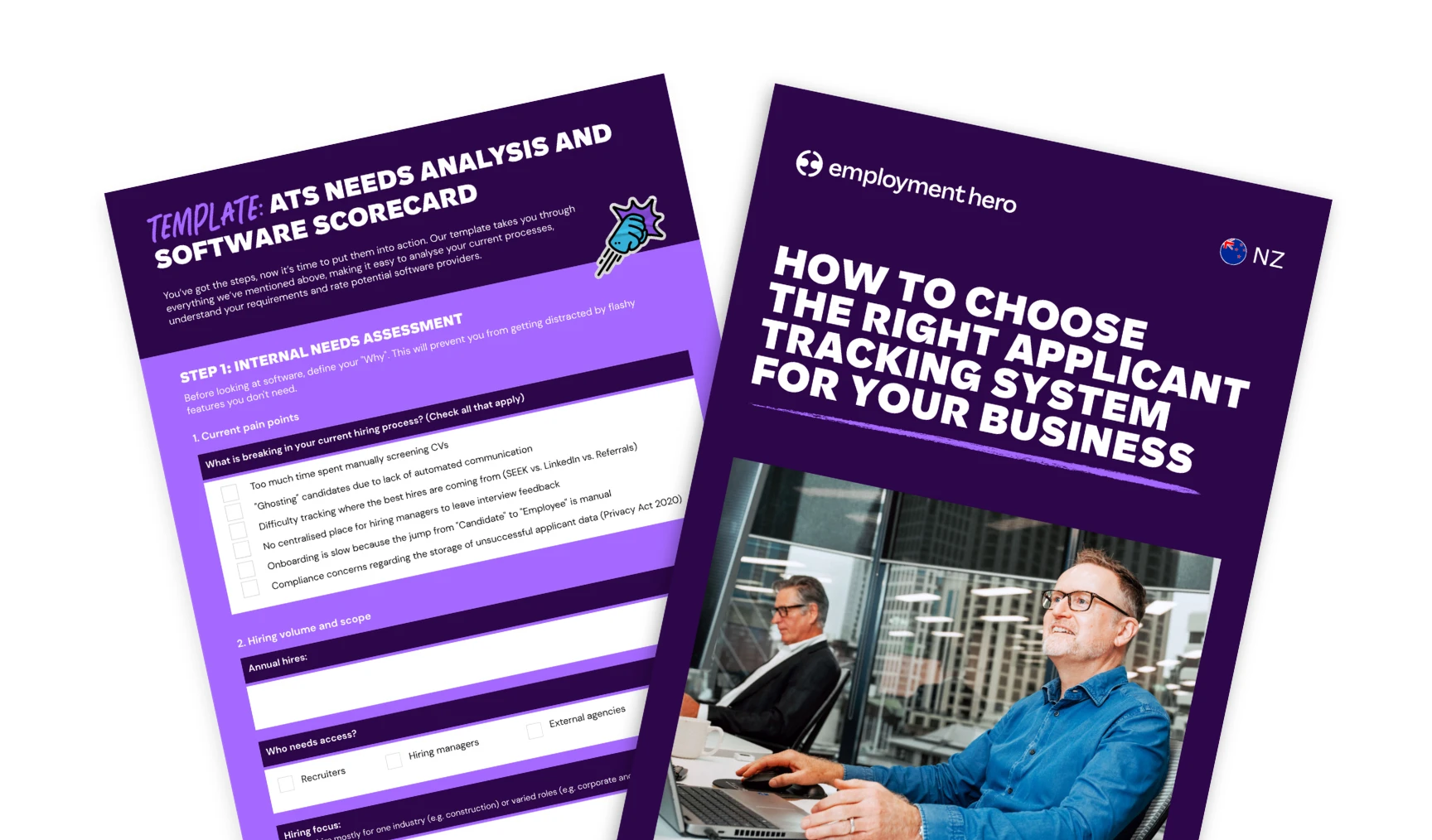 Read more: How to choose the right ATS for your business
How to choose the right ATS for your business
Learn how to choose the right applicant tracking system. Explore features, vendor questions, red flags, and comparison tips in this…

