

















Incident report template NZ: free download for businesses
Published
Incident report template NZ: free download for businesses
Accidents and unexpected events can happen in any workplace, no matter how prepared you are. Having a reliable incident report template ensures you can document these events properly, meet legal requirements and take steps to prevent future issues. A clear, structured approach to incident reporting is essential for protecting your team and your business.
What’s included in the incident report template
We’ve created a free, editable incident report template designed for New Zealand businesses. It’s designed to help you manage workplace incidents correctly.
This template includes fields for:
- Incident details (time, date, location)
- People involved
- A factual description of the event
- Immediate actions taken
- Injuries, damage or hazards
- Follow-up and preventative actions
Download the template by filling in the form on the right.
When to use an incident report form
An incident report form is not just for serious accidents. It is a critical tool for documenting any event that happens at work that is outside of normal operations. This creates a formal record for internal review, investigation or reporting to external bodies like WorkSafe or ACC.
Injuries, accidents and near misses
According to the Health and Safety at Work Act 2015, you should record every workplace incident, regardless of severity. This includes serious harm events, minor injuries and near misses where no one was hurt but an accident could have occurred. Documenting near misses helps you identify and fix problems before they cause harm.
Health and safety risks or hazards
If a team member identifies a potential hazard or an unsafe condition, it should be formally reported. This could be anything from a faulty piece of machinery to a slippery floor. Using an incident report form ensures the risk is documented and can be properly assessed and controlled.
Behavioural or workplace incidents
The template can also be used for incidents related to employee conduct. This includes situations like bullying, harassment, violence or other misconduct. A formal record is essential for any resulting disciplinary or internal investigation processes.
Why accurate incident reporting matters
Consistent and accurate reporting strengthens your business, protects your people and improves your company culture.
Compliance and legal protection
Detailed incident records are your proof of diligence. They show you are meeting your obligations under New Zealand law. Should WorkSafe investigate or audit your business, these reports help demonstrate that you take health and safety seriously and follow a proper process.
Workplace safety and culture
When you record and act on incidents, you send a clear message to your team that their safety is a priority. This builds trust and encourages employees to be more proactive in reporting potential issues, creating a stronger safety culture for everyone.
Preventing future incidents
Incident reports provide valuable data. By analysing them over time, you can spot trends, identify recurring issues and understand the root causes of accidents. This insight allows you to implement effective preventative measures, making your workplace safer.
Legal requirements for incident reporting in NZ
As an employer in New Zealand, you have specific legal duties around managing and reporting workplace incidents.
Health and Safety at Work Act 2015 (HSWA)
Under the HSWA, you must ensure the health and safety of your workers. This includes having processes to manage incidents. For certain serious events, known as notifiable events, you have a legal duty to report them to WorkSafe NZ as soon as possible. You must also keep a record of all notifiable events for at least five years.
ACC reporting obligations
If an employee is injured at work, you may need to report it to ACC so they can get support. This is a separate process from notifying WorkSafe. Your internal incident report provides the key details needed to complete the ACC forms correctly.
Record-keeping and timelines
You must notify WorkSafe immediately after becoming aware of a notifiable event. This includes fatalities, notifiable injuries or illnesses, or a notifiable incident. Your internal incident report should be completed as soon as is practical after the event to ensure details are fresh and accurate.
What to include in an incident report
A good incident report is clear, factual and complete. It should capture all the necessary information for a thorough investigation.
Basic incident details
Record the essentials first. This includes the date, time and specific location of the incident. List the names of all people involved, including those injured and any witnesses.
Description of the incident
Write an objective summary of what happened. Stick to the facts and avoid personal opinions or blame. Describe the sequence of events as they occurred in a clear, chronological order.
Injuries, hazards or damage identified
Detail any injuries sustained, no matter how minor. If property or equipment was damaged, describe the extent of it. Note any hazards that were present or contributed to the incident.
Immediate actions taken
Document the immediate response. What was done right after the incident occurred? This could include providing first aid, calling emergency services or taking steps to make the area safe.
Follow-up actions and preventative measures
Finally, record what will happen next. This section outlines the plan for investigating the incident and the steps you will take to prevent it from happening again.
How to fill out and use the template
Using a template each time is a great way to ensure you have consistency across your incident reporting. Follow this simple process to ensure your incident reporting is effective and all relevant information is captured.
Step 1 — Record the incident promptly
The form should be filled out as soon as possible after the incident occurs while memories are still clear. The person completing it should be a manager, a health and safety representative or someone directly involved.
Step 2 — Involve the right people
To get a full picture, gather information from everyone involved. This includes the person who was injured or affected, any witnesses and the relevant manager or supervisor. Their input ensures the report is comprehensive and accurate.
Step 3 — Store and share securely
Incident reports contain sensitive personal information and must be stored confidentially. Keep them in a secure location, with access limited to relevant personnel like HR or senior management. Share them with WorkSafe or ACC only when legally required.
Step 4 — Review and take preventative action
The process isn’t over once the form is filed. Use the findings from the report to make real changes. Review what happened, identify the root cause and implement corrective actions to improve workplace safety.
Technology can also streamline a lot of these steps. Employment Hero’s health and safety features make it easy to digitally record any incidents and notify WorkSafe. Find out more about our health and safety features here.
Download the free incident report template for NZ businesses
Streamline your health and safety processes with a comprehensive, easy-to-use template. Ensure you meet your legal obligations and build a safer workplace for your team.
Download your free copy now by filling in the form on the right.
The information in this article is current as at 30 November 2025, and has been prepared by Employment Hero Pty Ltd (ABN 11 160 047 709) and its related bodies corporate (Employment Hero). The views expressed in this article are general information only, are provided in good faith to assist employers and their employees, and should not be relied on as professional advice. Some information is based on data supplied by third parties. While such data is believed to be accurate, it has not been independently verified and no warranties are given that it is complete, accurate, up to date or fit for the purpose for which it is required. Employment Hero does not accept responsibility for any inaccuracy in such data and is not liable for any loss or damages arising directly or indirectly as a result of reliance on, use of or inability to use any information provided in this article. You should undertake your own research and seek professional advice before making any decisions or relying on the information in this article.
Register for the template
Related Resources
-
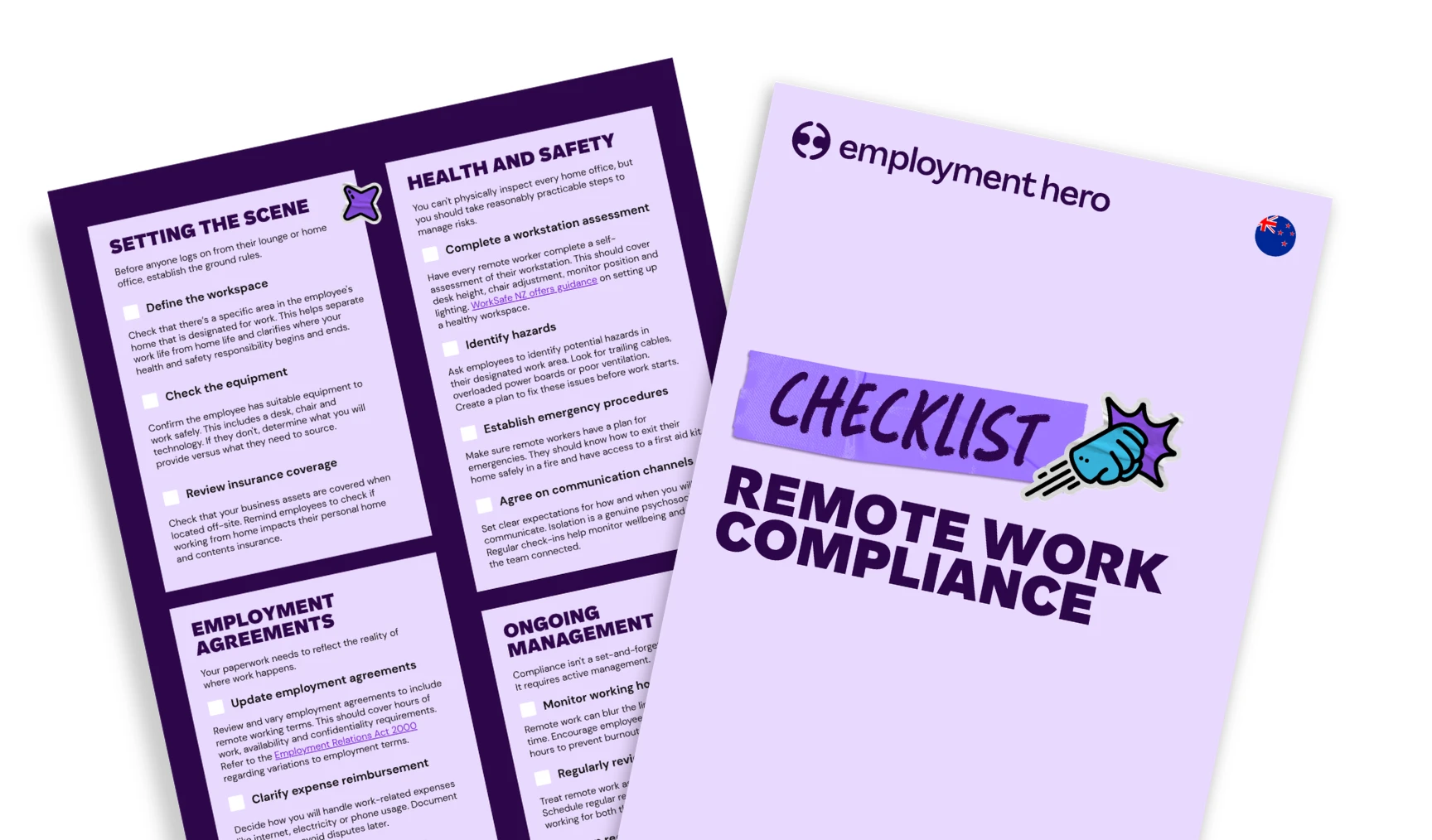 Read more: Remote work compliance: Checklist & best practices
Remote work compliance: Checklist & best practices
Support your team with our NZ remote work compliance checklist. Understand legal obligations and create a safe, productive workplace.
-
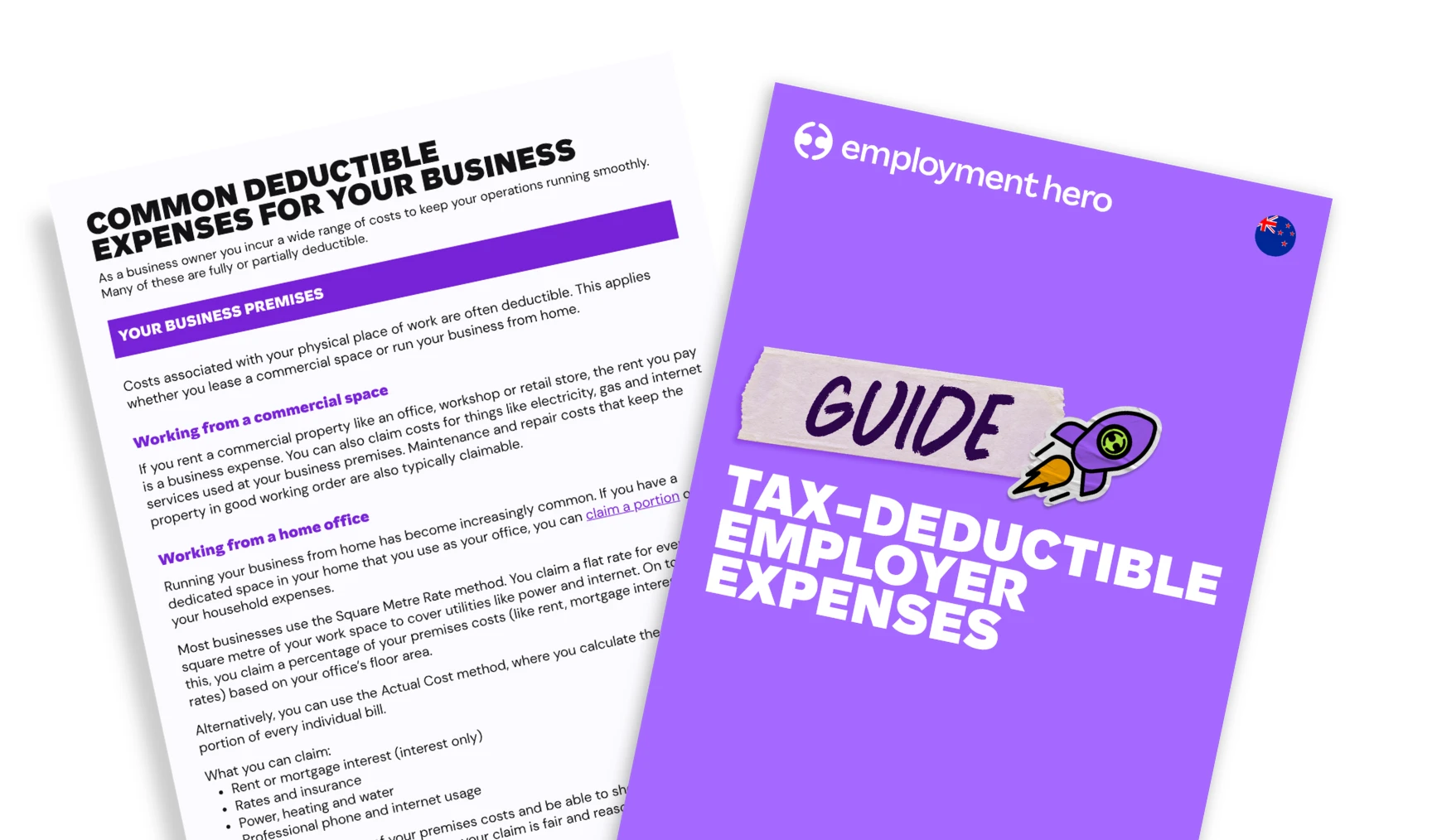 Read more: Employer’s guide to tax-deductible expenses
Employer’s guide to tax-deductible expenses
Tax deductions may include expenses like office rent, business insurance, equipment and even business travel.
-
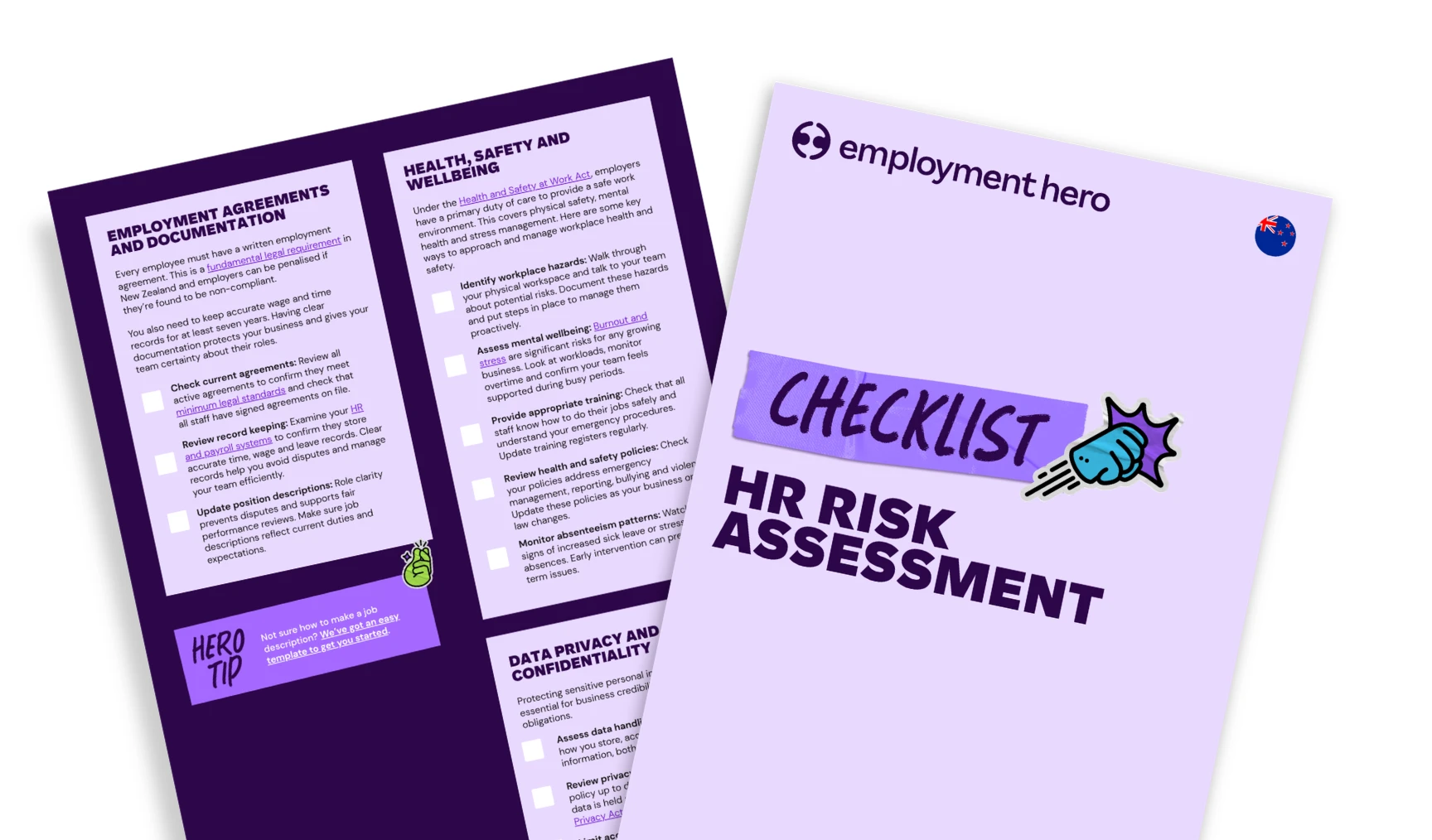 Read more: Your HR risk assessment checklist
Your HR risk assessment checklist
Use our straightforward checklist to identify and manage potential issues, so you can focus on growing your business.
