 Australia
  United Kingdom
  Singapore
  Malaysia
  Canada (Français)
 New Zealand



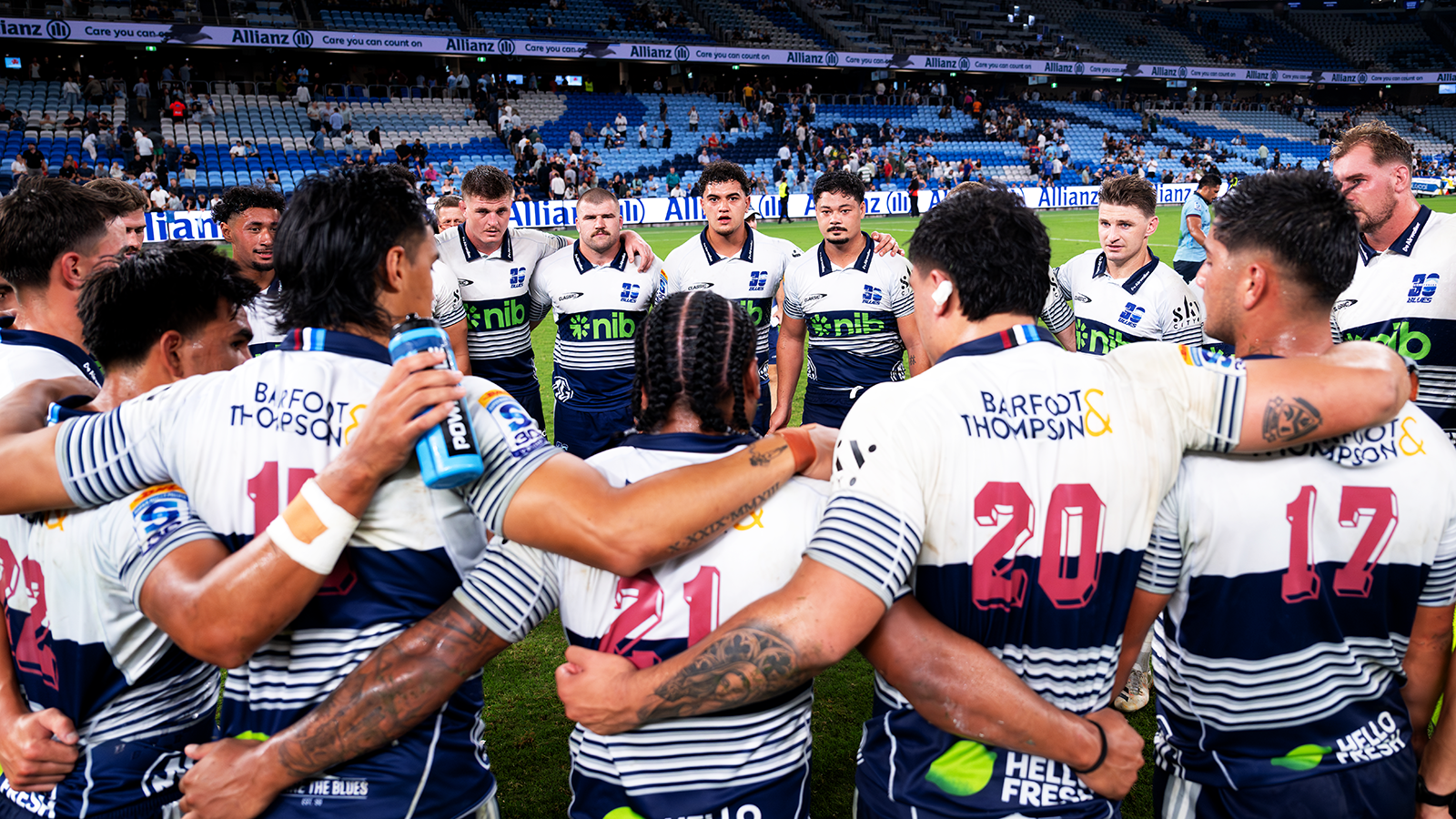
They operate on vastly different playing fields but powerful parallels can be drawn between small businesses and elite sporting franchises: both involve small teams, limited budgets and high stakes — and both are intent on winning.
They also share the goal of high performance, and the visibility that’s unavoidable in a smaller workforce. If someone drops the ball, there’s nowhere to hide.
As CEO of the Blues, Karl Budge sees lessons from the worlds of sport and business as interchangeable. Whether managing a rugby team or an SME, he believes the same principles produce success: a focus on cohesion over superstars, and strategic development of talent inside and outside the office.
“Performance is systematic,” Budge says in a recent webinar addressing small and medium business owners. “I don’t think it can be reactive. I think it is something that you have to create and be really intentional about.” By applying tactics used by professional sportspeople to their own teams, smaller businesses can hold their own against larger and better-resourced opponents.
A Few Superstars Are No Match For A Cohesive Team
While fans love a star player, Budge says no manager wants a team full of them. Instead of stocking their roster with individual superstars, the Blues have concluded a united group of talented players produces a greater chance of success.
“When you’ve got that right balance, it doesn’t always need to be the superstar player. That cohesion throughout the unit is where we’ve seen the biggest gains,” he explains. “When we have greater levels of cohesion around the team, we get greater performance outcomes.”
Cohesion is more than a buzzword for the Blues. It’s a concept to which they are so committed, they have developed a way to track it. “There’s quite a few different inputs, but it basically spits out a score,” Budge explains. “And what we’ve been able to analyse over the last three years is when we’ve had a higher cohesion score, we’ve seen a direct outcome on the amount of points scored positively or, in the negative sense, when we’ve let in more points. Cohesion has become vital for us.”
Several factors influence the Blues’ cohesion metric: how long team members have played together, the level of trust and understanding between players, the impact of new or disrupted combinations of players, and the coaching philosophies to which they have been exposed. Budge observes that businesses could benefit from measuring cohesion among employees in a similar way, particularly during the hiring phase.
“It changes how quickly you can come up to speed,” he argues. “The recruitment or retention of an individual player, one that’s going to add to the cohesion, you’re able to accelerate their performance and their ability to contribute so much quicker than someone that has got a negative cohesion score, how much more time you’re going to have to invest.”
Staff Need Safety Before They’ll Go Above And Beyond
While team unity is central to the Blues’ strategy, personalised professional development is also crucial. “We really do break it down to the individual,” Budge explains. “So, every player from under-17s through to Patrick Tuipulotu at age 33 has an individual development plan tracked and monitored throughout the season. We have up to five analysts looking over every game for areas of growth and opportunity.”
But the goal is not simply to squeeze every ounce of performance out of each player, Budge says. Rather, it’s a two-way street, where the club endeavours to establish psychological safety for every team member, so that they are motivated to give their all. He uses percentages to quantify effort. “If rugby teams operated to 90 per cent, we’re probably going to lose more games than we’ll win,” he says. “That sweet spot is in that sort of 95 to 105 per cent.”
105 per cent is only possible, Budge says, because players have full licence to make mistakes. “You’ve got to accept the mistakes that come with playing right on that edge,” he insists. “If they’re not able to express themselves, be themselves and feel confident, you’re not going to get that. It falls apart pretty quickly.”
The safety net extends to responsibility. Budge says just as players are empowered to use judgment on the field, business leaders should let trusted employees take the ball and run with it. Some will feel more comfortable than others, but growth comes from discomfort, and efficiency follows when leaders are no longer the bottleneck for all decisions.
“We’re not wanting Beauden Barrett to have to make a decision by committee,” he says by way of analogy. “We back that guy to utilise his experience, to utilise his preparation, his research, his homework, to be able to execute in that moment and know when to push the extremities of performance. I think that’s something from a business perspective we can really encourage, too.”
Overall, Budge believes conversations about performance should come as naturally as a chat about the weather, and should be ongoing rather than confined to an annual review. “It should just be normal, right? It should be that we’re able to comment on progress and what’s working or not working. If we can have that honest, real conversation at all times, then you’re going to create a pretty high-performing environment.”
When conversations don’t go well, he says businesses should adopt the marriage adage of never going to bed angry. “I reckon there’s something similar in a corporate environment. Never leave the office angry. If you do that and create a culture of it, you start to have a pretty powerful environment to drive growth,” he says.
Make The Most Of Onboarding To Get Employees On Side
When it comes to recruiting, the Blues have a pipeline small businesses could only dream of. An accelerator program means by the time they’re ready to make their professional debut, players have been exposed to the club’s values and coaching philosophy for years in what is essentially the ultimate onboarding system.
Perhaps the most important characteristic monitored for during this period is coachability, which Budge says translates to corporate recruiting if the right questions are asked. “Are they coachable? What are they doing extra? Where are we seeing their appetite for growth, their competitiveness? Those things that we’re trying to really ingrain so that when they come into our environment, they can accelerate quicker and contribute to that cohesion score a lot more rapidly.”
Budge says the Blues have adopted this criteria in hiring office staff as well as players. “If you get someone who might have looked good on paper but they show up and they’re not 100 per cent there, being able to coach them through that in a corporate setting can be really challenging,” he notes. SMEs could test for this at interview stage by giving candidates short practical tasks and delivering on-the-spot feedback to see whether they adapt their approach.
The Blues also employ a transition coach as part of their onboarding process, and rely on mini pods to forge deeper connections between employees. “Mini pods are ultimately little groups,” Budge explains. “We really try and work together to drive those standards on and off the field and help integrate new people. They’re part of a smaller group where everyone has their backs and that’s everything from making sure they’re cleaning the coffee machine through to how we stick together on defense.” The idea is that peer accountability does more to build culture than top-down management.
The focus on social connection extends to the captain, Tuipulotu, who conducts his own induction with all new team members, getting to know the person behind the player. Indeed, all employees are encouraged to be themselves at work. Budge cites the example of a sidelined nib Blues player who apologised to him for cheering on her teammates too loudly in a corporate suite. “I said to her never apologise for that. If you can’t come and be your authentic self here and be passionate, where can you? That’s something we stress really significantly here. We want you to bring who you are into this environment knowing that you know that collection of approaches is going to be a real accelerator for us all.”
Going further, Budge says businesses should start to worry when staff aren’t willing to speak up. His alarm bells start ringing if new hires are not challenging or questioning processes during onboarding. “When they’re able to ask questions and push back and introduce new ideas, it’s a pretty good signal that they’ve understood it,” he says.
Retaining Valuable Players Requires Work
Just as rugby clubs want to keep their players, Budge says retention should be a priority for small and medium businesses. He cites a recent conversation that drove home the importance of keeping experienced performers. “We have a star in this business that’s just told us that they’re leaving,” he says, highlighting the commercial consequences. “We’re now going to pay more for someone that’s unproven versus someone that we know is a star that adds to our cohesion score. It’s something that we really got wrong.”
Budge advises business owners not to wait for contract renewals or performance evaluations to let employees know they are appreciated. “Staff just want to feel valued,” he observes. “We make sure two, three years out from their contract renewals that we’re telling them how important they are, how much we value them, where their future is here.”
But, he says, the greatest driver of retention is having a culture employees want to remain part of. He notes that values and mission statements mean nothing if they are simply words on a wall and are not acted upon every day. “If you want a high-performance environment, that’s something you’ve got to purposely create. It’s got to be something that’s constantly proactive,” he argues, urging businesses to follow sport’s lead. “That’s something that we’ve got to constantly strive towards.”