

















Hire, retain, thrive: The complete employee life cycle guide
Published
Hire, retain, thrive: The complete employee life cycle guide
Last Updated
Managing people is one of the most rewarding and challenging parts of running a business. From the moment someone first hears about your company, to their last day on the job, their experience matters. This entire journey is known as the employee life cycle. Understanding and managing it well can make a significant difference to your business’s success.
Our guide will walk you through each stage of the employee life cycle. We’ll provide practical advice for New Zealand employers on how to attract the right people, boost productivity and build a team that wants to stay and grow with you.
The guide includes:
- What the employee life cycle is
- The six crucial stages
- Your legal obligations as an employer
- How technology can help
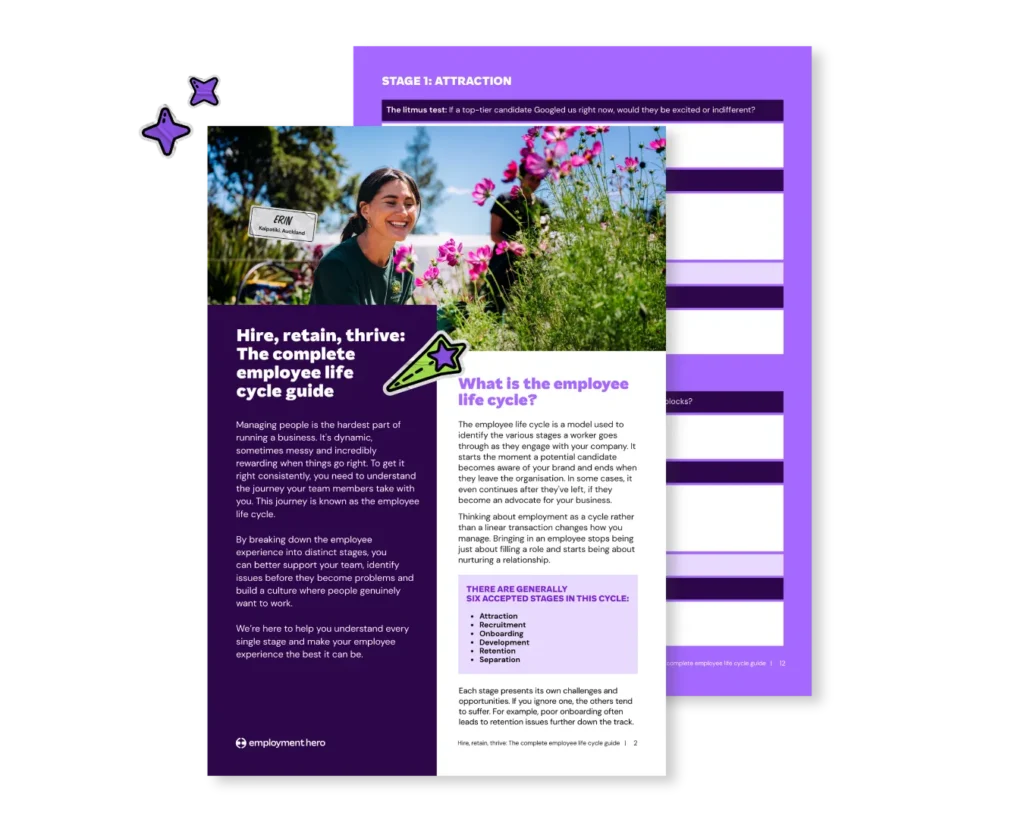
- An editable worksheet, to help you audit and improve your current employee life cycle management
What is the employee life cycle?
The employee life cycle is the complete journey an employee takes with your company. It starts well before their first day, beginning with their initial awareness of your business and continuing right through to their departure.
Think of it as a series of connected stages. It covers every interaction a person has with your organisation as a potential candidate, a new hire, a current team member and finally as a former employee. Each stage presents an opportunity to create a positive experience, which in turn helps build a stronger, more resilient business.
Why is the employee life cycle important?
Focusing on the employee life cycle isn’t just an HR exercise. It has a direct impact on your bottom line. A well-managed life cycle helps you attract top talent who are not just skilled but also a great fit for your company culture. When employees feel supported and valued from the beginning, they’re more productive and engaged in their work.
This also leads to stronger employee retention. Keeping your best people is far more cost-effective than constantly recruiting and training new staff. In a competitive market, creating an environment where people want to stay gives you a real advantage. Engaged employees drive innovation, provide better customer service and contribute to a positive workplace culture, making your business a place where people want to work.
The employee life cycle model
The employee life cycle model is a framework that breaks down the employee’s journey into six distinct stages. Using the model helps you and your leadership team visualise each phase, from attraction to offboarding. It provides a structured way to look at your processes and identify areas for improvement.
By understanding the different needs and expectations at each point in the journey, you can be more intentional about how you manage your people. This structured approach helps you build a cohesive and supportive workplace culture that supports your business goals.
The 6 employee life cycle stages
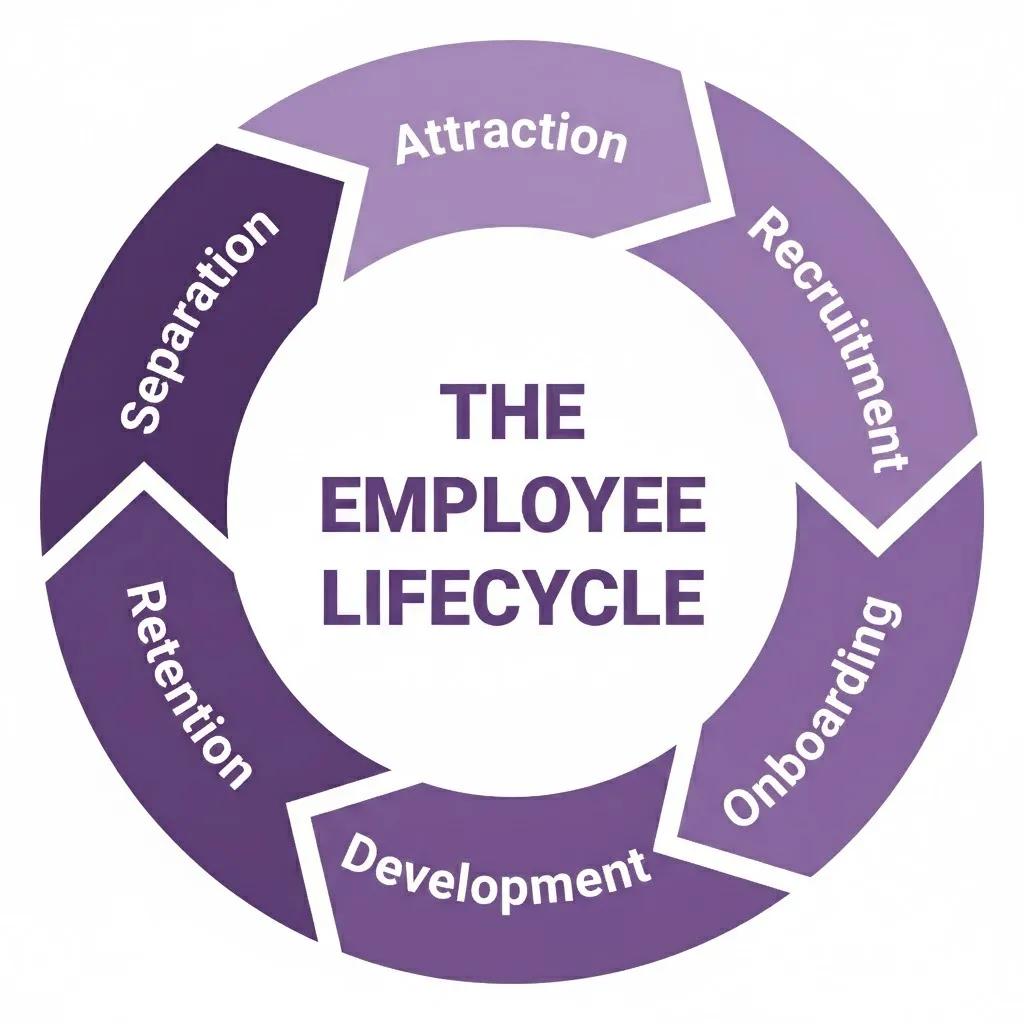
The employee life cycle can be broken down into six key stages. Each stage is unique and requires a different approach to ensure you’re meeting the needs of your people. Understanding these stages is the first step toward managing the entire journey effectively. The stages are:
- Attraction
- Recruitment
- Onboarding
- Development
- Retention
- Separation
We’ll now take a closer look at each of these stages and explore how you can optimise them for your business.
1. Attraction
Before you even post a job ad, the attraction stage is already in motion. This is all about building your employer brand. Your employer brand is your reputation as a place to work. It’s shaped by what current and former employees say about you and by how you present your company to the world.
To attract the right candidates you need to showcase your company’s culture and values. What is it like to work for your business? What do you stand for? Clearly communicating this helps you connect with people who are not just looking for a job but for a place where they can belong and make a real contribution. A strong employer brand acts like a magnet, drawing in candidates who are genuinely a great fit for your team.
2. Recruitment
Recruitment is the process of actively finding and hiring the best people for your team. A positive candidate experience is critical during this stage. From the moment someone applies for a role to the day they receive an offer, every interaction matters.
A clear and efficient recruitment process shows respect for candidates’ time and effort. This includes:
- Writing clear job descriptions that accurately reflect the role.
- Communicating with candidates throughout the process, even if they are unsuccessful.
- Conducting structured interviews that focus on skills and cultural fit.
- Making a timely and professional job offer.
Creating a good impression during recruitment sets the tone for the entire employment relationship. It shows candidates that you are an organised and considerate employer, making them more likely to accept your offer and feel excited about joining your team.
3. Onboarding
Onboarding is the process of welcoming new hires and helping them settle into their new role. A strong onboarding program goes beyond the first day. It should provide new employees with the tools, information and support they need to become confident and productive members of the team.
Effective onboarding includes introducing them to the company culture, their colleagues and their responsibilities. It’s about making them feel welcome and part of the team from day one. When new hires feel supported and prepared, they can contribute to the business much faster. A well-structured onboarding process is a key driver of long-term employee engagement and retention. It turns a new job into the start of a promising career with your company.
4. Development
Once an employee is settled in, the focus shifts to their long-term growth. The development stage is about investing in your team’s skills and creating clear pathways for their careers. When you show your employees that you’re committed to their professional growth, they are more likely to see a future with your company.
This can include formal training programs, opportunities for upskilling or mentoring from senior team members. It’s also about having regular conversations about career goals and showing employees what their career path within the business could look like. Investing in your team’s development doesn’t just benefit them. It builds a more skilled and capable workforce that can adapt to new challenges and drive your business forward.
5. Retention
Keeping your top talent is crucial for long-term success. The retention stage focuses on the strategies you use to create a positive employee experience that makes people want to stay. While pay is important, retention is about much more than just salary.
Strong leadership is a key factor. Managers who support their teams, communicate clearly and act with integrity create an environment where people thrive. Regular recognition for achievements, whether big or small, makes employees feel appreciated. A supportive culture where people feel respected and have opportunities to grow is also essential. By focusing on these elements you can build a workplace where your best people are happy to build their careers.
6. Separation
How you manage an employee’s departure is just as important as how you welcome them. The offboarding process should be handled with respect and professionalism. A positive exit experience ensures that employees leave on good terms and can even become advocates for your brand.
Conducting an exit interview is a valuable part of this process. It provides an opportunity to gather honest feedback about what it’s like to work for your company. This information can help you identify areas for improvement and make your business an even better place to work. Treating departing employees well reinforces your reputation as a considerate employer and ensures they become happy leavers who speak positively about their time with you.
The employee’s journey: A holistic view
To truly manage the employee life cycle effectively you need to see it from the employee’s perspective. Their journey is a continuous experience, not just a series of separate stages. Every touchpoint, from the first time they see a job ad to their final day, contributes to their overall perception of your company.
Taking a holistic view means thinking about how each stage connects to the next. Is the job description an accurate reflection of the role? Does the onboarding process live up to the promises made during recruitment? When you create a seamless and positive journey at every step, you build trust and strengthen the relationship with your employees. This consistent experience is the foundation of a strong and positive workplace culture.
Enhancing the employee experience
Improving the overall employee experience involves focusing on the key moments that matter within each stage of the life cycle. These are the interactions that have the biggest impact on an employee’s perception of your company.
For example, a quick and personal response to a job application can make a great first impression. A well-planned first week can make a new hire feel instantly welcome. Regular check-ins from a manager can make an employee feel supported and valued.
By identifying these key moments and making small improvements you can significantly enhance the employee experience. This doesn’t have to involve big expensive initiatives. Often it’s the simple thoughtful actions that make the biggest difference.
The role of HR leaders in the employee life cycle
HR leaders and business owners play a strategic role in managing and optimising the employee life cycle. It’s your responsibility to design the processes and create the culture that supports employees at every stage of their journey. This isn’t just about administrative tasks. It’s about taking a strategic approach to people management that aligns with your business goals.
This means actively working to build a strong employer brand, creating efficient recruitment and onboarding processes and championing employee development. By leading the charge, you can ensure that the employee life cycle is a core part of your business strategy, driving not just employee satisfaction but also overall business success.
Employee life cycle management: Top tips
Managing the entire employee life cycle can seem like a big task but breaking it down makes it more achievable. Here are some practical tips to help you get started.
- Map the journey: Visualise the entire employee journey from their perspective. Identify all the touchpoints and think about how you can improve each one.
- Invest in your brand: Actively build and manage your employer brand. Showcase your culture and values to attract candidates who are the right fit.
- Streamline your processes: Make your recruitment and onboarding processes as simple and efficient as possible. Use technology to automate administrative tasks so you can focus on the human element.
- Listen to your people: Regularly ask for feedback through surveys, one-on-ones and exit interviews. More importantly, act on that feedback to show your team that you value their input.
- Lead with support: Train your managers to be supportive leaders who can coach and develop their teams. Good leadership is one of the biggest drivers of engagement and retention.
- Recognise and reward: Create a culture of recognition where good work is consistently acknowledged. This reinforces positive behaviours and makes employees feel appreciated.
- Focus on growth: Provide clear opportunities for career development. When people can see a future with your company, they’re more likely to stay and grow with you.
Master your employee life cycle for a successful business
Right now, holding on to good people is one of the biggest challenges for New Zealand businesses. Examining your employee life cycle is not a silver bullet but it’s a proven, practical step you can take.When your people enjoy their experience with your business, they’re more likely to stay, perform and recommend the company to others. If you’re ready to optimise your employee life cycle, download our full guide for actionable steps to help you get started.
The information in this article is current as at 30 December 2025, and has been prepared by Employment Hero Pty Ltd (ABN 11 160 047 709) and its related bodies corporate (Employment Hero). The views expressed in this article are general information only, are provided in good faith to assist employers and their employees, and should not be relied on as professional advice. Some information is based on data supplied by third parties. While such data is believed to be accurate, it has not been independently verified and no warranties are given that it is complete, accurate, up to date or fit for the purpose for which it is required. Employment Hero does not accept responsibility for any inaccuracy in such data and is not liable for any loss or damages arising directly or indirectly as a result of reliance on, use of or inability to use any information provided in this article. You should undertake your own research and seek professional advice before making any decisions or relying on the information in this article.
Register for the guide
Related Resources
-
 Read more: Minimum wage: Guide for New Zealand employers and payroll teams
Minimum wage: Guide for New Zealand employers and payroll teams
Understand NZ’s minimum wage rates, training wage rules, and 2025 updates. Learn how Employment Hero NZ automates wage compliance.
-
 Read more: Navigating 2025: NZ Employment Law Forecast
Navigating 2025: NZ Employment Law Forecast
Stay ahead of NZ employment law changes in 2025 with insights on grievance laws, wages, and more.


