 Australia
  New Zealand
  United Kingdom
  Singapore
  Malaysia
  Canada (Français)














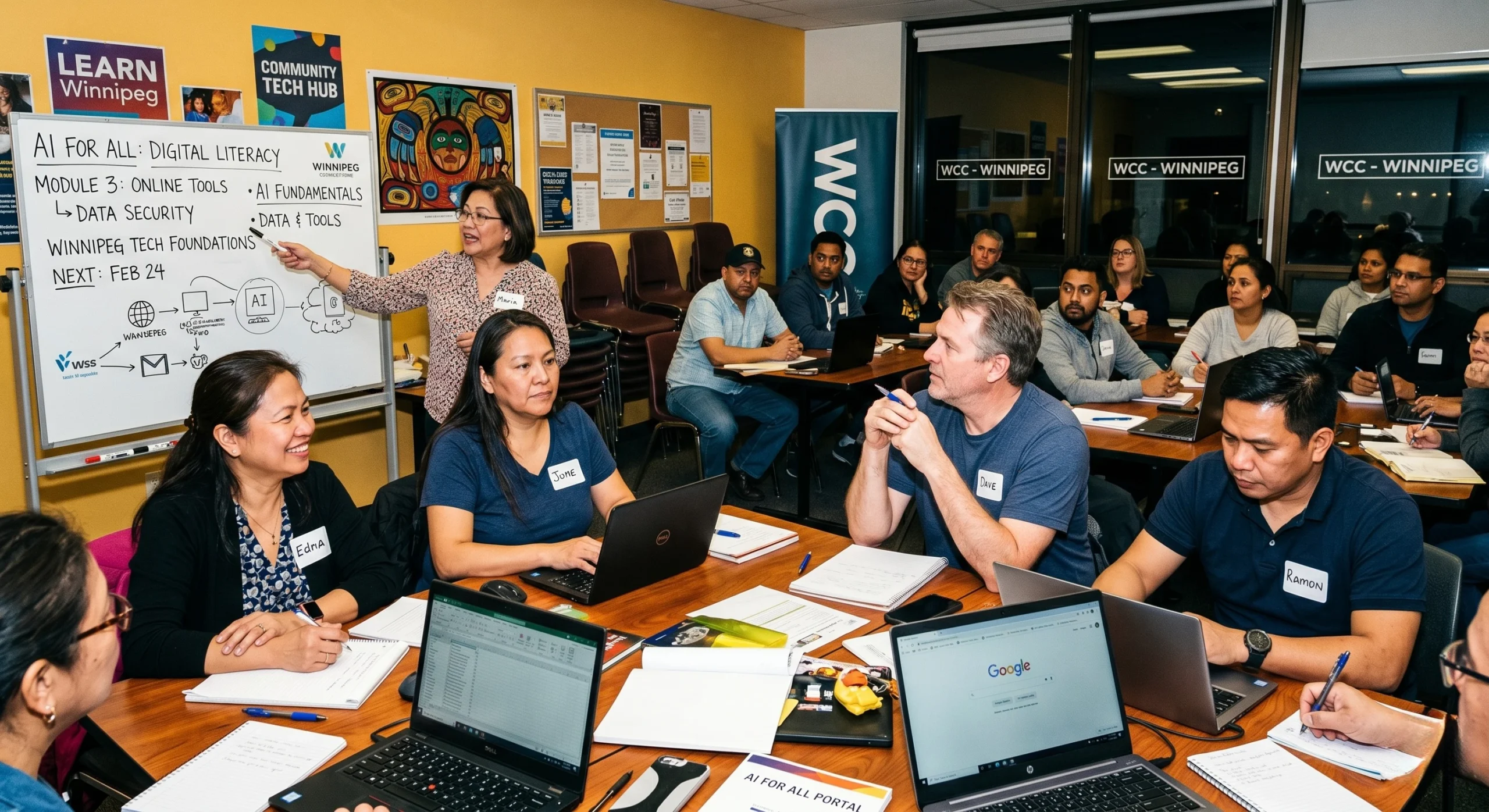
Canada possesses one of the fastest-growing digital sectors in the G7 but remains among the slowest nations to adopt artificial intelligence at scale. In an effort to reverse this trend and safeguard digital sovereignty, the federal government has officially launched a comprehensive five-year national strategy titled AI for All.
The initiative aims to position small and medium-sized businesses (SMBs) at the forefront of technological transformation. It arrives amidst intensifying economic competition, with the global AI market projected to hit U.S.$4.8 trillion by 2033. By injecting new regulatory frameworks, investment pools and workforce training programs, the federal plan intends to establish a secure blueprint for commercial automation. For Canadian business owners, the framework represents a significant shift from localized tech adoption to a structured national infrastructure.
“AI is here. The question is whether it will improve the lives of all Canadians or benefit only a few,” says Mark Carney, Prime Minister of Canada, in an official federal release. “AI can shorten our emergency room wait times and make a small business more competitive, if it is governed by Canadian values with a clear goal of improving the lives of all Canadians.”
Ambitious growth targets to drive workforce expansion
The newly minted AI for All strategy targets an additional $200 billion of economic growth over the next five years. To support this expansion, Ottawa projects the creation of 250,000 new AI-related jobs across the country within the same timeframe. The underlying objective is to increase domestic AI adoption from its current level of just over 12% to 60% by 2034.
For employers grappling with labour shortages and evolving technical demands, the strategy allocates specific resources toward the future workforce. The plan will provide up to 90,000 AI-related jobs and work placement opportunities tailored specifically for young Canadians. By embedding younger workers directly into tech-driven roles, the government intends to help small firms build sustainable internal pipelines of digital talent.
“Canada’s new AI for All Strategy is about putting artificial intelligence to work for Canadians,” says Evan Solomon, Minister of Artificial Intelligence and Digital Innovation, in an official federal release. “It will give people the confidence to use AI safely, help businesses adopt it and ensure more of the value is created here at home.”
Strengthening trust through modernized digital regulations
A core pillar of the federal framework focuses on building public and commercial trust by modernizing legislative frameworks for the digital age. Government officials noted that a lack of clear guardrails risks driving Canadian talent and startups abroad while leaving critical segments of the domestic tech ecosystem under foreign control.
To combat these vulnerabilities, the strategy introduces strict protections against harmful digital practices. The updated legislative measures target non-consensual deepfakes, surveillance pricing and online safety hazards for users of social media and conversational chatbots. Additionally, the plan expands the operational capabilities of the Canadian AI Safety Institute to conduct transparent evaluations of complex AI models. By establishing clear regulatory baselines, the policy aims to give corporate leaders the confidence to invest in automated software without exposing their business operations to unmitigated compliance or reputational risks.
To ensure the benefits of technological transformation extend beyond the tech sector, the strategy establishes a National AI Literacy Initiative. The educational program is designed to deliver entry-level training to 1 million post-secondary students spanning various disciplines, including arts, commerce, medicine and traditional STEM fields. Over 3,000 educators will receive specialized learning kits to integrate practical AI coursework into Canadian classrooms. Every post-secondary student will also gain access to trusted AI agents to assist with their studies.
Beyond academic institutions, the strategy focuses directly on helping small and medium-sized businesses adopt AI to support workers, raise operational productivity and drive technical breakthroughs. Initial deployment will focus on priority sectors such as health, energy, transportation, agriculture, manufacturing, robotics and public services.
The rollout includes an initial AI Missions Program, featuring a flagship health mission aimed at accelerating the adoption of diagnostic and patient care software. For existing staff, the government promises upskilling and training opportunities, including employer-led modules, to help mid-career professionals and frontline staff adapt to AI-enabled workplaces.
Securing sovereign compute infrastructure and global alliances
The final phase of the strategy focuses on reinforcing Canadian sovereignty by building the foundational elements of localized technology. This includes dedicated investments in domestic compute, cloud systems, connectivity, data and talent. Ottawa plans to construct a world-leading public AI supercomputer alongside sustainable sovereign cloud infrastructure aligned with Canada’s clean energy expansion and environmental standards.
To scale local firms into globally competitive organizations, the government intends to improve access to growth capital, leverage public procurement as a strategic anchor customer and provide robust intellectual property protections. This domestic focus is paired with international outreach through a newly formed Sovereign Technology Alliance designed to attract foreign investment. Canada will leverage 12 existing international agreements signed since March 2025 with global partners, including the United Kingdom, Germany, Australia and India, to open fresh markets for Canadian firms.
By tying infrastructure investments to regional business support, the policy seeks to keep high-paying careers and corporate value within domestic borders. For small business employers, these combined initiatives represent an opportunity to utilize secure, locally hosted digital tools to upgrade everyday productivity.