











Restaurant Brands International Inc. (RBI) is preparing to introduce an artificial intelligence-powered voice assistant to Burger King locations across Canada later this year. The tool, known as Patty, provides real-time coaching to front-line staff via the headsets they already wear. This move marks a significant shift in how Canadian service businesses might manage performance, moving from retrospective reviews to live, data-driven prompts.
For small and medium-sized businesses (SMBs) in the hospitality and retail sectors, the rollout serves as a practical case study for AI integration. While the technology aims to solve common operational headaches, like training gaps and service speed, it also raises important questions about the employee experience and the logistics of digital supervision. Understanding how this tech functions on the floor’s front lines is the first step for business owners considering similar digital co-pilots.
Integrating voice-based assistants into daily operations
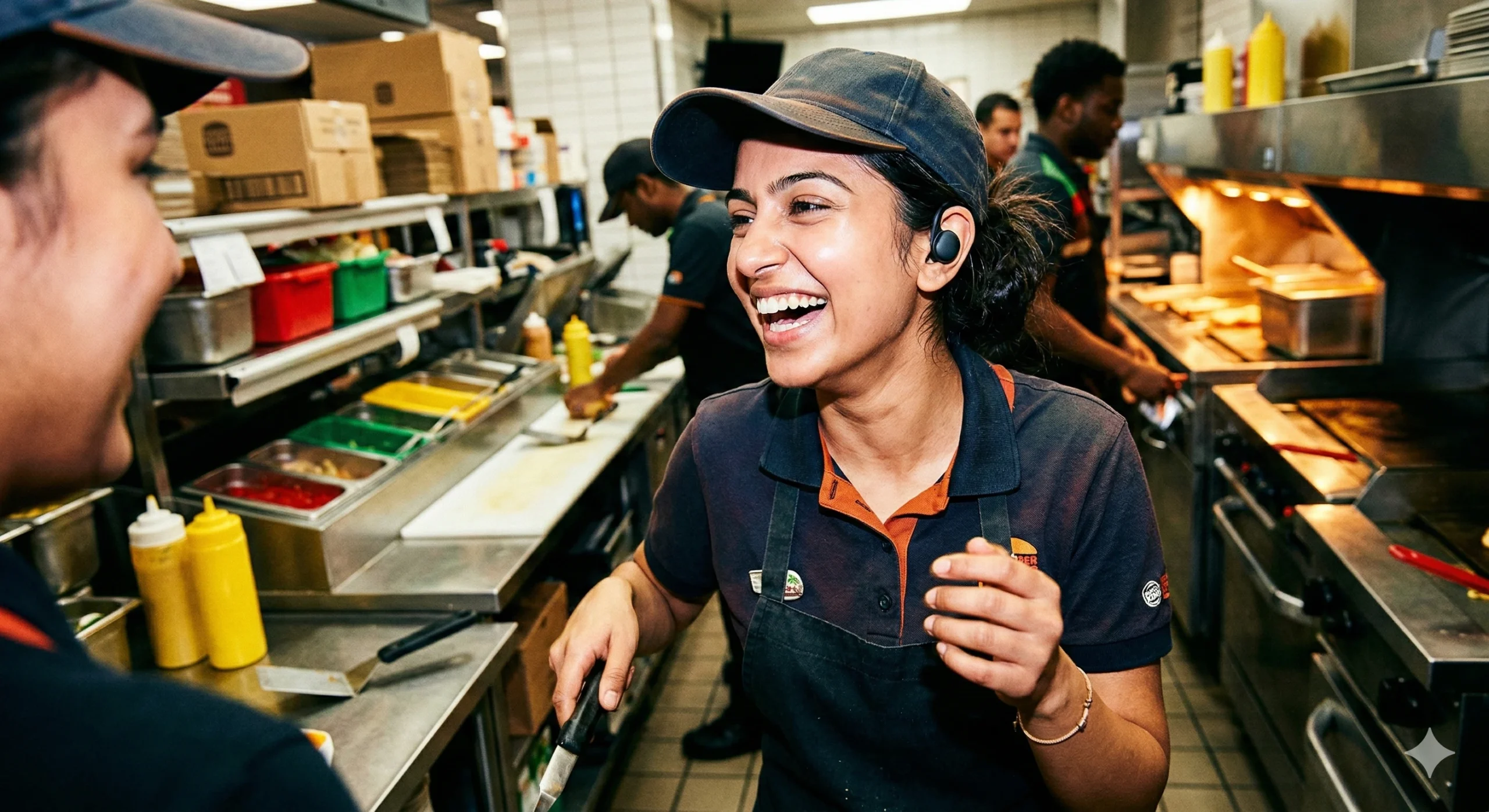
Patty operates by listening to employee conversations with customers and providing immediate feedback. The assistant is powered by OpenAI technology and is designed to help workers manage the increasing complexity of modern food service. It can remind staff of specific assembly steps for complex orders, suggest upselling opportunities and alert teams to operational tasks that need immediate attention.
RBI executive chairman Patrick Doyle recently highlighted the efficiency gains seen during U.S. pilots. He noted that before Patty, it could take more than a day to replace an empty drink flavour cartridge. With the AI assistant, that timeline has reportedly been reduced to about an hour. “It is extraordinary. It is a game-changer in terms of how you run restaurants,” Doyle told an audience at the company’s annual investor day in Miami.
The tool doesn’t just track tasks; it monitors soft skills. According to reports from the Canadian Press (CP), Patty is capable of assessing tone, courtesy and brand-consistent greetings. This allows managers to see if staff are being friendly, saying “welcome” or thanking guests for their visit. This level of continuous assessment provides a volume of data that human managers simply can’t capture manually.
While the efficiency gains are documented, some experts suggest that a “second voice” in an employee’s ear could create new challenges. David Pullara, a business consultant and marketing instructor at York University’s Schulich School of Business, expressed concerns to CP regarding the mental load on workers. He noted that it’s nearly impossible to give full attention to a conversation when another voice is trying to provide instructions.
The risk for SMBs is that such technology might inadvertently slow down service if it isn’t implemented carefully. If a cashier has to pause a customer interaction to process an AI prompt, the “fast” in fast food may be compromised. Pullara suggested that a more effective route for smaller operators might be using these tools for training and role-playing during quieter periods rather than during the peak lunch rush. This positions the AI as a learning and development platform that builds long-term skills rather than a constant interruption.
Addressing the talent shortage through technological support
The push toward AI-driven coaching comes at a time when Canadian employers are facing historic talent shortages. According to ManpowerGroup’s 2026 Talent Shortage Survey, AI skills are now the hardest-to-find capabilities globally. By integrating AI directly into the workflow, businesses can effectively “build” these skills into their existing workforce without needing to find rare specialists in the open market.
Burger King’s spokesperson, Kristen Viersen, confirmed that the technology is expected to reach many of the 380 Canadian locations by the end of 2026. For franchised systems and SMBs, this rollout is a litmus test for how consistently such tools can be governed across different owners. A Burger King spokesperson also clarified to the Guardian that the tool isn’t meant for scoring individuals. Instead, they described it as “a coaching and operational support tool built to help our restaurant teams manage complexity and stay focused on delivering a great guest experience.”
As AI becomes more prevalent, Canadian HR leaders are increasingly focused on the ethics of workplace monitoring. The Law Commission of Ontario has recently launched a review of workplace surveillance, reflecting a growing public interest in how employee data is handled. While Patty is designed for coaching, the fact that it listens to live interactions puts service under a digital microscope.
For SMB owners, transparency is key. Ensuring that staff understand the tool is there to support them, rather than strictly enforce scripts, is vital for maintaining morale. When employees feel that a tool helps them manage a busy shift or reduces their mental load, they’re more likely to adopt it. However, if the tech feels like an ever-present supervisor, it may contribute to burnout in an already high-pressure industry.
The future of the digital co-pilot in SMBs
The arrival of Patty is a reminder that AI is no longer a back-office experiment; it’s a front-line reality that’s literally whispering in the ears of the Canadian workforce. For SMBs, the takeaway is clear: technology isn’t just a tool you buy, it’s a permanent member of the team you manage. Whether it’s an automated payroll system or an AI coach, these platforms provide the kind of real-time oversight that human managers, stretched thin by labour shortages, simply can’t match.
But don’t mistake efficiency for connection. The businesses that win won’t be those that use AI to script every “hello” and “thank you”. The winners will be the employers who use these data insights to strip away the grunt work, leaving their people free to do the one thing AI can’t: provide a genuine, human touch. It’s time to stop using technology to monitor your people and start using it to make them the heroes of the customer story.