 Australia
 United Kingdom
 Singapore
 Malaysia
 Canada (Français)

 New Zealand

Hospitality will always be powered by people. AI’s role is to make finding, supporting and keeping great people easier.
Video transcript
Minimise
Joined.
I'm delighted to be joined today by Leigh Brown, head of operations at Hospitality New Zealand, and Hannah Miller, child CEO and cofounder at Behemoth Brewing. To kick us off, it'd be great to hear from both of you a little bit about your background and your experience in the industry.
Leigh, why don't I start with you?
Thanks, Neil. Thanks for having me here today.
So as Neil said, I'm Leigh Brown, head of operations for hospitality in New Zealand. I'm originally from Australia, but proudly New Zealand based and have more than twenty five years experience across quite a mix of environment. So family owned businesses, not for profits, manufacturing, and, of course, hospitality. And so I've really seen how people and the operations challenges show up differently depending on the size and the shape of the business. As the head of operations at Hospitality New Zealand, I lead our major national initiatives like our Hospitality New Zealand Conference and the top fifty New Zealand gastropubs.
And but most importantly, for this conversation, I also laid our membership team and our regional managers who are effectively our feet on the street with our members week in and week out and are hearing, you know, the coalface of what's going on in hospitality.
Excellent. Thanks, Lee, and over to you, Hannah. Oh, you're on mute, Hannah.
Sorry. I'm Hannah. I know there's a few beer people on, so I probably know you.
And so my background is hospitality for most of my life.
And then when moving to New Zealand, met Andrew, founder of Behemoth Brewing, and so got involved with that. So I've been running Behemoth with him for the last ten years, and we also have four hospitality venues. So about fifty staff that we're sort of keeping tabs on.
Excellent. Well, great to have you both here. Thank you so much for joining us. Really looking forward to this conversation.
Alright. So let's let's set the scene. Hospitality is we know is a is a really important sector. It's a big part of our domestic and sort of tourism sector.
It's contributing about five percent of GDP through sales and supports more than a hundred and ninety thousand jobs. So a lot of people working in this industry, really, really important, especially at a time when we've got high unemployment.
So a really dynamic part of the the economy.
So, Lee, maybe I'll come to you first.
What are you hearing from hospitality businesses around the country right now? Where are we at?
I I don't think I wanna say anything surprising or anything new, but, you know, we're hearing from the industry that cost is cost is an issue, not just labor costs, but, you know, the whole stack, rent, ingredients, utilities, insurance, all climbing, and and then you get into the staff element and defining staff and keeping them while, also, labor costs are rising. It's it's getting, you know, really complicated for our businesses, and add to that compliance. So, you know, rules and the complexity around that.
For a small operator running a cafe with a few staff, that can become a real burden. So it's you know, they're probably the three things that we're hearing the most regularly. But, again, it's the differences across the country. So the challenges that are facing a venue in Queenstown, you know, dealing with completely different cost of living wage squeezes versus someone in a rural, smaller town in the sector. It's not just one story.
Feel like, you know, I can empathize with the challenges that are facing our industry because every operator has really their own personal story to tell.
Yeah. Yeah. No. Absolutely. Absolutely.
And, Hannah, also, well, operating both the hospitality business and the brewery, as you say, in twenty twenty six, are are you seeing anything different this year com compared to last year? What's what's what do you think the trends are?
I would say I think it's optimistic, overall. I think I think we're seeing a lot of positive shifts, that we haven't seen for the last couple years. But some of the differences there are around people spending habits that we've noticed. And so on both sides of the business. So where people are spending, but just spending a little bit differently. So say they come to one of our venues, you know, they might have two, maybe a third drink, but they'll have fries. They won't also have dinner.
Whereas if they're coming for dinner, they might just have one, maybe two drinks, you know, because they're coming for dinner. They're not sort of definitely those days of of, you know, kind of staying heavy. Oh, might as well eat. Oh, might as well have another, you know, kind of sessions seems to be quite limited. You're either sort of drinking or eating, not necessarily both.
And then the same for manufacturing. We're definitely seeing a trend in, you know, high end limited releases. People still want them, but they might buy one or two as a weekend treat rather than kind of as every night drinking and then get the six pack or the more economical four forty as a more kinda everyday drinking.
Right.
And so, yes, we are we're we're definitely all under pressure, aren't we?
And so and so I think it's fair to say that operators are are looking at opportunities to run, you know, run a bit leaner where they can in ways that don't impact that customer experience.
Is that is that where are the where are the focuses for you? And we're kind of getting on to the the AI piece here in terms of, you know, is is AI one of these areas where we can kind of work a bit smarter rather than harder?
Sorry. I'll I'll go back to you, Hannah.
Basically. Yeah. Definitely. You know? And and I think so I guess one of the things we've done already is with having multiple venues, we've cross trained our team pretty extensively. So been able to you know, front of house and back of house, we have many team members that can actually do both, as well as cross training them across venues so they can cover at other venues, which then reduces the liability for around sick time. So if someone's sick, we can send someone from another venue because they might be having a a quieter day than than someone else.
So things like that are already were already in play in order to try to reduce cost without reducing customer experience.
And then AI is something that we just think of as another another level to that. So another thing that okay. What can we do to not replace people, but to I guess, what we're doing in this business, you know, business owners are constantly looking at ways that they can maximize productivity. And I think more and more, we're all kinda looking at hiring another person as the last thing.
And so because you've you know, there's a lot a lot of overheads you gotta cover, you know, a lot of money you gotta bring in to cover those. So, you know, if AI can be a tool where, hey. Maybe we don't have to get in a part time person or even a whole another FTE. If we can actually use AI to, make the excellent staff we have already, make some of their workload a little bit lighter, or more manageable, then then we're trying to do that first.
Excellent. Yeah. No. That's that makes a lot of sense.
One of the one of the challenges that we really think about when it comes to hospitality is is the big swings that hospitality gets in demand, in their market, you know, specifically around whether it's time of year, you know, like, some hospitality venues have a real summer rush and, you know, some have a real kind of Lee mentioned Queenstown, and, yeah, some people have a real winter rush.
Or whether it's just week to week or even kinda like hour to hour with, like, events going on and things like that.
And it's it's I think that's one of the most challenging things. You know, you go from run off your feet to dead quiet, figuring out how to kind of match demand and then and then staffing and people in particular. So the trick for leaders on the people side of the business is is, like, I think you started, alluding to it there is how to retain a really good team when it's quiet, and kind of make the best of that team, and then how to scale up when it if it does get a little busy.
So making sure, you know, yeah, you manage the costs and then, make sure you have all your guests there. Have all the people there when the guests, sort of do show up. So, to do that, obviously, you just need to be able to hire onboard train quickly and easily, and cross train kinda to your point.
And and then obviously perfect the art of rostering, which is probably a never never solved problem in in hospitality.
But, yeah, maybe maybe a question for you, Hannah. Like, walk us through how how your like, what does hiring look like when you have to do it?
Yeah. So I think I feel like we're, quite honestly, pretty much always hiring. It feels like just that's the nature of hospitality. And but we yeah.
So we're using we use Employment Hero and going, you know, going through the processes. So from internally figuring out what we need, why we need it, and really taking that time to go back and figure out what we what exactly we need to have happen. And that's, I think, really key because I would say probably five years ago or maybe before COVID, but, you know, it was kinda like, oh, yeah. Cool.
JD, post the JD.
Some people will apply. You'll interview them. Away you go. And I really feel like that those days are gone.
It's now look you know, looking at the JD, reviewing the JD, looking at previous things, and making sure that the JD is actually delivering what we actually need to happen in this role. And then from there, posting that. So, I mean, Employment Hero makes it really simple to to turn that into an ad, and then also links into Seek, which we use for some of our recruitment. We do also use TradeMe.
And then, yeah, and then it kinda from there, realistically, our team, they check it kinda once a day. They get alerts and that sort of thing. But most of the siphoning through, you know, qualifications, all that kind of stuff has already been all of our guidelines have been preset. So that's all done through the the AI tool of Employment Hero, and then we're just sense checking that in the background.
And then from there, based on we'll kind of give it a week unless something amazing someone amazing comes through and then do a review and figure out, okay. Who who is there anybody we wanna speak to here? And we go straight to interview then. So we'll do a, usually, a call.
So a call first, just a quick sort of, like, sense check call. You know, does this person actually want the job? Did they actually pay attention to how much it pays?
What the hours are? It was a key thing that was sort of tick off.
And then as long as that's all good, then we'll go go ahead with an interview, which we try to do face to face as much as possible just to really get a good scope. We're a really tight team. So even though there's fifty of us, but that's across, you know, four venues and manufacturing. So the teams themselves are actually not very big. And so it's really important to have that to still, you know, have that face to face time.
Yeah. Hundred percent. Do you do you do you do a practical test? Is is anyone making cocktails or pouring beer?
Or We do some.
Yeah. Yeah. We do. So we have a a we do a volunteer shift, which is a is a signed document for that ahead of time, and that's, of course, kept on file.
And, you know, to come in and and and it's just it's a good opportunity to sort of see, can they do what they said they can? And I think, I mean, on a side note, AI, while we like it and we use it, people are using it to write CVs. So they come up with all sorts of random things that you're like, that's interesting. So it's good to just sense check that a little bit and also yeah.
So we do we do that as well. But it depends on it depends on the role. I mean, I think it'd be you know, if you're hiring a finance manager, that might be a difficult thing. You're you're more keep it checking, but we always check references as well.
Yeah. Yeah. No. A hundred percent. I think it's I think that's a really good description of the balance between, like, the type of work that you wanna hand off to the AI and the type of work you don't wanna hand off to an AI. And I think that's, as we kind of talk about this more, that's probably gonna become one of the themes here is, like, what do you want an AI to do, what don't you want an AI to do, and and and how do you interact between the two of those.
Alright. So maybe to question over to you, Lee.
In the current labor market that we're in, what creative ways have you seen businesses respond to? And what what what else are you seeing from hospitality businesses in terms of using AI to work a bit smarter?
I think for us, we're always we're always promoting hospitality as a career. And so businesses doing doing well are talking about, you know, investing in the development of their team. I mean, Hannah Hannah referred to it at the at the start of the call where she was talking about the cross training and development of their team. So not only does it help the business, but it also gives the individual that learning and development as well. I think that's really important, you know, to understand that there is that career progression and there's that develop that development opportunity.
And I think being deliberate about the structured progression and covering and cross training not only helps the business, but also helps that that individual around that. And, you know, as an association, we're obviously trying to back that up practically, and we're working on partnerships like the one with Employment Hero to be able to businesses be able to to support our members to do things like that.
And that's really important too, because it it helps them give that time back to, you know, working on their business and not just being in their business.
You know, that's the conversations that we were talking about with rostering. You know, when there's when there's challenges because you've you're short staffed or you haven't necessarily made a great hire, most operators end up stepping in. And that's the real challenge is, you know, how how often are they having to step in to do the do as opposed to be able to do that that overview. And AI really takes the burden out of that, you know, if you're doing it in the smart way. We know that there's, you know AI is never gonna be pouring a beer. Right? But it's going to be there, you know, helping in the back end, helping in that those data driven decisions about, do you really need to hire that next FTA?
Or can we, you know, look at what the rostering looks like? Look at where we're getting our spikes in people walking through the door? Or what are the most popular products that we're selling, do we focus on those?
That's where that's where the genuine benefits come from.
Yep. If if if you're anyone like me, Lee, the the real value for the person standing in front of the beer taps is trying to make sense of the dizzying array of interesting names and flavors and things like that.
It's less can they pull the handle and more can you just tell me what on earth I might be interested in.
So don't think that's going to AI anytime soon. I'd much rather talk to a beer aficionado.
It's not going to AI anytime soon. I think really recently, I was at an event, and bunch of business leaders were talking about where they use AI. And I can assure you that it was never anything related to, you know, the genuine hospitality or really anything creative. It was all just the the real grunt work, the data crunching, and just doing that first that first leg that actually helps people get back the time in their business.
Yeah. Absolutely. Absolutely.
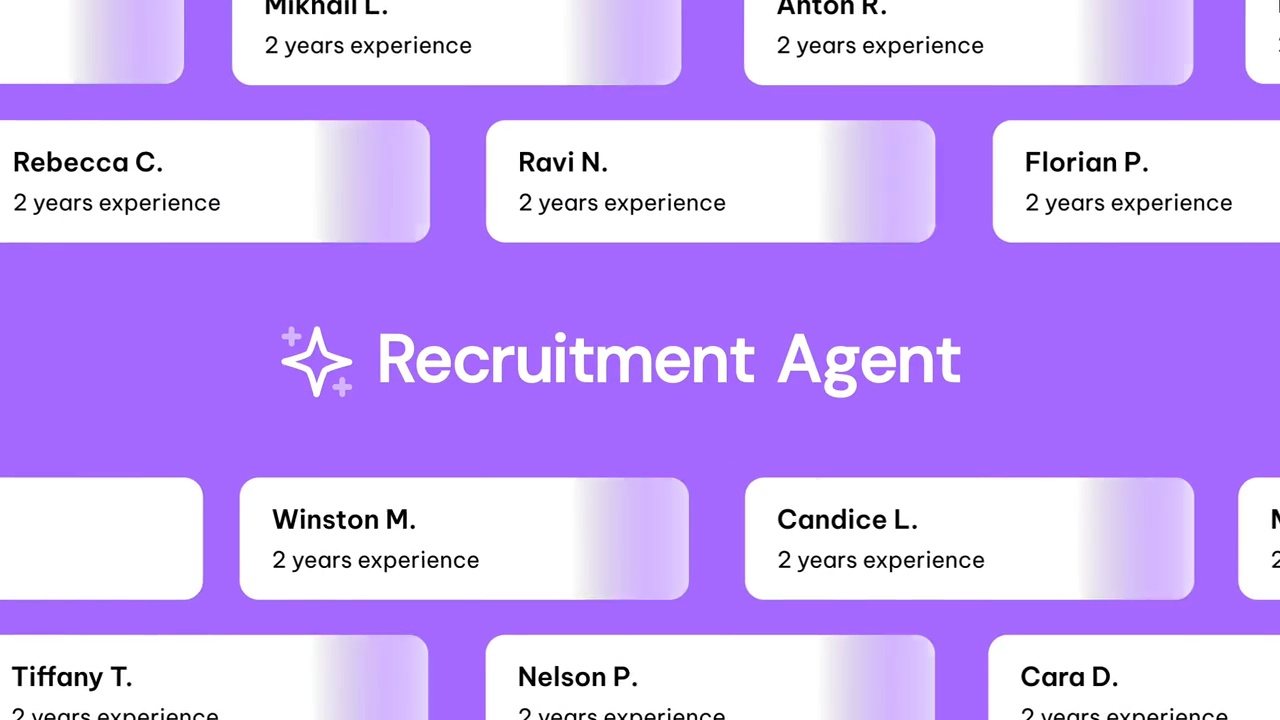
So, yeah, one of the certainly, like, that's I think we're we're really in line with that, Lee. One of the areas that well, what we've done recently is, like, carry on on our recruitment journey to be able to not only help people sift through all of those CVs and just get to a shortlist really quickly.
But we've actually we've we've released someone to do that that first interview that Hannah was describing. I think I think we were we were talking just before we came on, Hannah. I don't think you've been you're you're quite ready to try it out yet.
And it is it is a bit of a jump, so, like, it's not for everyone. We're finding a few people, though, who are who are really liking it. They they tend to be doing quite high volume hiring where it's becoming, like, quite burdensome to do those first calls. So, for example, if you're if you'd like the events companies that are hiring, like, hundreds of people to to run into an event where they just need to get a first interview done to do what Hannah described before with just like, does this person actually want the job? Have they actually read the salary? Have they actually tick, tick, tick so that they're ready to we don't waste the person who's doing the in person interview time.
But, definitely, the the other piece we're fascinated by is the rostering area. We've got some things coming up, but the idea of being able to not replace the person who's managing the roster because the person who's managing the roster intimately knows what who they need on the floor, when and where.
But we think we can give them a real head start. And so one of the things that we're looking at is, you know, can we take all the take all the holiday? People are on holiday, peep take people have called in sick, take some demand signals, and just give the person managing a roster a better start for, hey. This is what this is who was on roster last week.
Here's what we're suggesting as a starting position for this week. What do you reckon? And so, hopefully, just trying to cut the time down of the person driving rosters. So I think, yeah, I think I think we're right. Those those those are the areas that we can make a a big difference.
We've been we've been going kind of up and down the country talking to people in our hero exchange.
And when we talk to we've got a lot of people who, as we said, are really interested.
But what I'd what I'd love to hear from from both of you is what are you what are you hearing about people who've, like, already started or, you know, maybe in your own businesses or or people you've been talking to?
Where where is this really making a difference right now? What are your what are your members telling you? Where have they got some early wins, Leigh?
I think, as a general, members are what I probably term cautiously optimistic when it comes to to using AI. It's it was interesting, the poll at the start, that fifty percent of the the participants here are using using AI every day, and that's great. I think it's still there are still some people on their learning journey. But, you know, writing drawbacks or things that don't, you know, take all of that time after a close, I think that's where we're starting to see the the small steps forward.
I know that I've spoken to a couple of our members and partners that are using it to draft the the first draft of rosters and handle scheduling conflicts and things like that. I don't think it's fully adopted across across our membership base yet. I think there's a there's a way to go. And I think it's just about remembering that it probably doesn't remove that judgment call like you were talking about. You know, it's just doing that first pass, but it's still getting a human to go through and check and do the sense check because you, you know, you know what's not in that data.
Right. Keep the we need it we need our experts in the loop a hundred percent.
Exactly.
Hannam, maybe I think you you've got some really interesting examples. Love to hear kind of how both kind of how you're finding it useful in your business, and then maybe, like, what your recommendations would be for other business owners in terms of, like, getting start if they're a bit earlier in the in the process, how you think about them getting started.
Yeah. I think I I'd say, like, in getting started, it can be really daunting. So I I was quite interested because I'm always interested in doing things faster.
And the so I just sort of started and didn't really know really anything. And then as I started learning, probably the first thing I kinda learned was about the risks.
So it's pretty scary if you type in something. Even I did it with myself. Like, oh, write a bio for me.
And it's kind of scary how much AI knows about you. And so that then led me to go, oh, wait a sec. Maybe I should take a step back and looked into examples of how to make it more secure because what I didn't want is to get my team using it and have them just go on OpenAI platforms and type in, you know, make this financial data, make better sets. So I was like, okay.
Wait a second. So what we did is, we have a a computer or, like, a security computer security company that works that for us and handles all of, like, our that kind of stuff. So I talked to them. And and if you don't, if if anybody has questions or wants to ask me if, like, any from the beer community, feel free to shoot me an email.
I think most of you probably have it. But I just went to them and said, hey. What do I do? How do make this more secure?
And, they we already use Google, so, it's already a paid subscription. Anyway, so a good rule of thumb is, like, if you're paying for it, you're you're more secure than if you're not. If you're not paying for it, assume it's not secure. And if you're paying for it, check the security, but you're pro but you're definitely better off.
And so then from there, we started using Gemini, which has quite a few really great tools, including Notebook LM, which we quite like.
So that's that's the one that I'm sort of onboarding with my leadership team right now, and they're all, you know, using it. But it's it's pretty easy because once you it's easy to get somebody into it because once you use it and they trial it, they're like, woah. That saves me so much time. And so then and then it just gets people more interested. So we then, on the back of that, went ahead and for our work computers, went ahead and locked out some of the AI, like the main ones. So, like, ChatGPT, you can't use it on a work device.
Anything any of those kind of open AI that are that are quite popular, we tried to log them out, but also issued company adjusted policy and also issued memos to say, please don't use this because of these reasons.
You know, we're not trying to be the fun police. We're just trying to make sure that we're protecting our data as much as possible.
Yeah. And so for us right now, we use it for main things we use it for is contracts both internally and externally. So contracts with suppliers. You know, you get a new contract, and it's forty eight pages long, and you're just like, sure.
Sign. You know? But who knows what you're signing until there's a problem and they tell you, oh, no. You signed that.
Remember?
So it's really useful for that. It's really great for that. You can compare you know, take your last contract, compare it with the new one, have AI tell you what the differences are.
You can ask AI for watchouts. You can there's a lot of contract stuff. It's really helpful. Just just it's not doing it for you. You still have to do it, but it's really helpful.
And then we also use it or I would say cautiously starting to use it for some marketing materials, and that's in addition to our designer. That's not not replacing him. He's very secure at his job. Yeah.
Excellent. Yeah. How's it and so what's the and what's the impact in terms of, like, how much sort of improved productivity maybe in, like, marketing do you think there is? Is it that he can move faster or, like, look at more creative concepts than he would have been able to do before? Like, how would you describe, like, what the impact is of him starting to really use AI?
Yeah. I'd say that's definitely more on the beginning sides than, say, like, the data data side of that we've used AI for. But what we are starting to find is things like our, you know, Birvana design for our stand. You know, we have a it's a ten meter by three meter stand. It's a little big print material.
And that would normally take a few days, if not a week, to kind of get finalized.
In between other projects, it won't be full time. But and he was able to do that in a couple days with the help of the even so much as explaining the concept. So, you know, now we're able to go I'm able to go, this is the concept I want. Put in AI.
It comes up with some really dodgy looking, very AI something. And I was able to send that to him and go, I want something like this but better. And he rolls his eyes and then is like, yeah. Okay.
I get the concept. So I feel like that saves us quite a bit of time because, otherwise, it'd be a meeting and you'd go back and forth, and he'd come back and go, is this the concept you're thinking? And you might go, no. How how are you thinking that?
So that saves time, but then also save time for, like, for this year, he used he did drawing, and used his regular like, his design tools that already are there, but then also was able to use a little bit of AI to combine it together. So if you look at it, it looks really well presented, but it's not using it. I guess, it's using it as a tool. So if you looked at it, you didn't think, oh, yeah.
They just click clicked AI, and here you go.
But he did use it as a tool to help to help speed up the speed up the process.
Yeah. Nice. Nice. I think it's I I think what you're saying there about the like, making it safe for everyone to kind of start using the AI by kind of getting, like, the security and some of, the guardrails right is is why obviously, we deal with employment data, which is pretty sensitive sort of data that you don't want necessarily to throw into a general kind of, like it's got personal private data in there. It's got pay data. It's got, you know, all sorts of things.
And so, like, one of the reasons why we're we we spend a lot of time thinking about, like, making sure we've got all the permissions right. We've, you know, we've really thought about.
We have an an an HR AI adviser, for example, where you can ask, hey. Like, what's what's the policy for bereavement leave? You know, like, my grandfather died. Is does the bereavement leave you know, am I allowed to go on leave for that?
And, like, the the the risk there is that if you get that wrong, you know, it's it's you've communicated the wrong policy to someone. And so, you know, like, we we're quite kind of structured and sort of going, hey. Like, we do summarize your internal policy for you and say, hey. Like, this is what the policy says, but then we kinda link back to the original policy and and try and keep, like, the guardrails, like, quite conservative because we've realized that sort of, you know, we don't want our AI hallucinating and making things up and and say and so it's it's, yeah, it's interesting, isn't it? Like, being able to give your team the right kind of AI tools for the right context, for the right kind of sensitivity, for the right sort of situation, and getting the security right seems seems like an important step.
Yeah.
Lee, I'll I'll I'll come to you Maybe on that maybe on that question of, like, yeah, get it like, being able to kind of encourage the use of AI, but in a in a sort of safe, sensible way. Are you seeing businesses have the right sort of conversations out there?
Yeah. I think so. I think, you know, it's early days and, you know, mirroring what Hannah said, even internally at hospitality in New Zealand in terms of what we've implemented policies and processes to make sure that we are, you know, helping ensure our data is safe and our team know what tools are available, again, where where it's paid with inside our with inside our systems. But I think that we we've we've done a lot of offered a lot of training and courses to our membership base too, and we find that any time we mention AI, whether it's in our conference or whether it's through our training courses, people are absolutely there and getting the information.
I do I do we do often reiterate that we're here as a resource as well to be able to to assist with our membership base and simply, you know, putting a question into chat day, p and trusting the outcome is probably not the right right step forward, especially when you're talking about nail the processes and and policies that and, you know, compliance issues and liquor licensing and any of those kind of things, like, you know, trust trust the experts and make sure there's those the the human guardrails too.
Yeah. Absolutely. It's it's really important. How so how would have you have you got any sort of specific advice as to, like, if someone, you know, did have these types of questions, Lee? You know, should they use the AI tools and then, like, then contact you? Or, like, what what's the yeah. How how do you think, though, the two things should interact?
I think it's really I think it's really dependent on the topic.
But generally speaking, we're asking, you know, our members having conversations, especially with those media topics, to to contact us first.
But it's more around, you know, starting the process around those those data conversations and looking at things around rostering and, you know, menu items and ingredients and purchasing things like that and not necessarily in the in the things that are around compliance or licensing. That's not where you wanna play in the in the AI space.
That sounds fair. Sounds like sage advice, Lee. Thanks for that.
I think, yeah, this is, yeah, this is this is it's really important. It sounds it sounds like it sounds like marketing could be a safe place to play, although still, like, all these stories kind of involve whichever sort of domain expert has been involved being involved, and it's it's about, yeah, sort of modeling that the AI is a is a tool to help us.
We do we do think increasingly that we want to see AI. Again, we've got a very kind of, like, controlled space in which we're trying to operate. We we are trying to get the AI to do some more of the work for people, but we've got some we've we've what we've done is we've established some sort of AI principles that we kind of operate by so that we've so that all of our kind of engineers building products and things like that have got some principles to live by.
One of those principles is is employee in the loop.
And so while we want the agents to be able to do work for you so, for example, the recruitment agent can run an interview can run a kind of face to face video interview following the questions that you give it. It will, it will make a recommendation to you. Like, I think this person best suits what you're looking for, but it will never make, our AI tools will never make a decision.
So the decision always list sits with the employee, and the AI is doing is, as I say, is doing work, is making recommendations. And so the other principle that we have when we have AI operating is transparency. So whenever we build an AI tool, we want the AI to be able to explain what it's done back to the user so that the user is also informed and able to make the decision. And so I think, like, you know, starting to kind of think about some of the principles that people operate by, it kind of helps give everyone some guardrails and and and allows them a bit more ability to kind of start, you know, keep trying things. But, you you know, you I think as an organization, you'll start to, you know, develop some of those. I don't know. Hannah, as you've rolled AI out to your leadership team, have you have you guys established some sort of, like, norms and and principles around AI?
Yeah. Definitely. Like, so we we highly encourage its use, but within the guidelines that I've spoken about before. So, you know, hey.
We know in, you know, in Gemini and Gemini notebook and the Gemini tools, those are secure within our system, and it's and there's guidance on that and using that. If you wanna use other tools, like, we currently started using Claude. Like, cool. So then there's training around that.
And what I would try to do is, it can be really overwhelming, the training. So trying to do it in small pieces, and sort of did an overall overview. And then what I went from from that was specific departments did one on one training with the department leads as and when necessary. Because, obviously, a finance manager is gonna need different tools than somebody else.
And so doing that, those guidelines, but also just practicing it. You know, and so what I've done now is gone this often happens. One of our, you know, one of our leadership team will come to me and and ask, you know, some kind of question of blah blah blah, or can you help me? And I'll go, oh, cool.
Yeah. Have you put it through Gemini? Or one of my favorite ones is anyone who knows my husband, he's great. He's very creative.
But organization sometimes isn't always strong. And so he used to say, like, oh, can you just send me that email again so it'll top of my inbox? It drove me nuts.
Now with Gemini in your inbox, I I haven't been asked that in a year.
And so it's great because it's just such a good it's a way better search tool than just at the top of your email box writing email from Hannah of which she gets a thousand a day. You know?
It's a it's a way better tool. So I think using it and encouraging use and getting it's just like anything. The more you use something, the more you'll get comfortable with it, the more you'll learn how to use it, and those kind of things. So, yeah, it'd be really good.
Yeah. Fantastic. Alright.
So let's let's move into a little bit of q and a. As a as a reminder, there's a q and a button at the bottom of your screen. If you'd like to drop us a question, please do drop one in, and we will, have a have a look and be able to answer some of them. One of the, one of the, the first questions that I think we should, tackle here, guys, is I think we're conscious that there is some real concern out there amongst people about, like, is this replacing is AI gonna replace people in hospitality businesses?
And I I've I've got some thoughts, I'd really I think we should I think we should tackle this head on because it is a it's a real concern out there of people. And I think, like, my my initial take is that I think we've been trying to roll out technology to automate parts of a hospitality user experience kind of journey for a long time. We have, you know, sort of automated point of sale if you walk through a McDonald's, for example. You no longer serve, at the counter.
But at the same time, you know, there's there's more more need than ever. I was I was dining the other night at one of the restaurants where you, you know, scan a QR code on the table and put your order in, and then someone brings your meal out to you, which, if I'm honest, I would have preferred to just tell someone what I wanted to read.
But, you know, it was it was a it was a cool experience. So there's definitely some like, if we jump out to, like, technology, I think, you know, technology does change kind of how we do hospitality, but it's still is it still I don't know. What I'd love to get your guys' take on kind of where you think this might be headed.
Lee, should we should we start with you?
Sure. I think, you know, I love that you explained that experience now. Like, I think we've all been there. Right?
It's the, you know, it's the person that's walking up to your table having the conversation that's, you know, reading that you've potentially had a bad day or that you really might want, you know, a a different thing on the menu that's actually gonna make your night and make that true hospitality experience. I think, you know, we we spoke about it before that technology is not going to, like, pour a beer for you. And even the even the places that are serving food with robotic assistants are still having someone, you know, having to drive it, having to make the decisions. So I think it's about framing it within the business.
So, you know, people that are worried at an employee level that, you know, that their roles are gonna be impacted or, you know, businesses are just showing like Hannah's talking about, you know, educating her team on how it can help make their day easier and and make their job easier and, you know, having those conversations between Hannah and Creative to make sure that her concept is being explained and saving days of days of work. It's it's about take tackling those those those kind of admin heavy tasks, just giving the time back to people with their customers and to be on the floor effectively.
What what do you think, Hannah?
Yeah. I yeah. I I agree. I mean, I just think I don't know. Like, I feel like why the the tools are great.
You know? I mean, like, well, you wouldn't come I wouldn't as a when I was working as a chef or even as a butcher now or whatever I'm doing, you know, you wouldn't come to work with dull knives. Right? So why would we not embrace the the tools sort of the tools that we have?
You know? And and I think, yeah, you you do find those things. And it's funny. The robot one, was recently know, in Japan, you get served by a robot, but there's still people there.
And but also just making sure. I mean, I was at dinner this week, a restaurant where you order QR code. And my favorite thing on the menu, we couldn't order through the QR code. And I was there with my parents.
I was like, oh, I can't what? You know? And we had this whole discussion about, oh, it must not be available. No.
I'm gonna ask. And I asked, and they said, oh, no. We don't put it on the QR code because we only have, like, eight portions, and so we make people ask for it. So it's it's, yeah, it's it's having having tools, but but still making sure that your team are educated and they can answer the questions and that you'd yeah.
It's it's a whole mix. You know? I think it's just another another thing to add to the mix.
Yeah. I think I think my other perspective on it is that it's like if we really go back to what is a hospitality experience, like, we've we've had the ability to have to make your own flat white at home for, you know, quite some time. You can buy a coffee machine. You can make flat white at home. Lots of people do it. It's, you know, it's it's perfectly okay. That doesn't mean wish we're, that we don't still have a lot of business in cafes having flat whites because it's just a great place to catch up with your friends, you know, spend some time together.
And you will happily pay more than it costs for a cup you know, the cup of coffee that you could have made at home because it's a it's a great it's a really great experience. And I don't think I think I don't think AI changes any of those sort of fundamentals of what what hospitality is.
It's I don't know if yeah. If anyone's got any other thoughts on on that, or we've got some other questions.
I think I think that that is the the reason yeah. I think what cove I think, you know, if you look at COVID times, kinda what it taught us, right, is that we could make anything at home. You know, we we made homemade dumplings where we hand chopped the pork. You know what I mean? Just because I try to fill time.
But you want to come out because it's it's socializing.
And but it's also for that experience. And people will go back to the places where they had where they have a good experience. And and that is people based, and I and I very much believe it always will be. And so I guess there's one thing I would add on that is that in using AI and in in as we increasingly use it and increasingly train, you know, our senior leadership team and our operational managers and then and then also the floor team in the different aspects of it is but the way I see it, the way I explain it to my leadership team is the more you use AI, the more hopefully, it's freeing you up to have more time to spend with your operational managers. And the more time the operational managers are using it, then, hopefully, that gives them more time to spend time with their teams. Right? And then if their teams feel like they have more time and the teams that know exactly what they're doing and and away we go, then the customer is getting a better experience.
So that's if we have to pick a motivation for using it, that's that's my motivation is is that let's get rid of this admin stuff that, I mean, nobody likes. I don't know. A single person's like, yes. I've got to do admin. Yeah.
Let's let's use that to get that. We need it. We need the admin. We need the data. We need to know what we're doing.
But let's use AI to get those results, get them done faster. Usually, a lot of times, potentially less errors, and so that we can spend more time with people.
Yeah. Fantastic. That's, that's really great. I I hope we've we got that video clip. That was, what a sound bite.
Love it. Alright. Yeah. We've had a question from the floor here. I think this is a this is a great question.
Did adopting AI actually give you time back, or did it just move the work around? I love this.
You know, healthily healthily cynical kind of question.
Open to both of you. Who who would who would like to go have a crack at that?
I'm I'm happy to have a crack at that. And, absolutely, it's given like, you know, personally within our organization at Hospitality New Zealand, absolutely, it's given us time back. And, you know, Hannah's sound bite is perfect in that it, you know, it gives you time to get back and be with your teams and be with your people.
And everything from crunching data or helping even from a project plan perspective, reminding you what things are due, what things are coming up. I use we use Microsoft, which means we have Copilot within our lock system, which is the the opposite to to Gemini. But, again, every morning, what's your day got on? Where are your priorities? Help my pro me prioritize my day and my time. I can really focus, and it's I find it invaluable.
Fantastic. How about you, Hannah?
What would I say? So kind of both. So I think as a business owner, I never have enough time to do everything that I need to do. Not in a day, not in a week, not in a month, and not in a year. So the I'm always prioritizing and of of you know, and and sometimes blatantly just being like, well, that's just not gonna happen because it's just not gonna make this week.
And so you know? And then trying to also have time for holiday or covering other people or whatever it might be. So for me, I don't know if I'd say it gave me time back, but it's definitely made it makes the workload more manageable. It makes the our decisions more transparent.
And so what I found with it is through the being able to just go run better reporting, run faster reporting. So whereas before, I used to go so and so. I need this report from you, and it might take them three or four hours. Now they can have it done in maybe twenty minutes because they have all the background stuff to just plug in and go do the report. Sense check, send it to me. So I can make faster decisions, which then allows me theoretically to have more time.
But definitely with my team, but I don't know. You know? I get some days off, so that's a plus. So yeah. So I think I think it's it's both, I would have to say, from a Yeah. Yeah. To say it's both.
Yeah. Hannah, I can absolutely empathize with the moment you free up some time, you fill it. That's that seems very seems very real. I can also empathize with the the faster decision making. I I feel like it it's really reduced time to insight.
The those sort of ad hoc like, we we use a lot of, you know, dashboarding. We've got our regular reports, but then someone will ask a a really valid question that isn't in any of our dashboards. And so, yeah, like you say, getting getting answers really fast has been has been a a really big boon for us as well.
I've got another question here for, for you, Hannah. I think this is a really good one, actually. In your hiring, if someone put in their CV that they have AI skills, is that an advantage to them?
Would you would you look more favorably on someone who says they've got AI skills?
Totally depends on the role. If, you know, if somebody said if someone's coming in for you know, to be a dishwasher and they had AI skills, I'd be like, interesting.
Okay?
You're probably fifteen, and that's probably why you can use AI. So but the yeah. In a in a any kind of, I guess, operational manager or above, it would definitely make me go, that's interesting. And I would absolutely add that to the questions that I ask in the interview stage to go, hey. What do you mean by that, and what are you using it for? Because using AI to write an Instagram post is way different than using it to, you know, report or have present opinions or or, you know, educated guesses on trends of what beer is gonna sell the most in twenty twenty seven.
Nice. Yeah.
Love it. Love it. Love it.
Alright. How are we going? We probably got if if anyone feels like posting any more questions, feel free. We've probably got a minute. We've got a couple of minutes, a minute or two.
Is there so we've talked about we've talked about, like, a lot of things that we would do and and and would not do. Maybe maybe there's a moment for like, what would you what would you love to be able to maybe do with AI? Where do you where do you think it might be going? What are the next problems that you think the AI might be able to solve for you in a hospitality business?
I guess I'm like, how how what would your kind of ideal end state be for an AI agent?
Is it the one of the things I always think about is the is is inventory in a kind of hospitality business, like the the perfect inventory ordering manager so that you only have ever have the right stuff at the right time. Or is it is it something like that? It's it's you think where something could go on the back end?
I think more yeah. I mean, man, I I feel like AI is gonna surpass what any of us think it can do. You know, I think already it's doing helping us with so many things that I never thought it would help us with. And the amount of times that I say, have you used AI, to my team means that they also haven't thought about it. And so, yeah, on that, I think forecasting, you know, plugging in your data and going having it what it already does, you know, but set up, like, reminders or setting up, you know, things that the team can go, oh, yeah. Our grease trap is due to be claimed, you know, and not sort of having to look back through records and figure out what happened.
But, also, I guess, patterns is something we're probably not we're not using it for yet. That's something that I want to with patterns of that, what you're talking about earlier, right, about seasonality and when all your customers come in and and a lot of POS systems, you can get that out of that. But just extrapolating that even more to go, what have we seen in the last three years? Like, where where people were spending money, what times they weren't, what was going on in the world at that time?
The OCR just changed.
You know, were the all blacks playing? Were the all blacks winning?
You know, any of that kind of data that does affect hospitality trade in New Zealand.
You know, was it pouring rain? Was it really sunny? Was it January?
Whatever it might be. I think those those kind of things are just to better you always have that human human aspect, but any more data that we can know that we can then and, also, what I say was we're always hiring. Right? So we always are having new people.
And so if there's a you know, getting to that stage where there's something that just says, here's everything you need to know for today. Last year on this date, this is what happened. You sold this much. By the way, you're gonna sell out of red wine tonight because you didn't order enough because x y z.
Anything like that is really helpful just with that training and and trying to keep people abreast of information all the time can be harder than you think it should be. So yeah.
Yeah. Oh, it's you know, peep people, like you say, people who are working day to day or especially the close those operational, you know, leaders. It's a it's a busy life.
It's a full on life being an operational leader in a hospitality business.
So, yeah, anything that we can do to, like you say, bring them I mean, I think I think that I'd love to see that, like, someone, you know, proactively bringing insights just sort of just when you need them or, like, just, you know, when you need to better make that decision rather than dumping all the world's insights on you.
Know, instead of the month, but, like, hey. Here's your daily checklist. That sounds good. If there's any budding entrepreneurs out there who are wanting to sort of innovate in the hospitality space, We're coming up with business ideas for you here.
Lee, any any anything that you see, problems out there that you think AI might be able to tackle?
I think that probably we're looking at the the end to end. So, you know, we talk about there's a lot of data that happens at that pause space.
All this potentially inventory data, but what's happening, you know, right from the front door from the the facial recognition and security for your liquor licensing all the way through to your ordering, and and what's going on in the back back of house. So what's happening in your kitchen? Where is where is time being well spent?
Again, I think it's that end to end process. I think there's lots of good things happening in pockets of a hospitality venue, but I think being able to get from the front door all the way through to service and joining it all up will be the really interesting pace over the coming years.
Yeah. Fantastic. That's that's that's really good. Alright. I think we are just about at time.
So as as a as a reminder, we are the webinar has been recorded. So if you think this would be an interesting discussion for anyone else out there that you work with, do feel free. You will get you I I believe you will get a a link, you can share it with people.
We're you're also going to be redirected to a survey when this ends. We would love to hear your thoughts on today's session. It really helps us, work on future content and what we can do, to help.
And, yeah, that's, that's, about it from us today. You've got our, all of our details on the screen there. If you do want to reach out to myself, Hannah, or Lee, on LinkedIn, feel free to. Always, interested in hearing from other people, around the industry. But, yeah, other than that, that's that is it for us now. So we'll we'll sign off, and thank you very much for joining us today.
Frequently Asked Questions
From hire to retire, Employment Hero is the world’s first AI Employment Operating System. It offers all-in-one software for businesses to manage their own teams, alongside HeroForce, a managed service that provides the legal infrastructure to find, hire and employ talent in 180+ countries. Whether you manage your own workforce or use HeroForce to scale, we handle the contracts, payroll and compliance so you can focus on growth.
Employment Hero supports SMEs and growing organisations across almost every industry — from healthcare, IT and software, startups, manufacturing, marketing and advertising, retail, hospitality, childcare and education, to business services, legal, accounting, freight and logistics, construction, and more. It’s built for businesses that want employment handled for them — not just software to manage.
Employment Hero will help manage the implementation process. There are two journeys depending on your business needs: Managed, or Guided. You can find detailed information on our HR implementation page, and Managed Payroll implementation page.
Employment Hero uses advanced encryption protocols, multi-factor authentication, and regular security audits to ensure strict data protection, guaranteeing that our clients’ information remains secure, confidential, and protected from unauthorised access.
Employment Hero offers a range of pricing plans designed to suit different business sizes and needs.
Each plan includes access to various features tailored to simplify HR processes and improve business efficiency. Additionally, Employment Hero offers tailored enterprise solutions for businesses with unique needs, and the pricing for these is available upon request.
For more detailed information on what each plan includes and any potential additional costs, please visit our pricing page.