














AI in hospitality: What every employer needs to know
Contents

Running a hospitality business has always been a high-wire act. You balance tight margins, unpredictable foot traffic and the constant challenge of finding and keeping great staff. Now, there is a new factor changing the game entirely. Artificial intelligence is stepping off the sci-fi screen and straight into the kitchen, the front desk and the back office.
This is not just another tech trend you can ignore until it goes away. AI in hospitality is fundamentally rewiring how venues operate, how teams work and how guests experience your brand. Whether you manage a boutique hotel in Toronto or a bustling café in Calgary, understanding this shift is your ticket to staying competitive. We are going to break down exactly what this means for your business, your workforce and your bottom line.
Ready to see how artificial intelligence can transform your people management?
What is AI in hospitality, and why does it matter for employers?
Let’s cut through the complex jargon. Artificial intelligence in this sector simply means using smart software to handle repetitive tasks, analyze massive amounts of data and make clever predictions. Think of it as your most analytical, tireless assistant who never needs a coffee break.
For a hospitality employer, this matters because it directly impacts your three biggest pressure points: operational costs, guest satisfaction and labour management. We know finding reliable staff is one of the toughest parts of running a venue. AI steps in to take the heavy administrative lifting off your team’s plate. Instead of spending hours buried in spreadsheets or answering the same routine questions about parking, your staff can focus on what they do best. They can focus on actual human hospitality.
This technology is entirely about enablement. It gives your team the tools they need to work faster and smarter. When you implement these systems, you are not replacing your people. You are giving them superpowers.
How AI is transforming the hospitality industry
The scale of change happening right now across hotels, restaurants and event spaces is massive. Global labour shortages, rising inflation and increasingly demanding guests are putting unprecedented pressure on operators. The old ways of doing things simply don’t cut it anymore. AI in the hospitality industry has shifted from a shiny, nice-to-have gadget to an absolute strategic necessity.
We are seeing a massive evolution in how venues function. Smart systems are predicting supply chain disruptions before they happen. They’re adjusting staffing levels based on hyper-local weather forecasts. We expect these shifts to accelerate rapidly, as highlighted in the latest AI HR work trends for 2026.
If you cling to manual processes, you risk falling behind competitors who use smart tech to slash waste and boost their margins. The operators thriving right now are the ones letting technology handle the math while their people handle the magic.
AI for hospitality operations: key use cases employers should know
You might be wondering what this actually looks like on the ground. AI for hospitality is being applied across every corner of the business to remove friction and boost output. Let’s look at the practical applications changing the daily grind.
Guest experience and personalization
Guests expect more than just a clean room or a hot meal. They want tailored experiences. Smart systems analyze past guest behaviour, preferences and booking histories to customize every interaction. When a guest walks into your hotel, your system already knows they prefer extra pillows and a late check-out.
These tools automate pre-arrival communication, answer routine questions via smart chatbots and suggest personalized upgrades. This level of service drives up satisfaction scores and keeps guests coming back, all without adding extra work to your front desk team.
Revenue management and dynamic pricing
Pricing strategy used to rely on gut feeling and looking at what the venue down the street was charging. Now, AI takes the guesswork out of revenue management. Smart algorithms adjust your room rates or menu pricing in real time.
They analyze market demand, competitor pricing, local events and historical data to find the absolute perfect price point at any given moment. This means you maximize your profit during peak times and ensure you still get heads in beds when demand drops. It completely removes the need for manual, error-prone forecasting.
Housekeeping, maintenance and back-of-house automation
The back of house is the engine of any hospitality venue. AI optimizes cleaning schedules based on real-time room occupancy rather than rigid daily rotas. It predicts when an HVAC system or a commercial oven is likely to break down, prompting preventative maintenance before a catastrophic failure ruins a busy Friday night service.
This reduces operational downtime significantly. Your maintenance team stops fighting fires and starts preventing them, saving you massive repair costs and protecting the guest experience.
AI for restaurants: How food and beverage employers are using it
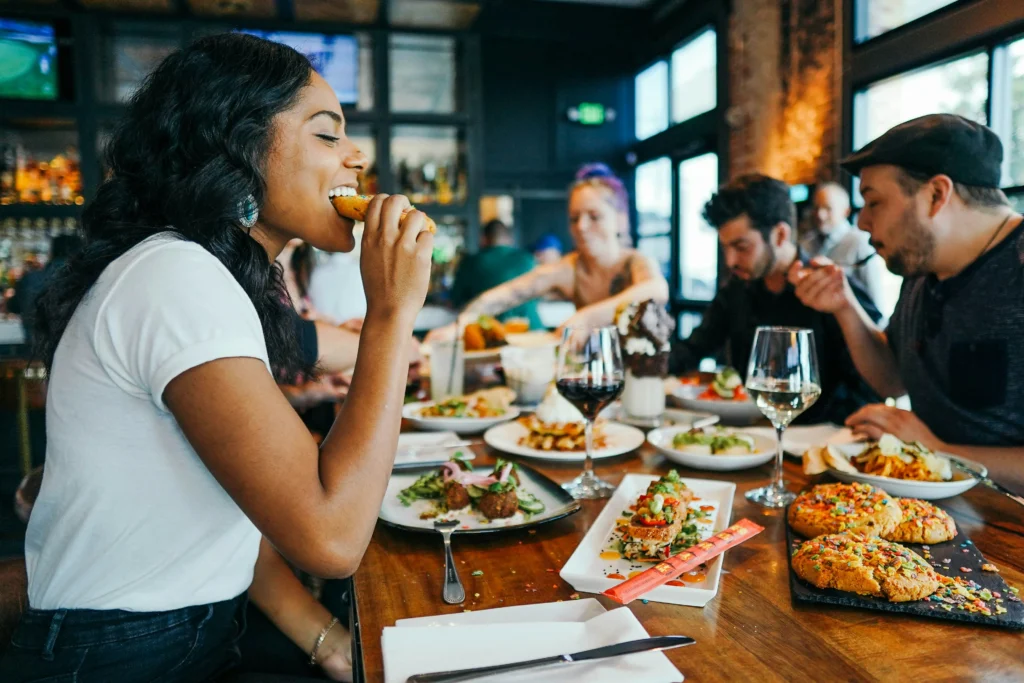
Running a restaurant is notoriously tough on profit margins. Food costs fluctuate, and waste is a constant battle. AI for restaurants is acting as a precision tool to tighten up these leaky margins.
Smart software now forecasts demand with incredible accuracy. It tells your kitchen exactly how much prep to do for a Tuesday lunch service based on historical sales, local events and even the weather. Menu optimization tools analyze which dishes are selling, which are driving profit and which need to be cut. By managing inventory and ordering automatically, these systems drastically reduce food waste. You stop throwing money in the bin and start seeing healthier profit margins.
AI agent for restaurants: Automating service and operations in real time
Imagine having an employee who can answer the phone, take reservations, process online orders and upsell side dishes to a hundred customers at once. That is an AI agent for restaurants. These autonomous systems handle the relentless influx of guest queries and transactions in real time.
For employers, the implications are huge. You no longer need a dedicated staff member glued to the phone or a tablet. Your front-of-house team can actually stay on the floor, interacting with diners and providing exceptional service. These agents integrate seamlessly with your Point of Sale systems, ensuring every order hits the kitchen without human error. It is about designing a service flow that maximizes revenue while minimizing staff stress.
AI for restaurant management: Running smarter, leaner operations
Managers carry the weight of the entire venue on their shoulders. AI for restaurant management gives them a much-needed lifeline. These platforms track performance metrics across the board, from supplier costs to individual server sales.
Venue owners can instantly see where they’re losing money and where they’re winning. Smart systems track supplier pricing trends, automatically flagging when a vendor increases the cost of cooking oil. They provide actionable insights that support rapid, data-backed decision-making. You stop running your business on a hunch and start running it on hard facts.
AI scheduling software for restaurants: Smarter rostering for shift-based teams
Rostering is the ultimate headache for any hospitality manager. Balancing availability, compliance and budget takes hours of manual administration every single week. AI scheduling software for restaurants completely changes this dynamic.
These tools predict your busiest periods and automatically build optimized rosters. They ensure you are never caught understaffed during a rush, and they stop you from wasting money on overstaffing during quiet spells. More importantly, they save managers hours of tedious work. You get that time back to focus on training, venue improvements and actually running your business.
AI for improving restaurant staff retention
High turnover is the hospitality industry’s most expensive problem. Constantly hiring and training new staff drains your resources. Using AI for improving restaurant staff retention gives you a massive advantage.
Smart HR platforms analyze workload balance, scheduling fairness and employee feedback to identify patterns. They can flag when a team member is at risk of burning out before they ever hand in their resignation. By supporting fairer scheduling and giving staff more control over their shifts, you build a workplace culture that people actually want to stay in. When you look after your team, they look after your business.
AI for restaurant staff development: Building better teams with data
Great hospitality workers are made, not born. Training is critical, but a one-size-fits-all approach rarely works. AI for restaurant staff development helps you build highly capable teams by tracking individual performance and identifying specific skills gaps.
If a server consistently struggles with upselling wine, the system can recommend a short, personalized training module specifically on wine pairing. It tracks progress over time, giving managers the data they need to have meaningful performance conversations. You move away from generic training days and start building a deeply engaged, highly skilled workforce that feels invested in their own growth.
Challenges hospitality employers face when adopting AI

We are straight shooters here. Adopting new technology is never entirely frictionless. The upfront cost of implementing advanced systems can feel daunting for independent operators. There is also the very real challenge of staff resistance. People naturally fear that automation will replace their jobs, so you have to manage that change with clear communication.
Integration is another hurdle. You need your new smart systems to talk seamlessly with your legacy Point of Sale and HR platforms. Then there is the critical issue of data privacy and ensuring you handle employee and guest information legally. Staying compliant is non-negotiable, so make sure you review the AI compliance essentials for Canadian small businesses to protect your operations.
Finally, the biggest challenge is maintaining the human touch. Hospitality is about human connection. The goal is to automate the task, not the hospitality. Finding that balance requires strong leadership and a clear vision.
The future of AI in the hospitality industry
The pace of innovation is not slowing down. The future of AI in the hospitality industry points toward even more seamless integration between physical venues and digital tools. We will see fully connected Internet of Things venues where equipment self-regulates energy usage. We will see predictive workforce tools that completely eliminate the friction of shift work.
Agentic AI concierges will handle complex, multi-layered guest requests instantly. Forward-thinking employers need to prepare for this reality today. The businesses that thrive will be the ones that adopt these tools early, train their teams to use them effectively and continuously challenge the status quo of how a venue should operate.
The future of hospitality belongs to those who are bold enough to change. Stop letting outdated, manual processes hold your business back. Embrace the tools that give you your time, your profit margins and your sanity back.
Take the pain out of people management and start building a smarter workforce today
Related Resources
-
 Read more: AI in construction: what every employer needs to know
AI in construction: what every employer needs to know
AI in construction is transforming how employers hire, schedule and operate. Discover how construction worldwide is using AI to improve…
-
 Read more: AI in accounting: what every employer needs to know
AI in accounting: what every employer needs to know
AI in accounting is transforming how employers hire, schedule and operate. Discover how accounting worldwide is using AI to improve…
-
 Read more: AI in hospitality: What every employer needs to know
AI in hospitality: What every employer needs to know
AI in hospitality is transforming how employers hire, schedule and operate. Discover how hospitality businesses worldwide are using AI to…

