














AI in construction: What every employer needs to know
Contents
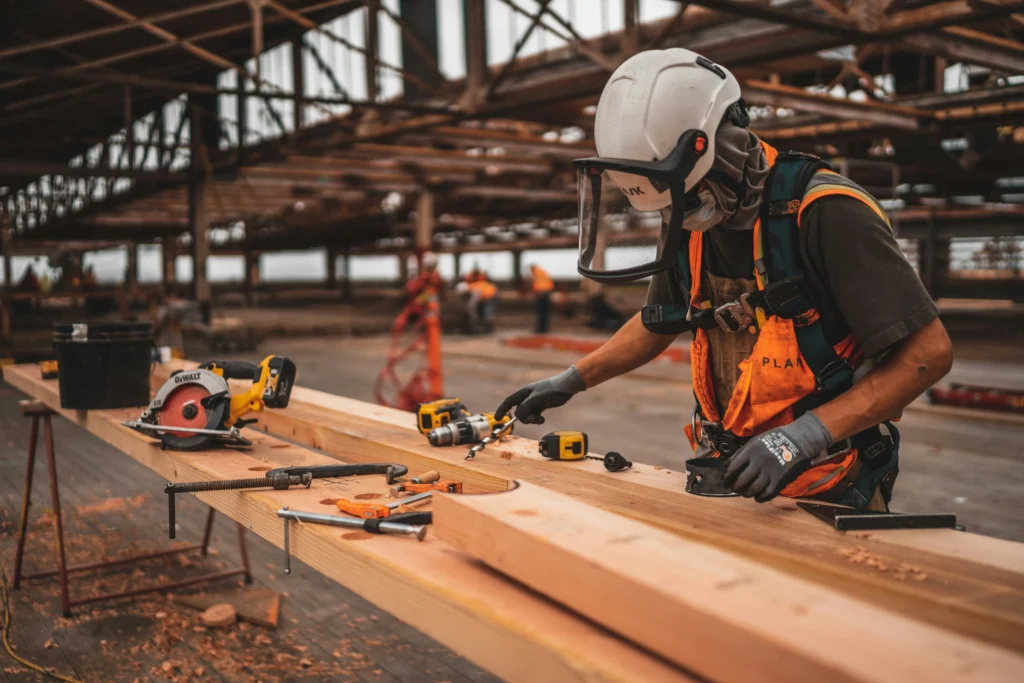
The construction industry has always been about more than just steel and concrete; it’s about the coordination of labour, the precision of planning and the management of risk. But for many Canadian firm owners and site managers, the daily reality is a constant battle against cost overruns, labour shortages and razor-thin margins. The old ways of managing projects—relying on manual spreadsheets and “gut feel” scheduling—are hitting a wall.
Artificial Intelligence (AI) has stepped onto the job site, offering a way to handle the data-heavy heavy lifting so your team can focus on building. This shift is part of a broader trend of AI in business, where technology is moving from a back-office tool to a frontline teammate that helps firms stay ahead of the curve.
Ready to see how AI can transform your workforce management?
What is AI in construction, and why does it matter for employers?
When we talk about AI in construction, we aren’t talking about autonomous robots swinging hammers (at least, not yet). For a busy employer, AI is essentially a high-powered engine that sits inside your project management and HR software. While standard software follows fixed rules, AI learns from past project data to make predictions, recognize patterns and solve problems in real time.
It matters because the stakes in construction have never been higher. Firms that delay adoption are already falling behind on project outcomes. AI addresses the “big three” project killers: unpredictable costs, scheduling delays and safety risks. By using AI to crunch numbers and forecast obstacles, employers can protect their margins and ensure their workforce is used where they are most effective. In a world where AI and HR trends are rapidly evolving, staying tech-illiterate is no longer an option.
How AI is transforming the construction industry
The global construction landscape is undergoing a massive shift. We are currently facing a “perfect storm” of chronic labour shortages, rising material costs and increasingly complex project requirements. In Canada, where seasonal windows are tight and safety regulations are stringent, the pressure on employers is immense.
AI in the construction industry is the strategic tool that allows managers to regain control. It’s moving the industry from a “reactive” state—where you fix problems after they occur—to a “proactive” state. Whether it’s predicting a supply chain bottleneck or identifying a potential safety hazard on a 20-storey build, AI acts as an extra set of eyes that never gets tired. For employers, this means fewer cost blowouts and a more stable, predictable business model.
How to use AI in construction: key applications across the project lifecycle
Efficiency is won or lost in the details. Knowing how to use AI in construction means understanding where it fits into every phase of the build, from the first sketch to the final handover.
Planning, design and feasibility
This is where AI saves the most money before a single shovel hits the dirt. During preconstruction, AI tools can run thousands of design iterations in minutes, identifying the most cost-effective and structurally sound options. It analyses project viability by comparing your plans against historical data from similar builds, producing cost estimates that are significantly more accurate than manual calculations.
Project scheduling and resource allocation
Rostering a site team is a logistical puzzle. AI builds baseline schedules faster by accounting for lead times, weather patterns and labour availability. It allocates equipment and crew more efficiently, flagging potential delays weeks before they actually hit the timeline. This ensures you aren’t paying for a crane to sit idle or for a crew to show up when the materials haven’t arrived.
On-site safety monitoring
Employer duty of care is a heavy responsibility. AI-powered cameras and drones can now monitor site conditions in real time, detecting if a worker isn’t wearing a hard hat or if a trench hasn’t been properly shored. These sensors flag unsafe behaviours immediately, allowing for instant intervention. This doesn’t just save lives; it protects the employer from massive liability and insurance hikes.
Quality control and progress tracking
AI can monitor active builds against original BIM (Building Information Modelling) models. By using site scans and photo documentation, it flags inconsistencies early—like a pipe being laid three inches off-mark—before they result in expensive rework. This constant feedback loop ensures the quality of the build stays high without requiring a manager to walk every inch of the site daily.
Predictive maintenance for equipment and assets
Breakdowns are expensive. AI analyzes sensor data from heavy machinery to forecast when a part is likely to fail. Instead of waiting for a backhoe to die in the middle of a critical pour, you can schedule maintenance during downtime. This extends the life of your expensive plant and keeps the project moving.
Generative AI in construction: What it means beyond automation
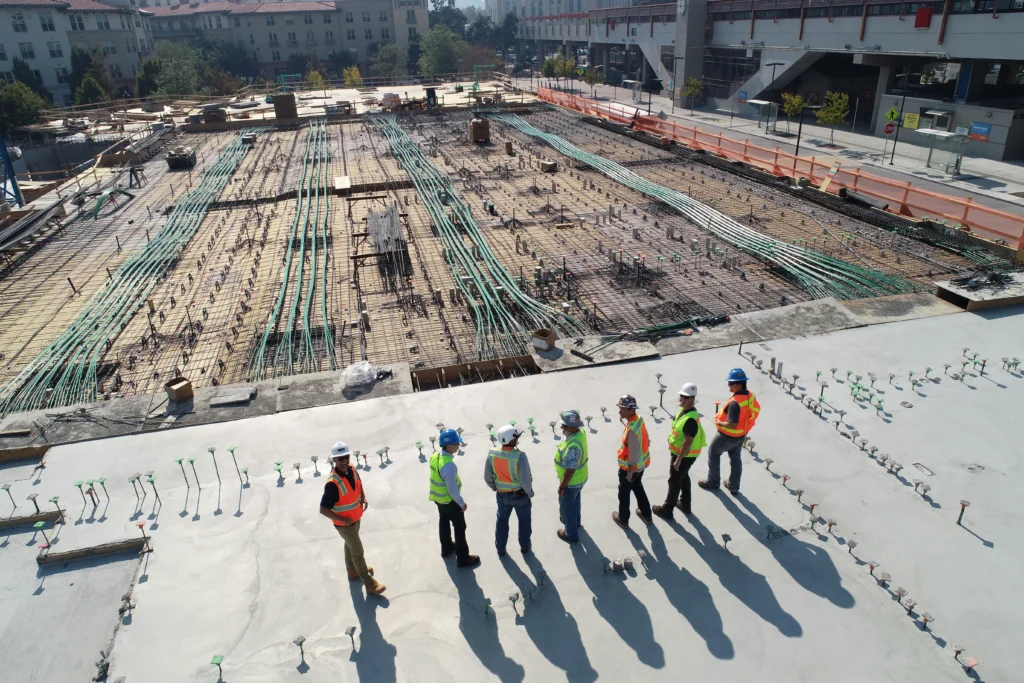
While basic AI follows rules, generative AI in construction actually creates new content. It’s the difference between a system that tracks your schedule and one that suggests a brand-new, more efficient schedule you hadn’t considered.
Generative design allows architects and engineers to input constraints, like budget, site size and local Canadian building codes, and have the AI generate dozens of optimized floor plans. It’s also being used for scenario modelling: “What happens to our timeline if the concrete delivery is delayed by four days?” Generative AI provides the answer and the solution instantly, assisting with complex documentation and reducing the “admin drag” that keeps site managers in the trailer instead of on the floor.
AI tools for construction management: what employers should look for
The market is flooded with tech, but not all of it is built for the “dust and dirt” of a real site. When evaluating AI tools for construction management, employers need to look for three things:
- Integration: Does it play nice with your current CAD or project management software?
- Scalability: Can it handle a small residential renovation and a massive commercial high-rise?
- User Experience: If your site foreman can’t figure it out on a tablet in thirty seconds, they won’t use it.
Look for platforms that combine scheduling, cost management and AI in HR to get a 360-degree view of your business health.
AI for construction workforce management: hiring, scheduling and retaining site teams
The biggest challenge in Canadian construction today isn’t tech—it’s people. AI for construction is now a critical part of workforce strategy, helping employers find and keep the talent they need to actually finish the job.
Using AI to recruit and onboard construction workers
Hiring at scale is a nightmare during a labour shortage. AI-assisted AI recruitment tools help firms screen hundreds of applications for trades and site staff in seconds. It matches candidates to project requirements based on certifications and past experience, significantly reducing time-to-hire. Once hired, AI-driven onboarding ensures every worker knows the site safety protocols before they even pick up a tool.
The skills construction employers are now hiring for
The “modern” construction worker needs more than just a trade ticket. We are seeing a massive shift in AI in the workforce, where digital literacy is becoming a core requirement. Employers are now prioritizing site managers who are comfortable with data-informed decision-making and can work alongside AI-powered tools.
Challenges construction employers face when adopting AI
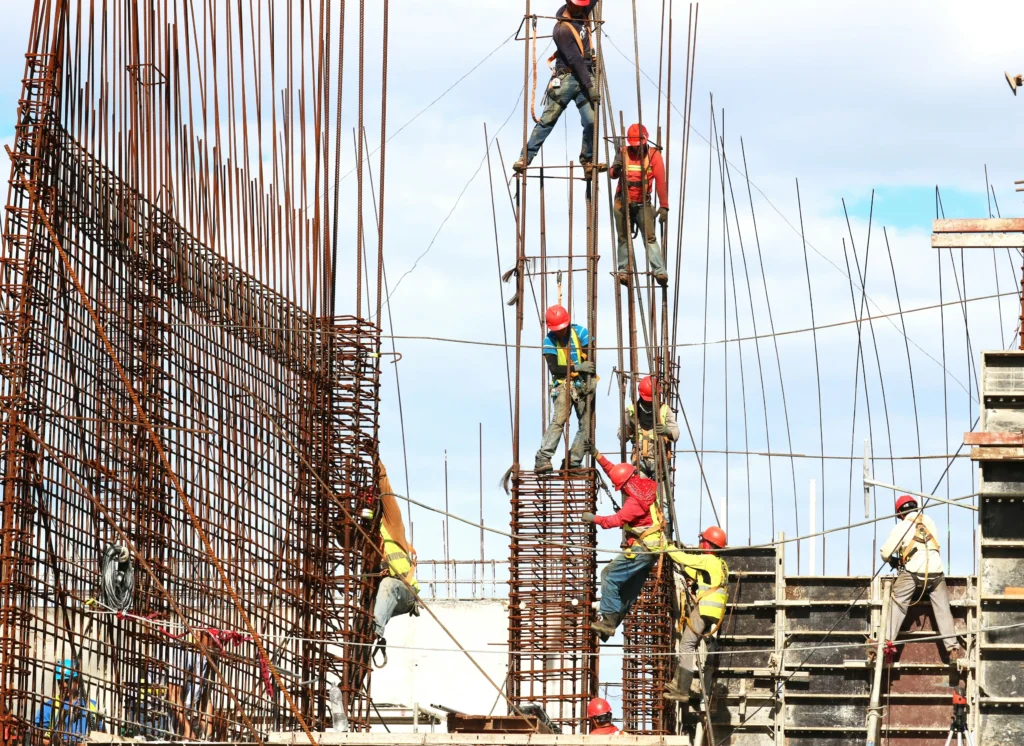
It’s not all smooth sailing. Adopting AI in a multi-party construction environment is complex.
- Upfront Investment: High-quality AI tools aren’t cheap, and the ROI can take a few project cycles to show up.
- Workforce Resistance: Some “old school” crews may be skeptical of “the computer” telling them how to work.
- Data Quality: AI is only as good as the data you feed it. If your past project records are a mess of paper notes, the AI will struggle.
- Compliance: Employers must ensure they are using AI done right by following Canadian privacy and compliance standards, especially when monitoring site workers.
The future of AI in the construction industry: What forward-thinking employers should prepare for
We are heading toward a world of “AI-native” construction. Imagine a site where autonomous equipment operates safely alongside human crews, guided by a central AI that manages the entire project’s digital twin in real time.
Predictive workforce planning will become the standard—you’ll know you need three extra electricians six months before the wiring even starts. Proactive employers should be investing in their digital infrastructure now. The firms that win the next decade will be the ones that stop viewing tech as an “extra” and start viewing it as the foundation of every build.
Build a smarter workforce with AI
The shift toward AI isn’t about replacing the skilled tradespeople who make the construction industry what it is. It’s about giving them the tools to work safer, faster and more efficiently. By letting technology handle the scheduling and the data-crunching, you give your team the breathing room to do their best work.
At Employment Hero, we’re here to help you navigate this transition. From smarter recruitment to automated payroll that actually works for site-based teams, our platform is designed to take the admin weight off your shoulders.
Want to see how our AI-enhanced HR and payroll can save your construction company time?
Related Resources
-
 Read more: AI in construction: What every employer needs to know
AI in construction: What every employer needs to know
AI in construction is transforming how employers hire, schedule and operate. Discover how construction worldwide is using AI to improve…
-
 Read more: AI in accounting: what every employer needs to know
AI in accounting: what every employer needs to know
AI in accounting is transforming how employers hire, schedule and operate. Discover how accounting worldwide is using AI to improve…
-
 Read more: AI in hospitality: What every employer needs to know
AI in hospitality: What every employer needs to know
AI in hospitality is transforming how employers hire, schedule and operate. Discover how hospitality businesses worldwide are using AI to…

