














Performance review template for restaurant employees: A guide for Canadian employers
Published
Performance review template for restaurant employees: A guide for Canadian employers
Published
Restaurant performance lives and dies by the tiniest details. One standout staff interaction can turn a first-time guest into a regular—or one misstep can send your reputation spiraling in the reviews. Yet the same things that make restaurants dynamic—busy, unpredictable shifts, constantly changing teams—can make it easy to let performance management slide.
That’s a risk you can’t afford. High turnover, shifting rosters and inconsistent standards can put your business on the back foot if you’re not running structured, regular reviews. This guide is built for restaurant owners and managers looking to get clear on performance, drive better service standards and finally turn feedback into business results.
Chaotic service periods are no excuse for poor feedback. A structured performance review process strips away the guesswork and challenges the status quo. It gives you a clear framework to measure service quality, operational reliability and teamwork. This guide shows you exactly how to build a review process that empowers your restaurant staff and elevates your entire guest experience.
Why performance reviews matter in the restaurant industry
Structured and regular performance reviews are especially critical for restaurant employers. There is a direct link between how well you manage performance and the two biggest operational challenges restaurants face: staff turnover and inconsistent service quality.
When you run an effective review, you give your frontline workers the clarity they need to excel. You help them understand expectations and build a clear path forward. Regular feedback is one of the most effective ways to convert casual workers into reliable, long-term team members. Engaging your best staff gives you a massive advantage in a fiercely competitive hospitality market.
Ready to streamline your staff evaluations? Download our free restaurant performance review template today.
The unique challenges of running performance reviews in a restaurant
You cannot copy and paste a corporate office review template into a commercial kitchen. Any practical review process needs to account for the structural realities of restaurant work.
High turnover and casual workforce dynamics
The restaurant industry operates with a massive proportion of casual and part-time staff. This workforce mix makes it tempting to deprioritise reviews for short-tenure employees. That is a massive mistake. Regular feedback actively reduces your turnover rate. Employment Hero is specifically built to handle this reality, supporting multiple employment types and entitlements within the same smart system.
Shift-based teams with no desk time
Most restaurant employees are on the floor or in the kitchen during working hours. There is no natural touchpoint for formal feedback. You must adapt your review formats to account for this reality. Keep reviews structured but time-efficient. Schedule them in quiet pre-service periods and use mobile-accessible tools. The Employment Hero mobile app gives staff access to everything from HR processes to self-assessments right from their phones.
The diversity of roles under one roof
A single restaurant employs front-of-house servers, kitchen hands, chefs, bar staff and supervisors. Each role carries entirely different performance criteria and service expectations. A generic review form will completely fail here. Effective reviews require role-specific criteria aligned perfectly to each position’s actual job description.
Burnout risk in a high-pressure environment
Burnout runs rampant through restaurant teams. Our research found that 48% of workers cited feeling mentally or emotionally burnt out as a reason for taking a sick day. When run well, performance reviews create a safe space for managers to identify early signs of burnout. You can check in on workloads and surface issues long before they become retention problems.
How to prepare for a restaurant performance review
A productive review starts long before the actual meeting. You need to gather objective data and set the right environment. Pull data from multiple touchpoints, including attendance records, guest feedback and peer observations. Ask your employees to complete a short self-assessment before the review to surface their unique perspective. Finally, choose a private space away from the kitchen and give your staff adequate notice to prepare.
Key metrics to evaluate restaurant employees during performance reviews
You must assess both the measurable and qualitative dimensions of performance. Focus on these core metrics to get a complete picture of your team.
Service quality and guest experience
Assess an employee’s direct contribution to the dining experience. Draw on guest feedback, manager observations across multiple shifts and peer input. Service quality criteria differ by role. Measure a server’s attentiveness, a bar staff member’s speed or a host’s ability to manage wait times gracefully. For guest-facing roles, this is the most business-critical dimension of the entire review.
Attendance, punctuality and reliability
Evaluate your employee’s consistency in showing up on time and prepared. In restaurants, a late arrival directly affects service delivery and puts massive pressure on the rest of the team. Review attendance data fairly using the clear records available in Employment Hero, accounting for legitimate absences while maintaining firm expectations.
Food safety and compliance
Assess your employee’s adherence to food safety standards, responsible service of alcohol (RSA) requirements and workplace health obligations. Employment Hero allows you to upload key certifications directly to each employee’s profile and get notified before they expire. We help you manage compliance seamlessly, making safety checks a natural part of the review process.
Teamwork and communication
Assess how well an employee works within their team. Front-of-house and back-of-house coordination directly impacts your service outcomes. Evaluate how employees respond to direction, support colleagues during busy service and communicate problems to their supervisors.
Job knowledge and technical skills
Evaluate role-specific technical competency. Look at a chef’s output consistency, a server’s allergen knowledge or a kitchen hand’s adherence to hygiene standards. Anchor these criteria directly to the role’s job description to guarantee fairness across all reviews.
Upselling and revenue contribution (where applicable)
For front-of-house roles, assess their contribution to revenue through upselling and add-on sales. Set fair benchmarks for these metrics. Frame them constructively by tying them to positive guest experience outcomes rather than just pure transaction value.
Need a structured way to measure these metrics? Download our free restaurant performance review template now.
Tailoring review criteria by role
A one-size-fits-all approach fails in hospitality. You must adapt your criteria for your main staff categories.
Front-of-house staff (servers, hosts, bar staff)
Evaluate guest-facing floor roles on service standards, menu knowledge, section management and complaint handling. Guest feedback is the most valuable performance data source for this group.
Kitchen and back-of-house staff
Evaluate kitchen employees against the gritty realities of their role. Look at output quality, adherence to portion standards, food safety practices and speed during service. Internal quality checks and manager observations are your primary evidence sources here.
Supervisors and team leaders
Evaluate supervisors against an expanded set of criteria. Look at their ability to lead during service, handle guest complaints in the moment and support junior team members. Employment Hero’s review tools can easily be configured to reflect these expanded expectations with different templates for different levels.
Best practices for delivering feedback to restaurant employees
Give feedback that is fair, specific and deeply motivating. Navigate the high-pressure restaurant environment with these practical tips.
Lead with recognition before development feedback
Open your reviews with specific and genuine recognition. Citing a strong shift or consistent reliability creates the psychological safety employees need to receive development feedback openly. Employment Hero’s recognition tools allow managers to acknowledge staff contributions in real time so positive feedback never has to wait.
Use specific examples and incidents to ground feedback
Ground your feedback in highly traceable examples. Point to a guest complaint handled perfectly or a shift where food safety standards slipped. Concrete examples prove you pay attention across the full review period rather than just the last week.
Keep development feedback focused
Do not overwhelm your casual or younger workers with a massive list of improvement areas. Limit development feedback to one or two major priorities per cycle. Employment Hero’s 9-box Talent Grid helps managers visually map performance against potential, making it easy to identify the most impactful focus areas.
Make it a two-way conversation
Restaurant employees often experience reviews as high-anxiety events. Frame the review as a collaborative discussion. Start with their self-assessment and ask open questions. Employment Hero’s built-in engagement surveys also provide a broader read on team sentiment before the review period even begins.
Setting goals and development plans for restaurant staff
Use the performance review to set meaningful goals that support both the employee’s career and your restaurant’s service standards. Apply the SMART framework to make goals Specific, Measurable, Achievable, Relevant and Time-bound.
Review cadence: how often should you review restaurant staff
Set a review frequency that keeps performance active without creating an unnecessary admin burden.
90-day new hire review
New employees need a structured review at the 90-day mark. Focus on onboarding progress, role clarity and early service performance. This review is as much about checking in on your support systems as it is about evaluating the new hire.
Quarterly reviews as the recommended default
A quarterly review cadence is the most practical approach for restaurants. It is frequent enough to course-correct early but spaced far enough apart for meaningful change to occur. Quarterly reviews align perfectly with seasonal menu changes and staffing peaks.
Regular check-ins between formal reviews
Brief check-ins keep performance conversations alive between formal cycles. Even a five-minute chat before a shift makes a difference. Employment Hero supports ongoing feedback and goal tracking so the formal review acts as a summary rather than an annual surprise.
Take the hard work out of goal setting. Download our comprehensive restaurant performance review template today.
Common mistakes restaurant employers make with performance reviews
Avoid these frequent traps that undermine the effectiveness of your restaurant reviews.
Reviewing only on recent memory rather than the full period
Recency bias is highly pronounced in shift-based environments. Counter this by using Employment Hero’s centralised HR data to build a solid evidence base covering the entire review period.
Using a generic form across all roles
Reviewing a kitchen hand against the same criteria as a floor supervisor produces a completely meaningless evaluation. Employment Hero allows you to configure entirely different templates for different roles within your business.
Skipping the self-assessment
Managers routinely skip self-assessments because of time pressure. This is a massive mistake. Self-assessments reliably surface differences in perception that quickly become turnover risks if left ignored.
Not following up after the review
Development goals agreed upon in the review are completely useless if they are never revisited. Employment Hero keeps goals highly visible between review cycles so both parties can track real progress.
The role of Employment Hero in restaurant performance reviews
Employment Hero’s Employment Operating System is built specifically for the operational realities of restaurant businesses. We support the full performance review cycle from preparation to follow-up. We take employment off your plate so you can focus on delivering an incredible dining experience.
Following up after the restaurant performance review
The true value of a review is determined entirely by what happens in the weeks that follow.
Keeping goals live between review cycles
Track development goals actively between cycles. Employment Hero’s goal-tracking functionality keeps agreed objectives visible to both managers and employees within the platform.
Acting on development commitments
The fastest way to disengage a restaurant employee is to break a promise made during a review. Follow through on training courses and pathways toward senior roles. Employment Hero’s learning tools make it easier to assign and track training as part of your post-review action plan.
Using review outcomes to inform rostering and team structure
Use your performance data to make smarter operational decisions. Identify high performers ready for more responsibility or flag team members who need additional support during peak service. Smart rostering builds a much stronger restaurant.
Employment Hero offers an all-in-one platform designed to streamline your HR, payroll and performance management processes. Reduce your administrative burden and empower your scaling restaurant team.
Request a demo today to see how we challenge the status quo and make employment easier.
Register for the template
Related Resources
-
 Read more: Performance review template for restaurant employees: A guide for Canadian employers
Performance review template for restaurant employees: A guide for Canadian employers
Learn how to conduct effective performance reviews for restaurant staff. Discover key metrics, best practices and tips to ensure a…
-
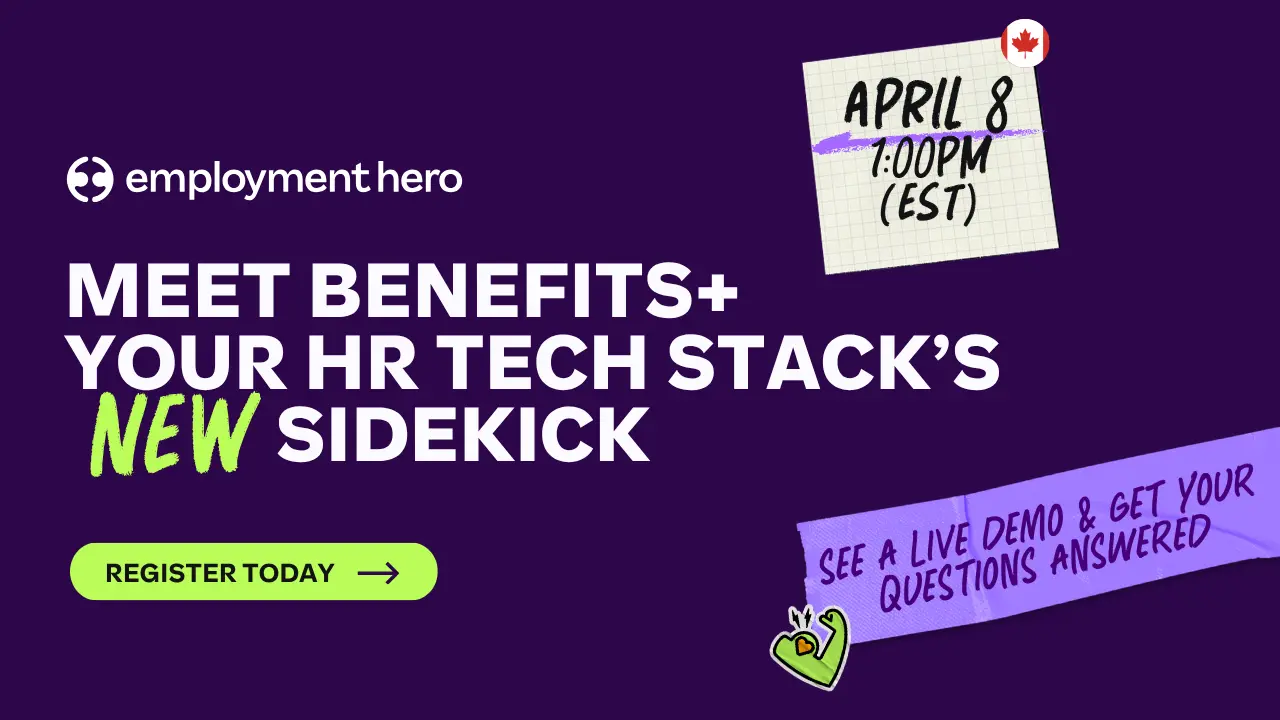 Read more: Meet Benefits Plus: Your HR Tech Stack’s New Sidekick
Meet Benefits Plus: Your HR Tech Stack’s New Sidekick
Manage benefits, HR, and payroll together in one platform. Join our live demo of Benefits Plus to learn how to…
-
 Read more: Performance review template for hospitality workers: A guide for Canadian employers
Performance review template for hospitality workers: A guide for Canadian employers
Learn how to conduct effective performance reviews for hospitality staff. Discover key metrics, best practices and tips to ensure a…

