 Australia
  New Zealand
  United Kingdom
  Singapore
  Malaysia
  Canada (Français)














Alberta statutory holidays 2026 and employer pay rules

Contents
Here’s a number worth knowing before your next pay run: an employee in Alberta can file an employment standards complaint up to six months after their last day of work. So a holiday pay miscalculation from Christmas doesn’t quietly disappear in the new year. It can resurface in June, long after the person has left, with interest in the form of an investigation.
The good news is that the rules for stat holidays in Alberta in 2026 are entirely learnable. The province recognizes exactly nine general (statutory) holidays, governed by Part 2, Division 5 of the Employment Standards Code. And the framework recently became more flexible: following a public consultation on General Holiday Flexibility, changes that took effect on 23 December 2025 now allow employers and employees to substitute a standard holiday for a cultural one, with mutual consent.
This guide covers the full 2026 calendar, who qualifies for holiday pay, the famously misunderstood 5 of 9 rule and how to calculate pay correctly in every scenario.
Want to see holiday pay calculated correctly before you’ve finished your first coffee?
2026 Alberta statutory holidays list and dates
Alberta’s nine general holidays are set out in the Employment Standards Code, and the 2026 dates fall as follows.
|
Holiday name |
2026 date |
Day of the week |
|---|---|---|
|
New Year’s Day |
1 January 2026 |
Thursday |
|
Family Day |
16 February 2026 (third Monday in February) |
Monday |
|
Good Friday |
3 April 2026 (Friday before Easter Sunday) |
Friday |
|
Victoria Day |
18 May 2026 (Monday before 25 May) |
Monday |
|
Canada Day |
1 July 2026 |
Wednesday |
|
Labour Day |
7 September 2026 (first Monday in September) |
Monday |
|
Thanksgiving Day |
12 October 2026 (second Monday in October) |
Monday |
|
Remembrance Day |
11 November 2026 |
Wednesday |
|
Christmas Day |
25 December 2026 |
Friday |
Notice the shape of the year: four of the nine land on a Monday, and two midweek holidays (Canada Day and Remembrance Day, both Wednesdays) create natural bridge day opportunities. Plenty of teams will ask for the Thursday and Friday around them. A downloadable holiday calendar in PDF, Excel or CSV format makes it easier to plan staffing around those four-day-weekend requests before they arrive in your inbox all at once.
Statutory holiday rules are one piece of a bigger provincial framework. If you want the full picture of your obligations as an employer in the province, the Alberta Employment Standards resource covers the code from hiring through to termination.
Optional and non-statutory holidays in Alberta
This is where well-meaning employers get tripped up, because the holidays people assume are statutory often aren’t. Four dates cause most of the confusion.
Boxing Day (Saturday, 26 December 2026) is not an official statutory holiday in Alberta. Many non-retail businesses close and treat it as one, which is a perfectly fine choice, but the Employment Standards Code doesn’t require it.
Easter Monday (6 April 2026) is not a provincial statutory holiday either. It’s a holiday for federally regulated workplaces, or a day off at an employer’s discretion.
National Day for Truth and Reconciliation (Wednesday, 30 September 2026) is an optional holiday in Alberta. It’s a statutory holiday for federal workers only.
Heritage Day (Monday, 3 August 2026) is an optional holiday in Alberta, the equivalent of the Civic Holiday observed in other provinces.
One important catch: if you choose to recognize any of these optional days as holidays in your workplace, all the employment standards rules around holiday pay apply to them. Adopting Boxing Day as a company holiday means paying it like one.
Alberta’s mix of official and optional days is also unusual by national standards. Some provinces recognize Boxing Day, others treat Remembrance Day as optiona. If you employ people in more than one province, the statutory holidays by province comparison shows how Alberta’s calendar lines up against the rest of the country.
Eligibility rules for general holiday pay

Who actually qualifies for holiday pay is the single biggest source of employer confusion in Alberta, so it’s worth slowing down here. Three conditions do most of the work.
1. The 30-workday threshold. To qualify, an employee must have worked for you for at least 30 workdays in the 12 months before the holiday. Not 30 calendar days. Thirty days actually worked.
2. The shifts on either side. The employee must work their last scheduled shift before the holiday and their first scheduled shift after it, unless they have your consent to miss one or a valid excuse, like illness. The key word is scheduled. A part-time employee who works Tuesdays, Wednesdays and Thursdays doesn’t need to work the Friday before a Monday holiday, because they were never scheduled to. They need to work their Thursday shift before it and their Tuesday shift after it.
3. The 5 of 9 rule. For employees with irregular schedules, this rule determines whether the holiday falls on what counts as a regular day of work. Look at the same day of the week as the holiday across the nine weeks before it. If the employee worked that day in at least five of those nine weeks, it’s a regular day of work for them.
Take Labour Day 2026, which falls on Monday, 7 September. Look back at the previous nine Mondays. Your weekend-heavy casual worker picked up five of those Monday shifts, so Monday counts as a regular workday for them, and they are entitled to holiday pay even though their schedule changes constantly. Their colleague worked only three of the nine Mondays, so the holiday falls on a non-regular day for them and different pay rules apply (more on those below).
A few clarifications that save arguments later:
- The same eligibility rules apply to full-time, part-time and casual employees, and they apply whether your business is open or closed on the holiday.
- An employee who is required or scheduled to work on a general holiday and doesn’t show up, without approval, is not entitled to general holiday pay for that day.
- Employment standards rules don’t apply to contractors. Certain roles are also excluded from general holiday pay entirely: commission-only salespersons in automobiles, investments, real estate and insurance, film extras, camp counsellors and teachers. Construction and farm workers have their own specific rules.
Want to see how to run eligibility checks without second-guessing a single shift?
How to calculate general holiday pay in Alberta
Every calculation starts with one figure: the employee’s average daily wage.
Average daily wage is the total wages the employee earned in the four weeks before the holiday (or the four weeks ending on the last day of the pay period immediately before the holiday), divided by the number of days they worked in that period. Performance-related bonuses count as wages. Overtime pay does not, so leave it out of the calculation. Salaried employees are permitted to use simplified calculations.
From there, the amount owing depends on two questions: did the holiday fall on a regular workday for this employee, and did they work it? That gives you four scenarios.
Scenario 1: Regular workday, employee does not work. They’re entitled to general holiday pay of at least their average daily wage. Business closed for Thanksgiving? Everyone who qualifies gets their average daily wage for the day.
Scenario 2: Regular workday, employee works. You have two options. Option one: pay 1.5 times their normal wage rate for the hours worked, plus their average daily wage. Option two: pay their normal wage rate for the hours worked and give them a future day off, paid at their average daily wage.
Here’s what that looks like in practice. Priya earns $20 per hour and her average daily wage works out to $150. She works an eight-hour shift on Labour Day, which is a regular workday for her. Under option one, she receives $240 for the shift (1.5 x $20 x 8 hours) plus her $150 average daily wage, for a total of $390. Under option two, she receives $160 for the shift at her normal rate, plus a future paid day off worth $150.
Scenario 3: Non-regular workday, employee does not work. No holiday pay and no day in lieu. If the 5 of 9 rule says Monday isn’t a regular workday for an employee and they don’t work the Monday holiday, nothing is owed.
Scenario 4: Non-regular workday, employee works. Pay 1.5 times their normal wage rate for the hours worked.
One more situation catches employers off guard: a general holiday that lands during an employee’s annual vacation. In that case, they’re entitled to an alternate day off, paid at their average daily wage, on their first scheduled working day after the vacation, or on another day you both agree to.
The average daily wage calculation, the four-week window and the scenario logic all sit inside a wider set of provincial payroll obligations. The Alberta payroll rules guide walks through the full compliance picture, from overtime to deductions.
Want to make calculating vacation pay a breeze? Try our vacation pay calculator
Federal vs. provincial regulations in Alberta
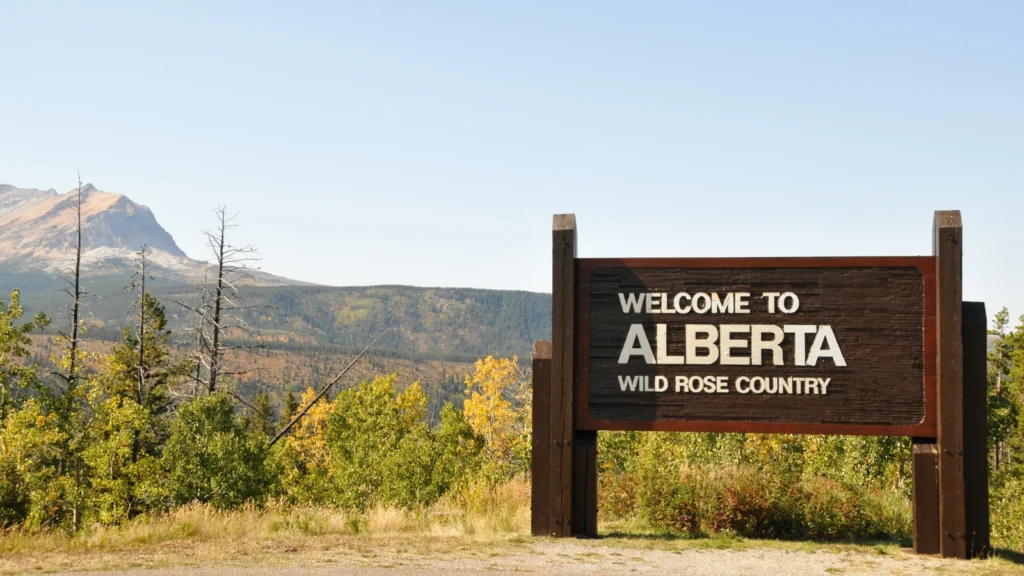
Most employees in Alberta are provincially regulated. If the work is performed in Alberta, Alberta Employment Standards apply, regardless of where the employer’s head office sits. A Toronto-headquartered company with a Calgary warehouse follows Alberta’s rules for its Calgary staff.
The exception is federally regulated industries, such as banking, telecommunications and interprovincial transportation. Employees in those sectors follow federal rules instead, and the differences are material. The federal minimum wage increased to $18.15 per hour on 1 April 2026, and federally regulated employers in Alberta must pay that rate because it’s higher than Alberta’s provincial minimum wage, which remains $15.00 per hour.
Provincial rules keep moving too. Amendments to Alberta’s Employment Standards Regulation took effect on 1 January 2026, extending the maximum duration of unpaid, job-protected long-term illness and injury leave from 16 weeks to 27 weeks per calendar year, bringing Alberta in line with federal standards. It’s a useful reminder that holiday rules don’t live in isolation. The same code that sets the nine holidays also governs leave, and both change more often than most busy employers can track.
Nine holidays, zero guesswork
Alberta’s stat holiday rules reward employers who set up their process once and apply it consistently: confirm the 30 workdays, check the shifts on either side, run the 5 of 9 rule for irregular schedules, then match the right scenario to the right pay. Do that, and holiday pay stops being a source of complaints and becomes proof that you treat your people fairly. That protection cuts both ways, shielding the business and building the kind of trust that keeps good staff around.
And if you’re growing your team in the province, holiday pay is just one of the standards you’ll want set up properly from day one. The guide to hiring in Alberta covers the rest of the journey, from contracts to onboarding.
Curious what payroll looks like when the holiday rules are already built in?
Frequently asked questions
Alberta has 9 official statutory holidays in 2026: New Year’s Day, Family Day, Good Friday, Victoria Day, Canada Day, Labour Day, Thanksgiving Day, Remembrance Day and Christmas Day.
Yes. To qualify for holiday pay, an employee must work their last scheduled shift before the holiday and their first scheduled shift after it, unless they have employer consent or a valid excuse. The shifts that matter are the employee’s own scheduled shifts, not the calendar days immediately beside the holiday.
The 5 of 9 rule determines whether a day counts as a regular day of work for an employee with an irregular schedule. If the employee worked on the same day of the week as the holiday in at least five of the nine weeks before it, that day is a regular day of work and standard holiday pay rules apply.
Yes, when the employee meets the eligibility criteria: at least 30 workdays with the employer in the 12 months before the holiday, plus working their scheduled shifts before and after it.
Yes. 16 February 2026 is Family Day, an official paid statutory holiday in Alberta.
Start with the average daily wage: total wages earned in the four weeks before the holiday, divided by the number of days worked in that period. What you owe then depends on whether the holiday fell on a regular workday for that employee and whether they worked it, ranging from the average daily wage alone to 1.5 times their wage rate plus the average daily wage.
Related Resources
-
 Read more: The October 2026 minimum wage increase: What changed in five provinces and what to check now
The October 2026 minimum wage increase: What changed in five provinces and what to check now
October 2026 minimum wage increase: see the new rates in Ontario, Manitoba, Saskatchewan, Nova Scotia and PEI and what to…
-
 Read more: Payroll calculator BC 2026: How to run payroll in British Columbia
Payroll calculator BC 2026: How to run payroll in British Columbia
Struggling with BC payroll compliance? Master deductions, stat holiday pay, and the latest 2026 tax rates to pay your team…
-
 Read more: Employee recognition ideas for Canadian businesses
Employee recognition ideas for Canadian businesses
Over 58% of employees feel undervalued at work. Discover creative, budget-friendly ways to reward your team, reduce turnover, and build…
