














AI in manufacturing: What every employer needs to know
Contents
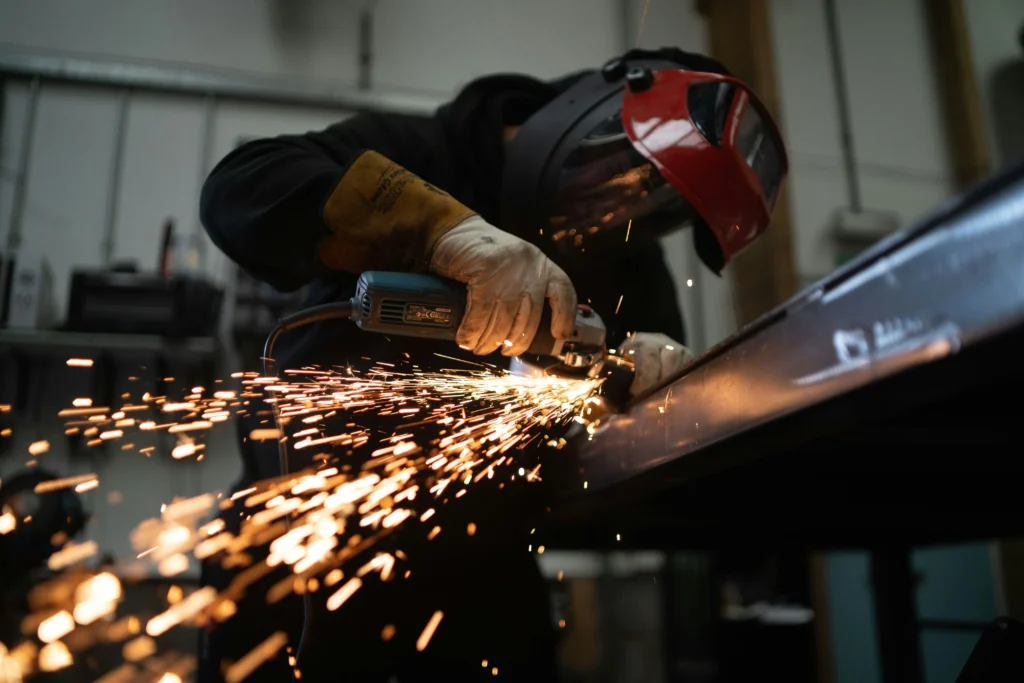
Running a manufacturing business means navigating tight margins, relentless supply chain pressures and an ongoing battle for skilled labour. You face the constant challenge of scaling production while keeping costs under control. For years, improving operations meant pushing your machinery harder or asking your team to work longer hours. That approach is broken.
Artificial intelligence offers a completely different path forward. We are seeing a massive shift in how products go from raw materials to finished goods. Smart technology takes the heavy lifting out of complex decision-making. It gives growing mid-sized operations the power to punch above their weight on the global stage.
You don’t need a massive enterprise budget to see the benefits. Adopting AI in business is about equipping your workforce with tools that eliminate bottlenecks. It clears the path for your people to focus on strategy, innovation and growth. If you want to build a resilient production line that adapts to constant change, you need to understand how these systems operate in the real world.
Discover the future of manufacturing, today
What is AI in manufacturing?
Artificial intelligence in this sector refers to software that analyzes massive amounts of production data to make smart decisions. Think of it as an invisible, high-speed analyst working alongside your operations team. It connects your shop floor to your back office. The technology processes information from machine sensors, inventory databases and employee schedules to find the most efficient way to run your business.
For a mid-sized employer, this technology directly targets operational efficiency; it spots patterns human eyes miss. Instead of reacting to a broken machine or a delayed shipment, your systems anticipate the problem before it hits your bottom line.
This matters right now because the global market waits for no one. Your competitors are actively adopting these tools to drive down costs and speed up delivery times. Integrating smart systems is no longer a futuristic luxury. It’s the new baseline for remaining competitive and building a sustainable company.
AI in manufacturing examples: how it’s being used on the floor and beyond
Theory is great, but practical application pays the bills. Manufacturers are rolling out these systems across their entire operations right now. They use them to cut waste, protect their equipment and keep their people safe. Industry leaders note how AI in manufacturing fundamentally shifts how factories respond to daily variables. Here’s how this technology shows up on the floor.
Predictive maintenance
Every minute of unplanned downtime bleeds money from your business. Traditionally, you fixed a machine when it broke or followed a rigid service schedule that wasted perfectly good parts. Predictive maintenance changes the game entirely.
The software constantly analyzes data from sensors attached to your equipment. It tracks vibrations, temperature changes and output speeds. When a machine starts acting slightly out of character, the system flags the issue immediately. You get an alert to replace a specific bearing before the entire production line grinds to a halt. This helps you to reduce maintenance costs, extending the life of your expensive assets and keeping your production schedule intact.
Quality control and defect detection
Manual inspections are slow and prone to human error. When your team stares at hundreds of parts moving down a conveyor belt, fatigue sets in. Missed defects lead to customer complaints, expensive returns and damaged reputations.
Computer vision, powered by smart algorithms, solves this problem. High-speed cameras inspect every single product in real time. The software compares the physical item against a perfect digital model. It instantly identifies microscopic cracks, misaligned labels or colour inconsistencies. Defective items are automatically diverted from the line. Your quality control becomes incredibly accurate, allowing your human inspectors to focus on resolving the root cause of the defects rather than simply playing catch-up.
Supply chain and inventory optimization
Managing a modern supply chain feels like guessing the future. Material costs fluctuate, shipping routes experience delays and customer demand shifts overnight. Carrying too much inventory ties up your cash flow. Carrying too little means you miss out on major orders.
These advanced platforms analyze global data sets to forecast demand with incredible accuracy and help businesses respond dynamically to disruptions. The system watches weather patterns, shipping container availability and historical sales data. It automatically adjusts your procurement orders to maintain the perfect stock levels. You build a resilient supply chain that bends without breaking.
AI agents for manufacturing: automating decisions without human input
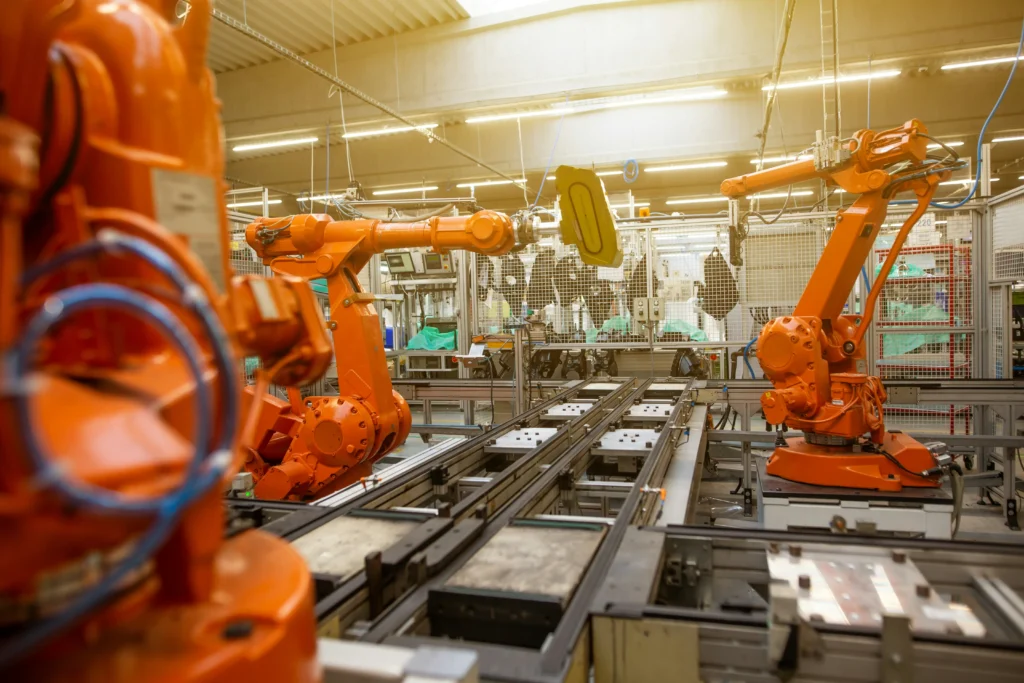
We are moving past software that just provides recommendations. AI agents for manufacturing are autonomous systems built to take action. They act on data in real time without waiting for a manager to click a button.
Imagine a sudden spike in raw material prices. An autonomous agent can instantly evaluate alternative suppliers, compare shipping times and execute a new purchase order. On the shop floor, these agents handle exception management. If a machine slows down, the agent automatically reroutes the workflow to an available production line to keep output steady. You empower your business to react to problems at the speed of data.
AI for manufacturing scheduling: smarter planning across shifts and production lines
Creating a production schedule that actually works is a massive headache. You have to balance machine availability, shift changes, worker skills and rush orders. One sick employee or one delayed shipment throws the entire plan into chaos.
AI for manufacturing scheduling takes all these variables and instantly builds the most efficient plan possible. It optimizes production runs to minimize changeover times. The software balances labour capacity against machine output to ensure you never have people standing around waiting for equipment. When a priority order drops out of nowhere, the system dynamically recalculates the entire schedule in seconds. You get maximum output with minimal idle time.
AI workforce planning for manufacturing: matching the right people to the right roles
Your factory relies on your people. Building a strong team requires looking ahead and understanding exactly who you need on the floor: AI workforce planning for manufacturing takes the guesswork out of building your team.
The technology models future headcount needs based on projected sales and seasonal demand. It identifies skills gaps within your current roster and suggests cross-training opportunities. You can automate shift allocation to ensure you always have the right mix of experienced technicians and junior staff on the floor. Embracing AI in the workforce helps you build safer, more productive team structures that scale with your business.
Using AI to hire and onboard manufacturing workers
Finding reliable staff is a massive hurdle for growing operations. You spend hours reading through applications, trying to find someone who fits your culture and has the right technical background.
Implementing AI recruitment tools gives you a massive advantage. These platforms screen applications at scale and flag candidates whose experience matches your specific needs. They cut your time-to-hire drastically. Once you bring someone on board, smart onboarding tools create a personalized training plan. An AI-enhanced HR platform connects the entire journey from the first interview to the first day on the floor. You boost retention because your new hires feel supported and prepared from day one.
The skills manufacturing employers are now hiring for
The introduction of smart technology fundamentally changes what a great employee looks like. You still need people with mechanical aptitude and a strong work ethic. However, the baseline requirements are shifting.
You need team members who possess technical adaptability. The tools they use will evolve constantly. Data literacy is becoming a core requirement across all levels of the business. Even floor operators need to read digital dashboards and interpret system alerts. Most importantly, you are hiring for human-AI collaboration. You want people who treat these systems as tools to boost their own productivity rather than obstacles to work around.
Best AI CRM for manufacturing or distribution companies
Selling manufactured goods requires managing complex relationships with distributors, wholesalers and direct clients. A generic customer relationship management tool will not cut it. You need a platform built specifically for the realities of production.
The best AI CRM for manufacturing or distribution companies provides total pipeline visibility. It integrates customer data directly with your production schedules. If a major distributor signals an upcoming surge in demand, your CRM feeds that data straight to your procurement team. It tracks buying signals and helps your sales team know exactly when to reach out for a reorder, aligning your sales strategy directly with your production capacity.
Challenges employers face when adopting AI for manufacturing
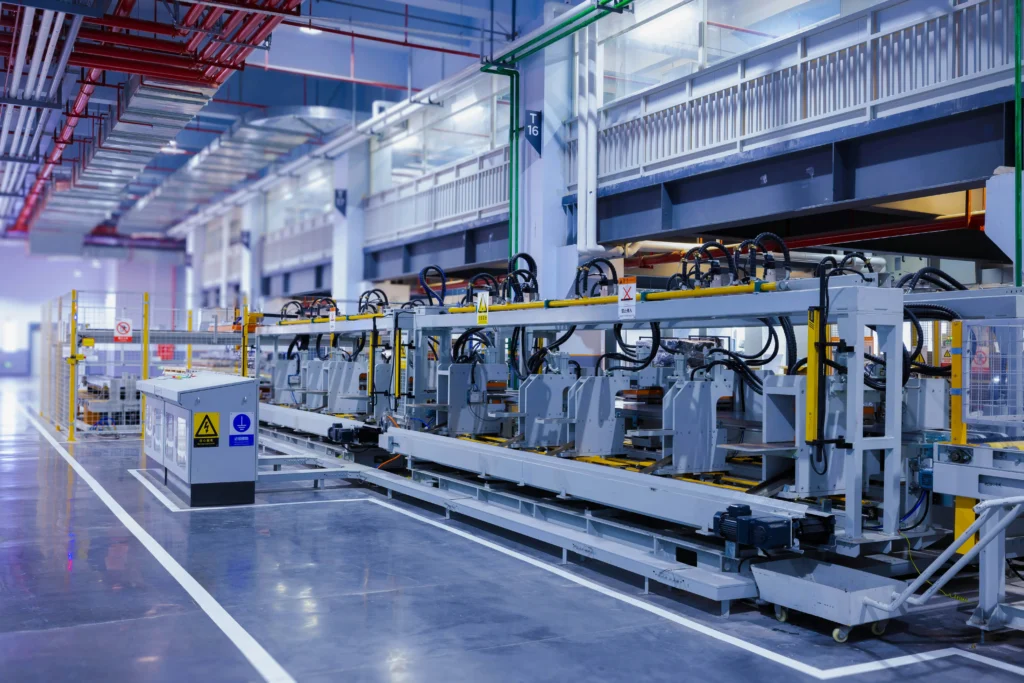
We can’t sugar-coat the reality of digital transformation. Bringing smart systems into a traditional manufacturing environment comes with significant hurdles. Pretending these barriers don’t exist is a guaranteed path to failure.
Legacy infrastructure is the biggest roadblock. You likely run equipment that is decades old and lacks digital sensors. Upgrading these machines or retrofitting them with connected devices requires serious capital. Data quality is another massive issue: if your current inventory counts are maintained on paper or isolated spreadsheets, the smartest algorithm in the world will only output garbage.
You also have to manage workforce resistance. Your seasoned employees might view these new systems with deep suspicion. They worry about job security and the steep learning curve. Overcoming this requires transparent leadership. You must invest in training and communicate clearly that these tools exist to support their work, not replace it. You also face a real skills shortage. Finding technicians who understand both heavy machinery and data analytics is difficult, so be prepared to train from within.
The future of AI in manufacturing: what employers should prepare for now
The manufacturing landscape is evolving rapidly. We are moving toward a future defined by autonomous factories. Facilities will run continuously with minimal human intervention for standard processes. Human workers will focus entirely on complex problem-solving and systems management.
Digital twins will become standard practice. You will have a complete virtual replica of your physical factory. You can simulate massive production changes in a digital environment before ever touching a real machine. Agentic AI will handle the daily friction of supply chain management and inventory control autonomously. AI-driven workforce planning will ensure your human capital is always deployed exactly where it creates the most value.
Proactive employers need to take action today. Start by digitizing your current paper processes. Clean up your data. Run a small pilot program on a single production line to prove the value to your team. The businesses that lead tomorrow are the ones laying the digital groundwork right now. They challenge the old way of working and build operations that are lean, fast and fiercely competitive.
Ready to leap into the future of manufacturing?
Related Resources
-
 Read more: AI in construction: What every employer needs to know
AI in construction: What every employer needs to know
AI in construction is transforming how employers hire, schedule and operate. Discover how construction worldwide is using AI to improve…
-
 Read more: AI in accounting: what every employer needs to know
AI in accounting: what every employer needs to know
AI in accounting is transforming how employers hire, schedule and operate. Discover how accounting worldwide is using AI to improve…
-
 Read more: AI in hospitality: What every employer needs to know
AI in hospitality: What every employer needs to know
AI in hospitality is transforming how employers hire, schedule and operate. Discover how hospitality businesses worldwide are using AI to…

